
 France market guide
When Should a French Food Business Move into Custom Paper Packaging?
Custom paper packaging can be useful when a French food business has a clear takeaway offer, repeat demand and a stable brand presentation. The right first question is not how many different packs can carry the logo. It is which items remain part of the service after dine-in arrangements, reusable options, menu portions and stockholding are considered.
For a boulangerie selling lunch alongside hot drinks, a coherent cup and meal-container range may simplify presentation. For a salad brand, the useful investment may be a bowl-and-lid specification that displays the food and holds a reliable portion. A distributor serves a different problem: it must support a range that several customers can order again without losing material, artwork or batch information.
This guide is written for those purchasing decisions. It explains how to separate on-site and takeaway demand, compare stock with dedicated print, assess a manufacturing partner and approve the first order. A small trial or a temporary opening may be better served by appropriate stock packaging. A custom run should follow an operational reason and a believable consumption plan.
France’s Foodservice Market: Service Mode Changes the Packaging Brief
The purchasing unit should be the meal as sold, not the empty box in a catalogue. A bakery lunch collected at the counter, a salad eaten at a desk and a meal delivered by courier expose the packaging to different handling. In a mixed service business, measure those channels separately before forecasting a custom run.
Dine-in Demand Is Not the Same as Disposable Demand
Article D541-342 of the French Environmental Code applies the reusable-tableware requirement from 1 January 2023 to on-site foodservice able to serve at least 20 people simultaneously. The scope should be checked for the establishment; a paper replacement is not a general substitute for the required reusable arrangement.[1]
The commercial implication is to calculate the remaining takeaway and delivery requirement rather than using total meals served as the print-run forecast. A site can be busy while its disposable volume is modest. An operator opening additional seating should reassess the demand model instead of automatically increasing orders for single-use cups and containers.
French Language and Meal Information Affect Design Space
Reserve space for the information the business needs to communicate in its French sales context. Brand artwork, menu labels and applicable sorting information should be planned together. A large graphic on a small bowl can leave an awkward surface for a food label, especially where staff apply it after filling. Test the actual label and readable text at the size customers will see, not only on a presentation mock-up.
Seasonal tourism or event demand can also change what should be printed. Treat a resort season, an exhibition contract or a limited menu as a separately forecast programme. Do not turn a short selling window into year-round custom stock unless the business has another use for it.
Which Businesses in France Benefit from a Controlled Custom Packaging Range?
The strongest fit is a business that can repeat a defined food service and coordinate its purchasing decisions. A logo is easier to manage when menu portions, lid choices and artwork ownership are already stable. A business with several counters may benefit from one approved specification, but shared branding does not remove differences between dine-in, collection and delivery.
| Business | A focused starting range | What to settle before printing |
|---|---|---|
| Boulangerie with a takeaway lunch offer | One or two drink sizes and the meal format actually used at lunchtime. | Channel split, portion, handling space and the French artwork. |
| Salad or bowl-meal brand | A bowl and lid matched to the menu and display routine. | Usable capacity, dressing contact, label location and chilled holding. |
| Multi-site takeaway restaurant | A small shared assortment for repeat dishes. | Store instructions, courier trial and who approves specification changes. |
| Foodservice packaging distributor | Private-label formats supported by clear technical and carton data. | Demand by customer and SKU, responsibilities and slower-stock exposure. |
| Catering business with recurring contracts | Formats connected to the contract’s service and collection arrangements. | Venue rules, reuse, delivery dates and the treatment of unused artwork. |
A new café that is still changing drink sizes may be better off measuring usage through available stock first. A temporary food counter can use suitable plain packaging while deciding which branding method fits its budget and operation. Customisation should make a recurring service more coherent; it should not lock an uncertain menu into an unnecessarily large assortment.
Approve One Purchasing Owner for the Range
Where a franchise or several shops share a brand, identify the person who can authorise a change to the cup, coating, lid or text. Individual stores can supply useful performance feedback, but uncontrolled local substitutions can make a central range difficult to replenish. Keep the commercial benefit of standardisation connected to the staff who will actually use the packs.
Dine-in vs Takeaway vs Delivery: A France-Specific Packaging Comparison
Separating these service modes is particularly important in France because on-site reuse arrangements can change the volume for which disposable custom packaging is appropriate. The comparison is an operating framework; the establishment should confirm its regulatory position and the precise conditions of each service.
| Service | Packaging decision | Evidence from the operation |
|---|---|---|
| On-site dining | Start with the required and practical reusable service before considering disposables. | Seating and service arrangements, washing, storage and collection. |
| Takeaway collected at the counter | Choose the format customers can carry and use after collection. | Normal fill level, handover, closure, label and carrying trial. |
| Courier delivery | Assess a complete meal system rather than a container in isolation. | Holding time, bag fit, stacking, movement and interactions between dishes. |
| Prepacked chilled display | Match product visibility and label space to the prepared-food offer. | Filled presentation, refrigerator arrangement and intended holding conditions. |
A mixed outlet should record which of these channels each SKU serves. Otherwise a forecast can overstate disposable requirements by counting meals eaten on site, or understate the need for lids by counting bowls without their actual sales channel. Linking the pack to the till or menu category can make the forecast easier to maintain.
Keep Acceptance Criteria Relevant to the Channel
A counter cup may be assessed for immediate hand comfort, while a delivered drink needs an approved carrying arrangement. A chilled salad needs a different trial from a hot prepared meal. Ask staff to use the normal portion and packing routine; a carefully staged sample can conceal overfilling or awkward closure movements. The purpose is to find a repeatable specification for the real service, not to prove that every item in the catalogue can be made to work.
Plain Stock vs Custom-Printed Packaging for French Food Brands
For an established takeaway offer, dedicated artwork can provide a consistent presentation across cups, bowls and boxes. For a business still testing portions or a short seasonal concept, plain stock can preserve options. Compare how the two systems will be used and paid for, rather than treating custom print as a necessary sign of business maturity.
| Decision | Plain or stocked option | Dedicated artwork |
|---|---|---|
| Menu still being tested | Allows the format to change without discarding a large printed balance. | May become obsolete if the first portion or closure choice is wrong. |
| Stable everyday range | Provides a reference for performance and replenishment. | Worth reviewing when each size has predictable consumption. |
| Seasonal resort or event | May permit later buying after attendance or contracts are clearer. | Needs a plan for unsold season-specific inventory. |
| French food-label space | Allows different labels where the substrate and layout are appropriate. | Must reserve an approved area before the design is fixed. |
| Multi-site consistency | Depends on the stock specification and substitution controls. | Can establish a controlled branded range if versions are managed. |
Ask how the print minimum changes with size and artwork. A combined quantity can look substantial while each variation remains slow to consume. A useful first programme may print the most stable core item and retain another suitable stocked format until demand is clearer.
If a separate label, stamp or sleeve is proposed, check its effect on food-contact suitability where relevant, service speed and the intended claims. Include its purchase and application costs. A comparison of an unlabelled stock cup with a complete printed serving system is incomplete; so is a comparison that ignores unused dedicated artwork at the end of a campaign.
French Distribution vs Direct Manufacturing for Custom Food Packaging
A French or European distributor can combine product availability and smaller releases, while an overseas manufacturing arrangement can offer a direct route to a repeat production specification. The correct choice depends on how much stock the buyer can control and how much procurement work it can organise. Neither route should be assumed to have a universal price or delivery advantage.
| Buying need | Distributor arrangement | Direct manufacturing arrangement |
|---|---|---|
| Short-notice replenishment | Verify the exact SKU and available quantity in stock. | Do not assume a new print run can resolve an urgent gap. |
| Stable custom range | Ask which factory and specification sit behind the private label. | Agree the production version, proof process and change controls. |
| Several stores or customers | Review call-off, allocation and local delivery terms. | Decide who stores and splits the inbound stock. |
| Technical evidence | Confirm the route for obtaining product-specific documents. | Require the proposed material and intended-use scope in the order file. |
| Commercial comparison | Understand the service included in the delivered price. | Include import, inland handling and stock exposure before comparing costs. |
A distributor may be a sensible contingency even when the core range is manufactured to order. Keep the contingency product tested and identified. A cup described under a similar nominal volume may use another lid, and a replacement bowl may occupy different space in the refrigerated display.
Fude can be assessed as a China-based manufacturer for the proposed programme. Ask it to respond to the same French menu and documentation brief as other shortlisted suppliers. The decision should be based on the response, samples and agreed commercial scope, without assuming local warehousing, a particular certification outcome or a fixed international transit time.
Choosing Custom Paper Cups for French Café and Bakery Takeaway Service
A café that serves espresso, longer coffees and milk drinks may not need the same packaging for every serving. Begin with the drinks actually taken away, the usable fill volume and the way the customer handles the cup. Keep the on-site service separate where reusable tableware is the appropriate arrangement.
| Cup construction | Potential reason to choose it | What to assess |
|---|---|---|
| Single wall | A relatively simple format with a smooth artwork surface for a specified drink. | Temperature, hand comfort, sleeve need and lid pairing. |
| Double wall | An outer wall as part of a hot-drink handling solution. | Print appearance, stack separation and the complete serving cost. |
| Ripple wall | A textured wrap where grip and hot takeaway presentation matter. | Graphic clarity, comfort at normal fill conditions and lid retention. |
Make the Millilitre Specification Unambiguous
Record the serving volume, cup dimensions, required headspace and lid reference. A catalogue ounce description is not enough to reproduce a menu serving. Check foam, toppings and any use inside a carrier. If two sizes are intended to share a lid, establish that compatibility with the actual samples rather than inferring it from a photograph.
The trial should include normal counter movements. Staff should separate cups from a stack, fill them, apply the selected lid and hand over the drink. Assess the printed proof at actual size, especially small French text or details crossing a seam. Approve the construction being offered; a visually similar sample with another coating or wall should be clearly distinguished from the proposed production pack.
Paper Bowls vs Lunch Boxes for Boulangerie and Salad Menus
The packaging brief for a French lunchtime offer should explain the food, portion and time before eating. A dressed salad can need display visibility and a reliable separate lid, while another prepared meal may fit a folded carton. Neither nominal capacity nor the empty pack’s shape is enough to choose between them.
| Format | Useful starting point | Decision that needs a filled trial |
|---|---|---|
| Paper salad bowl | Salads and bowl meals where the portion is presented in a round container. | Dressing contact, visibility, label area and loaded stacking. |
| Folded lunch box | Prepared takeaway portions suited to a folding closure. | Food height, closure security, grease and condensation. |
| Compartment format | Meals whose elements need to remain separated during handling. | Actual portion fit and whether separation survives carrying. |
| Open snack format | Food intended for prompt counter consumption after handover. | Protection if the customer carries it further or combines it with drinks. |
Run trials with the normal recipe, not a simplified dry substitute. If the business adds sauces separately, test that complete arrangement. If staff apply a food label after filling, check where their hands need to hold the container and whether the label obstructs the closure or view of the product.
Avoid Hidden Menu Expansion
A supplier’s range can tempt a business to buy formats for dishes it does not yet sell regularly. Keep those possibilities outside the first production commitment until the menu needs them. A narrower range with proven portion and closure performance can be easier to brand, store and reorder. Record where one format genuinely covers several dishes and where a separate pack is justified by the food or sales channel.
Coated Paper, Recyclable Claims and Reusable Service in France
Material language should describe the complete pack before it promises an outcome. Paperboard can be combined with coatings, inks, adhesives and a separate lid. A natural kraft appearance does not show which materials are present, and an alternative barrier should be assessed for its own intended use rather than accepted from a broad environmental description.
| Topic | Useful question | Supporting information |
|---|---|---|
| Paper and barrier | What is the full structure and what foods can it contain? | Material description and product-specific intended-use evidence. |
| Lid and visibility | Which lid suits the service, food and display? | Lid reference, composition, fit and handling trial. |
| Fibre sourcing | Which claimed supply and logo use are covered? | Current certificate scope and relevant traceability. |
| Recycling or composting | What route and conditions support the exact claim? | Finished-pack assessment and acceptance by the intended collection or processor. |
| Reuse | Can this service operate suitable reusable tableware? | An actual service, return, washing and storage arrangement. |
For a French operator, customer-facing disposal communication should be reviewed alongside the packaging category and the responsible scheme. Do not copy artwork from another European market without checking its applicability. A container can be technically usable for the food while its printed environmental information remains unsuitable for the way it is sold.
Keep claims conservative until the supporting review is complete. If a buyer asks for a different coating, explain why and request a sample and evidence for that version. If the change affects lid fit, print, stacking or food use, update those records as well. A material transition is a product-development decision, not only a change of adjective on a quotation.
Food-Contact Evidence for Paper and Board Packaging Supplied to France
France’s DGCCRF publishes paper-and-board guidance covering relevant food-contact structures, including paper components used with other materials. That makes it useful to identify the complete construction rather than relying on a generic paper certificate. The assessment should match reasonably foreseeable use of the ordered product.[2]
Describe the Food-Contact Conditions Before Requesting Evidence
Tell the supplier whether the pack will contain hot, chilled, oily, moist or acidic food, and identify the expected contact time and handling conditions. Ask the reviewer to check whether the documents cover the actual substrate, barrier and any relevant components. A test report for a similar material can be informative without necessarily settling the proposed order.
A practical file links the product reference to its specification, supporting reports and any applicable declarations. Where a document covers a product family, obtain an explanation of why the ordered size and structure fall within that scope. Keep the evidence available to the person approving the food use, not only the commercial buyer.
Treat Use Instructions as Part of the Supply
Do not infer microwave, oven, freezing or prolonged holding suitability from the word paper. If the business needs one of those conditions, include it in the requirement and obtain explicit confirmation for the proposed product. Staff need instructions that match the approved use. A successful short counter trial cannot replace an assessment of a substantially different food process or contact period.
French Packaging Responsibilities: Distinguish Household and Professional Flows
Classify the supply and end use before applying a packaging-responsibility checklist. French household packaging and professional packaging are not interchangeable categories, and a takeaway consumer pack may raise a different question from packaging used in a professional kitchen. The ministry’s household packaging information remains a separate reference for the relevant flow.[4]
Current Service Public guidance records the professional-packaging REP operational rollout as postponed from 1 July 2026 to 1 January 2027. That change concerns the professional packaging rollout; it should not be read as suspending every French packaging or EPR obligation. Use the current status and confirm the category and responsible party for the actual transaction.[3]
| Question | Record to create | Information the supplier can support |
|---|---|---|
| What is being supplied? | Empty packaging, packed food or another identified flow. | SKU, construction and intended use. |
| Where will it become waste? | Customer takeaway route or a defined professional operation. | Component description and quantities. |
| Who places it on the market? | Named contracting and importing parties. | Commercial scope and manufacturing details. |
| What is printed? | Approved French artwork and applicable information review. | Dieline, print method and final revision. |
| Which date applies? | Current rule and any separate future transition. | Updated product records when material or artwork changes. |
Keep the business’s reporting or scheme decisions separate from a supplier’s product claim. A manufacturer can provide information the buyer needs without automatically taking over every responsibility in the French transaction. Assign the review to the appropriate business function and retain the agreed answer with the order.
EU packaging rules also need to be followed through their phased implementation. The Commission’s PPWR overview is a framework reference, not evidence that every later measure took effect at once in August 2026.[5]
How to Assess a Manufacturer for French Custom Food Packaging
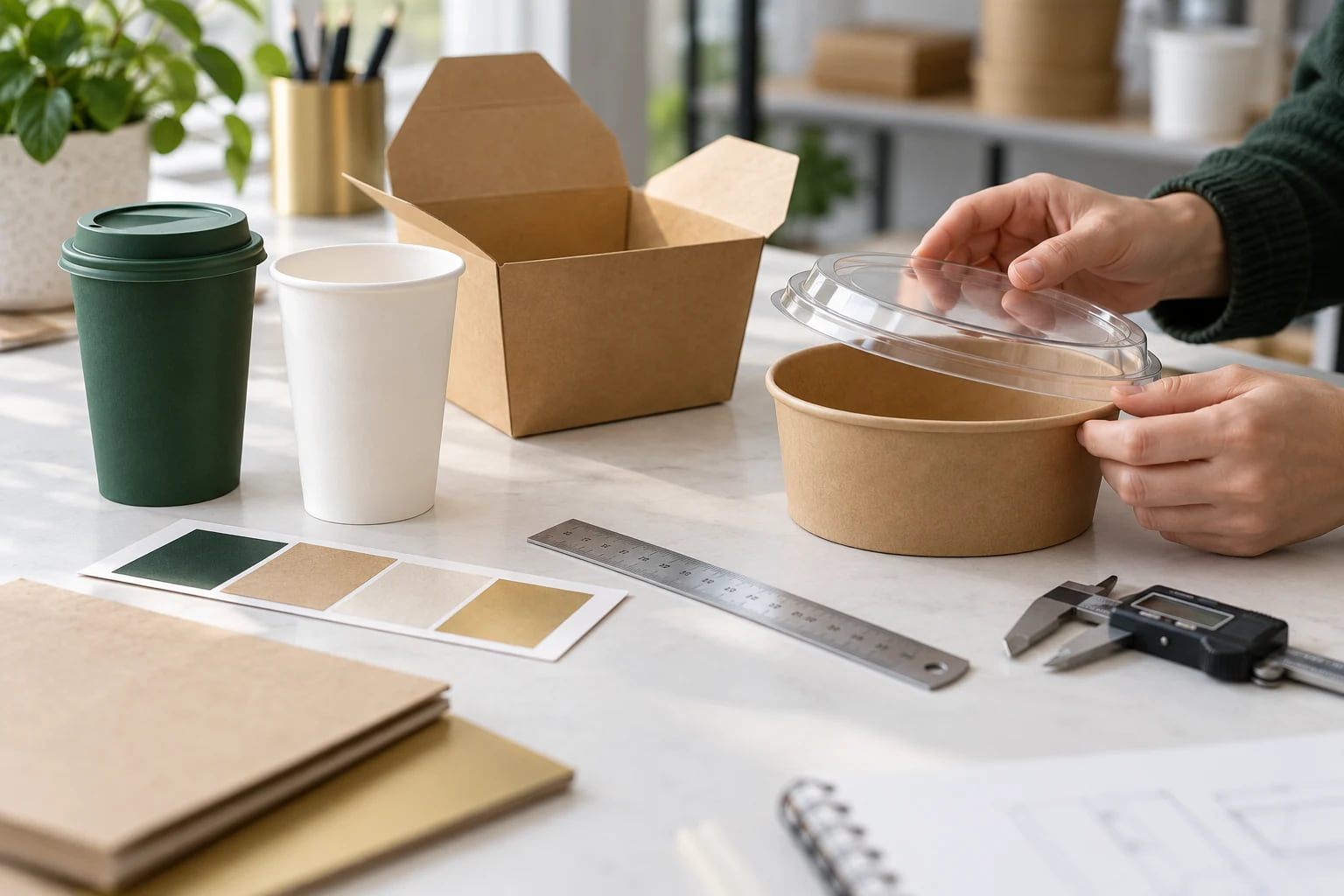
Use a shortlist that can be compared on the same menu, material, artwork and delivery basis. A catalogue title rarely contains enough detail. Ask where the proposed pack is produced, what stages are outsourced if any, and how the supplier records the approved construction.
Look for a Repeatable Approval Process
The quality question is how the next run will remain consistent. Discuss control of paper specification, barrier, lid source, colours and dimensions. Ask which changes require written approval and how retained samples are identified. If the supplier cannot explain how a material change reaches the buyer, the same product name may conceal a different item on a later order.
Review an example complaint workflow before it is needed. For a bowl range, a useful discussion might concern a lid that moves during the agreed loaded-stacking trial. For a bakery cup programme, it could concern colour variation or changed handling comfort. Agree the information required, the investigation path and the commercial remedy process. This makes quality a workable cooperation topic rather than a general assurance.
Start with Representative Complexity
A first order should test the aspects that matter to the business without expanding into unnecessary formats. One representative printed cup and one meal pack can reveal a great deal about artwork, evidence, packing and communication. Add other products when the supplier relationship has a stable record and the menu justifies them. The first purchase is an opportunity to validate the process, not a reason to maximise the catalogue coverage.
French Custom Packaging Artwork: Make Room for the Whole Message
The front-facing logo is only one part of a production-ready design. Prepare the final French text, applicable packaging information and the space needed for any separate food label. Check the full pack at actual size: seam, fold, lid overlap and the area visible when the pack is held.
Agree the Proof That Answers the Question
A structural sample helps assess dimensions and food handling. A digital mock-up helps discuss placement. A printed proof or production-representative sample addresses print appearance. Ask which is included and identify any difference between a sample substrate and the proposed production material. A digital image cannot establish colour consistency or suitability for the food.
For a boulangerie or salad brand, test how the design looks with the filled product and the real label attached. Fine lettering that looks clear when enlarged on screen may be hard to read on a curved or textured surface. Decide which details are essential and whether a simpler design would reproduce more reliably across the range.
Control French Text and Revisions Centrally
Have the business approve the language and required information before the manufacturer proceeds. The artwork register should identify size, product reference, material, print method, version and approval date. If a regional promotion needs a variation, keep it separate from the core file and calculate its inventory. Remove superseded files from the normal reorder route so an earlier seasonal design is not selected simply because its filename looks familiar.
MOQ, Landed Cost and Seasonal Stock for French Packaging Procurement
Ask for minimum quantities by product, size and artwork. Combining cups and boxes in one shipment does not necessarily combine their production minimums. A business should know how long it will take to use each variation and where the cartons will be held before comparing a larger run with a smaller replenishment model.
| Cost group | What to include | What can distort the comparison |
|---|---|---|
| Finished service unit | Cup or container, lid, sleeve, label, print and setup. | One quote includes a lid and the other does not. |
| Inbound route | Carton data, freight basis and named delivery point. | A sea-port price is compared directly with a warehouse-delivered offer. |
| Import and responsibility | Applicable customs, administration and packaging-related business costs. | The contract does not identify the responsible party or included work. |
| Season and storage | Space, internal handling and stock remaining after the campaign. | An attractive unit price requires more dated print than the season can use. |
For a seasonal business, forecast the selling window rather than spreading demand evenly over the year. Keep a stable core design where possible, and review a separate promotional element if appropriate. If the planned order is intended for several locations, use each site’s likely consumption and stock capacity rather than dividing the quantity evenly for convenience.
Lead time needs separate artwork, sample, production, transport and receiving stages. A port or region name is not a delivery commitment. Provide the final postcode, access restrictions and receiving schedule, and ask for a dated plan for the proposed order. Keep a tested contingency for a launch whose timing cannot tolerate a late first production run.
From a French Purchasing Brief to an Approved Repeat Order
A useful cooperation leaves a small set of records that connect decisions. Begin with the service mode and food requirements. Send comparable enquiries and ask suppliers to identify deviations. Trial samples with the staff who will fill and close the packs, then approve the precise construction and artwork that production should follow.
Approve the Order as a Complete Supply
The production order should settle the quantities, materials, lids, packing, print revision, documentation, acceptance criteria, inspection, payment stages and delivery basis. If a point is still open, identify who can resolve it and whether it blocks the run. A general instruction to proceed is ambiguous when several sample or artwork versions have been discussed.
Inspect, Record and Learn from the First Shipment
Connect receiving checks with the agreed reference. Record carton and batch information and any discrepancy. Review staff feedback from normal service and compare actual use with the forecast. The result may justify a simpler assortment or a different replenishment rhythm rather than merely a larger order.
Make Changes Deliberate
A menu or material change should update the specification and any relevant evidence. A new French text layout should update the artwork register. A new site with different on-site service should trigger a review of the demand and use assumptions. Good repeat-order cooperation means the parties know what can change, who approves it and what must be checked again. That control is especially helpful when the same brand uses both stock and custom products.
Three French Use Cases: Choose a First Order That Fits the Operation
A Boulangerie Adding a Regular Lunch Offer
First distinguish on-site and takeaway sales. Trial the actual lunch portion, beverage sizes, label and carrying arrangement. If the offer is still developing, retain suitable stock while measuring demand. Once the menu is stable, compare a focused custom cup and food-container programme. Keep the design readable with the food label attached and ensure staff can pack it without an awkward extra movement at the lunch peak.
A Salad Brand with Several Collection Points
The priority is a dependable bowl-and-lid system, with a serving volume and visible presentation the sites can repeat. Record how dressings are added, how filled bowls are stored and how customers carry several items. A shared branded pack can support consistency only if each point uses the same approved version. Do not let local substitutions or overfilled portions undermine the performance against which the sample was accepted.
A Distributor Supplying Both Restaurants and Consumer-Facing Takeaway Operators
The distributor needs clear product descriptions, end-use information and a responsibility review for the flows being served. Treat household and professional packaging questions distinctly, using current implementation information. Build the range around customer forecasts and the ability to support reorders, including technical documents and batch records. If one format is expected to serve several customers, check that their foods and service conditions genuinely fit the same approved structure.
FUDE Product Options for Buyers in France
Use these existing catalogue items as starting points for a written specification and sample review. Confirm the proposed structure, available options and supporting documents for the actual order.
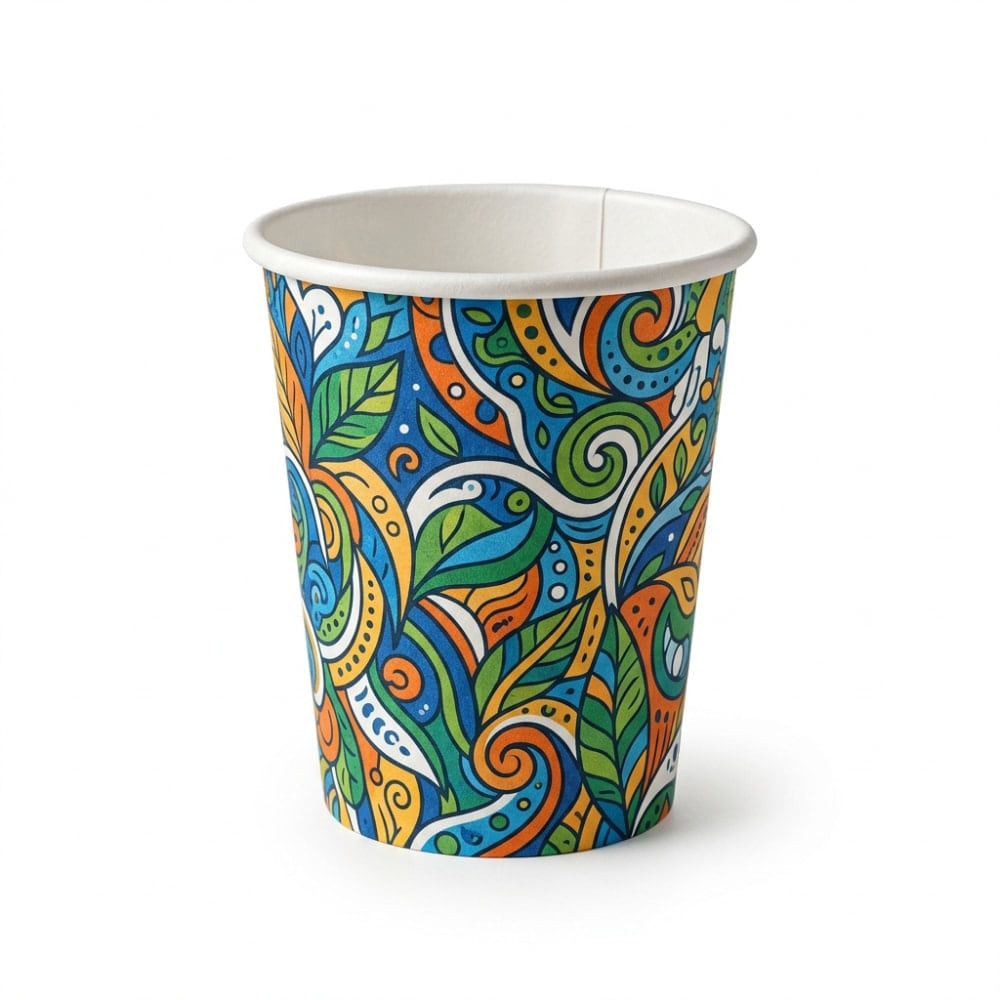
Custom Single Wall Paper Cups
A possible core item for a defined French café or bakery takeaway beverage offer after on-site service is separated.
Review for the enquiryServing ml, headspace, hand comfort, lid reference and French layout.
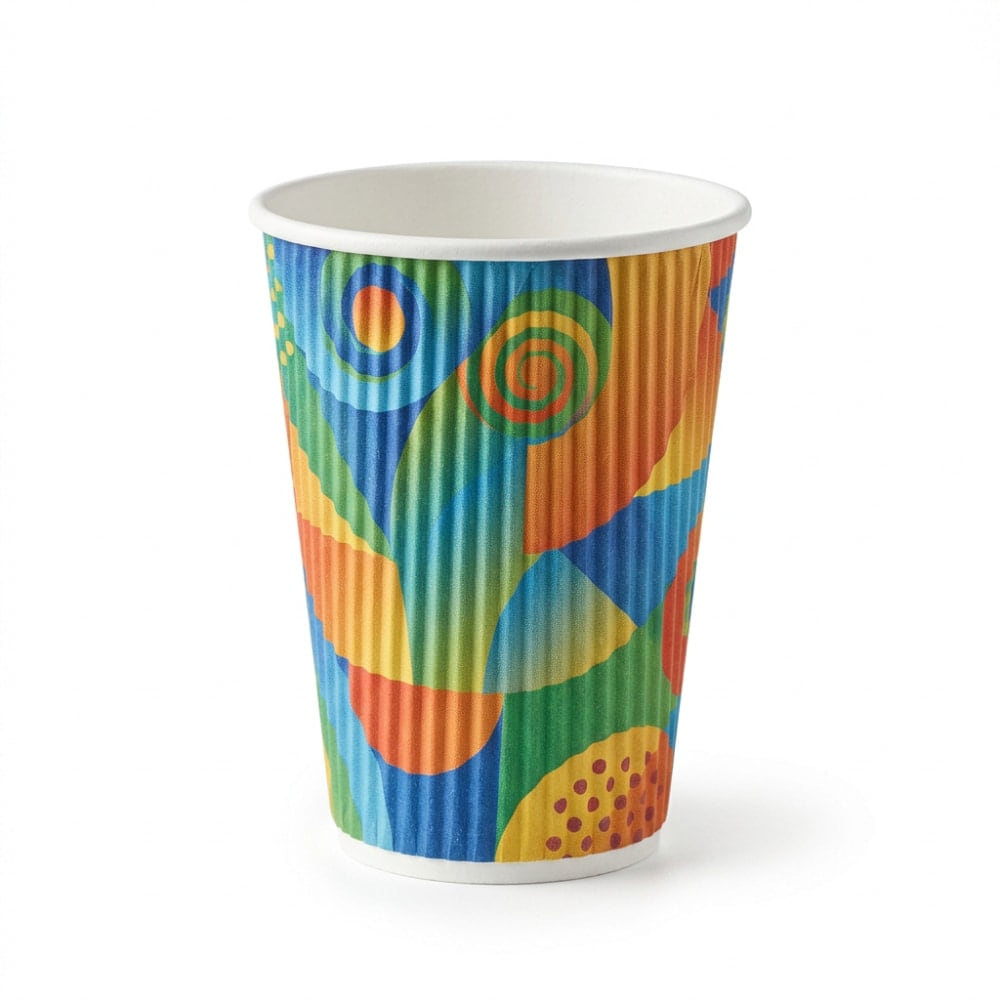
Ripple Wall Hot Drink Cups
A hot takeaway option where grip and the textured cup appearance suit the brand.
Review for the enquiryNormal fill conditions, graphic clarity, stacking and the approved lid.
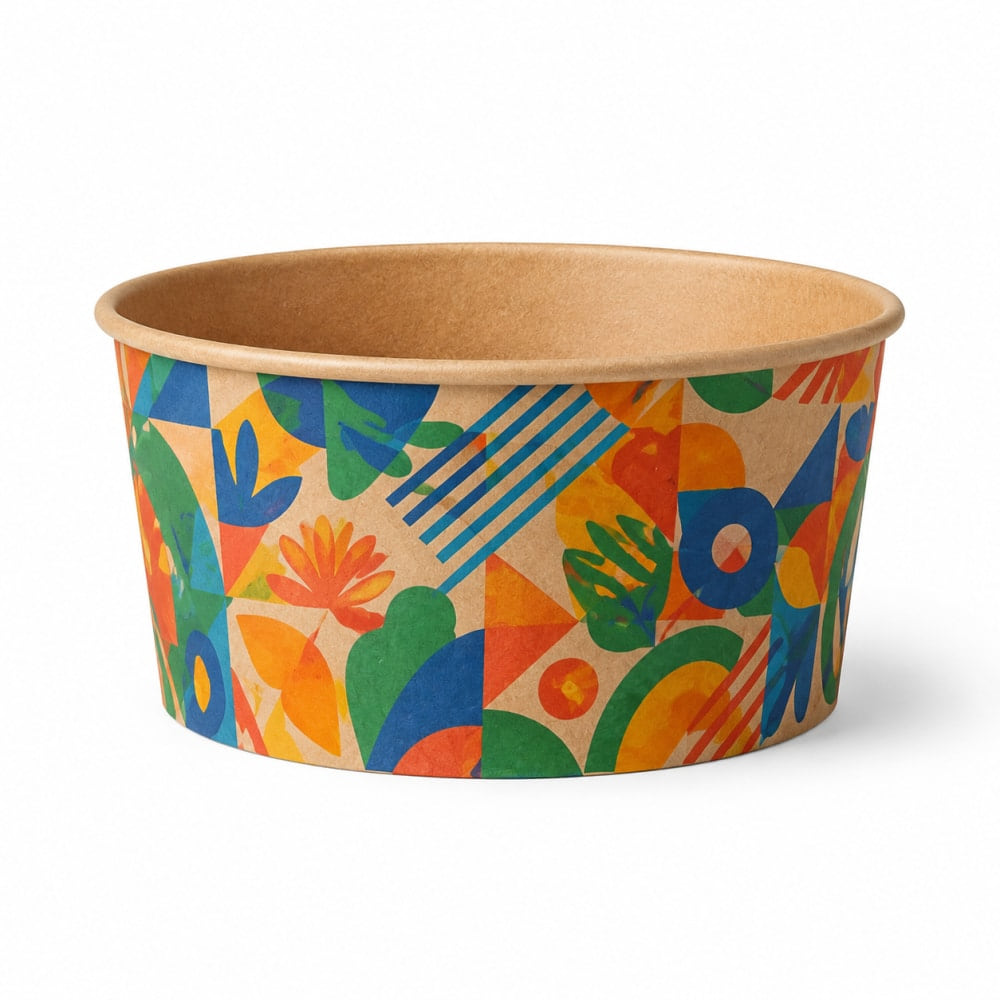
Kraft Paper Salad Bowls
A starting system for salad and bowl-meal businesses needing a separate lid and food visibility.
Review for the enquiryPortion, dressing, chilled holding, label space and loaded carrying.
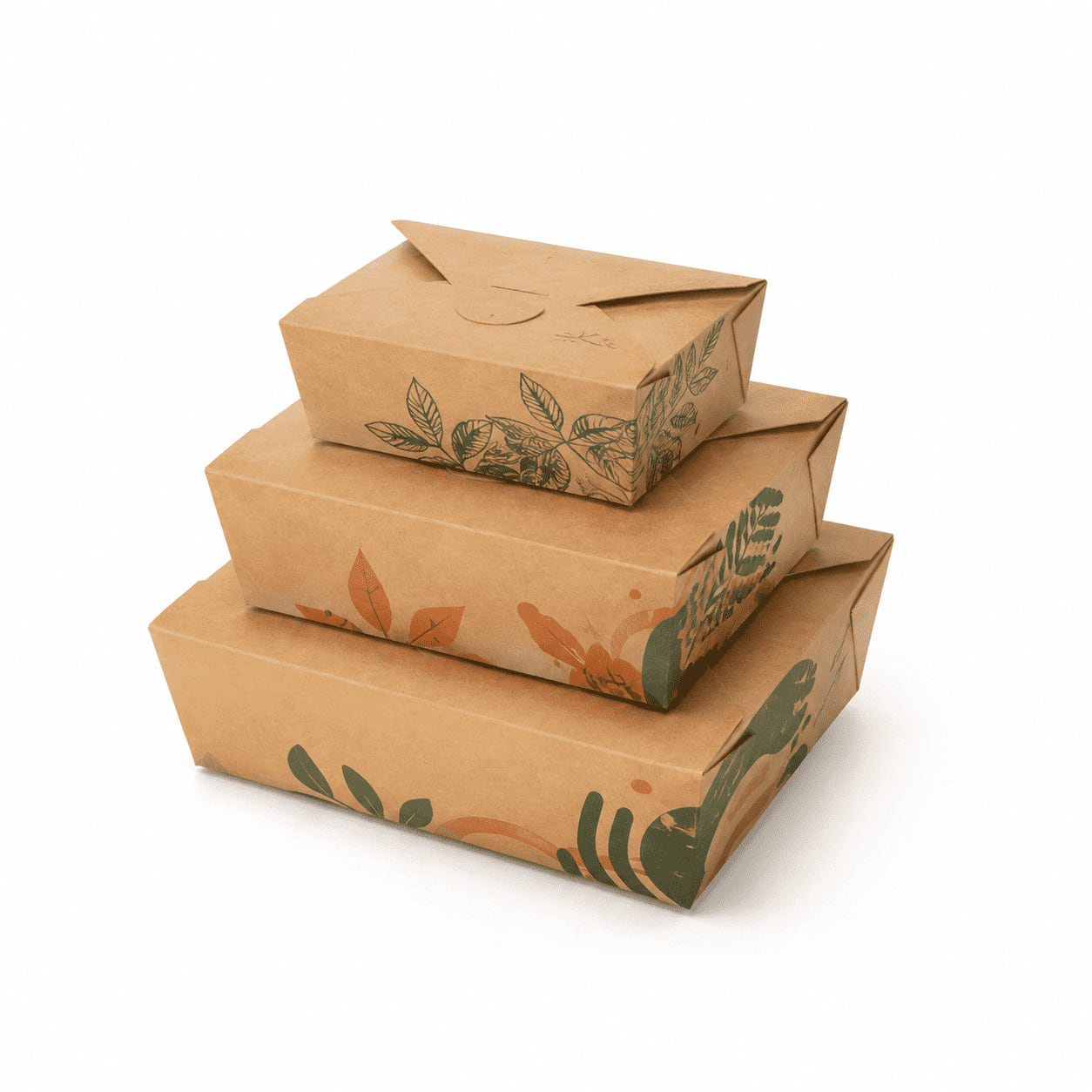
Kraft Paper Lunch Boxes
An option for suitable prepared lunch portions sold for collection or delivery.
Review for the enquiryRecipe compatibility, closure, food height, grease, condensation and staff packing trial.
FAQs: Sourcing Paper Food Packaging in France
Should a French Restaurant Print Disposable Packs for All Meals Served?
No. Forecast the service channels separately and account for the applicable on-site reusable arrangement. The quantity of meals sold is not automatically the quantity of disposable cups or boxes required. Use the remaining takeaway, delivery or other appropriate demand to assess a custom run.
Are Professional Packaging REP Obligations Simply Suspended in France?
Do not generalise the operational postponement. Current guidance moves the professional packaging rollout to January 2027, but household packaging and other responsibilities must be assessed separately. Identify the packaging flow, parties and relevant date for the actual supply.
Is Paper Packaging Automatically Suitable for French Food Contact?
No. The finished structure and intended conditions matter. Give the supplier food type, temperature, contact time and any heating or storage requirement. Review relevant documents against that exact pack, including coatings and separate components where relevant.
When Is Plain Stock Preferable to Custom Printing?
Plain stock can suit a developing menu, uncertain opening or short selling window where a dedicated minimum would create excess inventory. Compare suitable branding methods and their total handling costs. Print a stable core only when consumption by size and design supports the order.
Which Container Should a French Salad Business Trial First?
A bowl-and-lid system is a useful starting option where it suits the serving style, but it needs a filled trial. Check portion, dressing, lid fit, visibility, label placement, holding and carrying. A catalogue volume does not establish performance with the actual recipe.
Can the Same Artwork Be Used on Every Paper Pack?
Use one coherent identity, but prepare each product for its actual printable area, material and folds or seam. Review French text and required information at actual size. Keep food-label space and any different print response in the approval process.
Does a Recycling Claim Follow from a Fibre-Sourcing Certificate?
No. Fibre sourcing, finished-pack recyclability and compostability are different questions. Ask what each claim covers and which evidence and local collection arrangement support it. A coated paper body and a separate lid should not disappear from the assessment.
What Should Be Retained After the First Order?
Keep the agreed specification, artwork revision, documents, sample references, batch and receiving records, and staff feedback. Update the consumption forecast before reordering. Review any changed food, material, lid or printed information rather than assuming the previous approval covers it.
Send a Supplier Enquiry for France
You can include the menu, quantity by SKU and actual delivery point in your message. Enter your phone number with calling code, email and message, then choose Send Enquiry to submit directly through Zoho Forms. Your name and any product or quantity selections are optional.
Sources and Further Reading
Research checked on 22 October 2026. Official references support the local factual context; comparison frameworks and illustrative scenarios are purchasing guidance.
Service Public Entreprendre: business waste and packaging responsibilities ↗
French ecological transition ministry: household packaging and graphic paper EPR ↗
Product images are from Fude’s existing catalogue. Sample-review scenes are AI illustrations. Confirm the proposed SKU, materials, documents, quantities and commercial terms for the actual order.
 Germany
 United Kingdom
 Netherlands