
 Indonesia market guide
Custom Paper Packaging for Indonesia: Start with the Outlet Network
For an Indonesian buyer, a custom cup or meal container is useful only when the right format reaches the outlet that needs it. Start by mapping the receiving warehouse, any onward island movement and the final stock point. Then match the packaging to the menu and consumption at those sites. An attractive factory sample cannot resolve an incomplete replenishment plan.
A coffee group supplying one local cluster can make a different decision from a distributor serving customers on several islands. The first may prioritise a tightly controlled cup-and-lid system with frequent local replenishment. The second needs a practical way to allocate stock, preserve batch identity and support downstream applications through several receiving teams. Both can evaluate custom manufacture, but their requirements should be visible before they request a quotation.
This guide explains the product, documentation and cooperation choices for those buyers. It uses café, meal and distribution scenarios as practical examples rather than making claims about the size or growth of the national market. The objective is an approved range that the business can use and replenish consistently. Confirm quantities, current local requirements and the actual service scope with the relevant parties before turning a catalogue enquiry into an order.
One-Island Delivery vs an Indonesian Hub-and-Spoke Packaging Network
The receiving point matters as much as the country name on the quotation. Delivery to a central Indonesian warehouse may leave an onward transport and allocation task before the packaging is usable elsewhere. Identify those tasks explicitly. A buyer should distinguish stock physically available to an outlet from goods awaiting movement, inspection or a matching lid.
| Planning issue | One local receiving cluster | Hub supplying additional island stock points |
|---|---|---|
| Demand | Forecast the outlets actually served from that stock. | Forecast each destination and its own product mix. |
| Delivery commitment | Define the final named receiving point. | Define both hub receipt and onward delivery responsibility. |
| Reserve stock | Use the confirmed local replenishment uncertainty. | Review reserves at each stock point rather than one national total. |
| Transfers | Control ordinary warehouse-to-outlet handling. | Preserve carton protection and batch identity through each transfer. |
| Emergency supply | Approve a practical local fallback. | Identify a compatible fallback available to each receiving network. |
| Order quantity | Match manufacturing and local storage constraints. | Balance a shared run with the ability to allocate and hold it. |
For example, a distributor could buy one common printed bowl for committed accounts on Java and another receiving network on Sumatra. Its manufacturing specification may be shared, while the stock commitments are separate. If all cartons remain at the hub, the second network cannot treat the national stock total as immediate availability. Purchasing and sales should agree when each destination’s allocation becomes available to promise.
Ask the logistics parties to describe the actual route and uncertainty. Do not fill a planning gap with a standard number of days for Indonesia. The better comparison is the complete service: where responsibility changes, how stock becomes available and what happens when a destination consumes faster than expected.
Which Indonesian Businesses Should Consider Custom Paper Cups and Containers?
Customisation should follow repeat demand and an owner who can approve the application. A company with several outlets is not necessarily ready if each serves a different portion or buys its own lids. A smaller business with one stable product can sometimes write a clearer brief. Assess the range by product and artwork, not only by total company spend.
| Buyer type | Potential value | Decision needed before ordering |
|---|---|---|
| Café group | Consistent takeaway identity and drink handling. | Shared recipes, useful fill and an approved lid system. |
| Rice-meal or prepared-food operator | Repeat portion presentation and closing instructions. | Oils, sauces, hold and the customer’s eating sequence. |
| Foodservice distributor | A private-label assortment for committed accounts. | Accepted applications and demand by receiving network. |
| Hotel / catering operator | Packaging coordinated with a defined service. | Event quantities, client approval and use of remaining stock. |
| Central kitchen with partner outlets | One controlled packing specification. | Which party approves and checks the received meal. |
A new operator can begin with suitable stock packaging while gathering consumption and testing portion sizes. A chain can make the first custom programme deliberately narrow, using one core cup or meal format before adding less predictable variants. This limits the number of decisions that must be settled simultaneously and makes the first receiving inspection easier to judge.
A distributor should ask downstream customers for more than the desired price. Determine whether they need hot or cold use, the foods involved, storage limitations and any account-specific material policy. The answer may reveal that two superficially similar customers need different products. That information is more valuable than printing a broad catalogue range before its applications have been established.
Locally Stocked Packaging vs Custom Print for Indonesian Foodservice Buyers
Compare flexibility with the commitment created by custom artwork. Local stock can be useful for recipe development, small or variable demand and an urgent replenishment. A custom run can support a repeated brand presentation once the application and expected consumption are controlled. The commercial case should include the work and materials needed to turn either option into a finished service item.
| Question | Stock pack with added branding | Factory custom-printed pack |
|---|---|---|
| Portion or recipe changing? | Allows a limited trial of alternative sizes. | Works better after the usable format is settled. |
| Frequent message changes? | A label may separate the message from base stock. | Each printed design needs a realistic use plan. |
| Several receiving points? | Confirm consistent supply of the same construction. | Allocate the run and track stock by destination. |
| Peak-service handling? | Measure label or sleeve application in service. | Check whether integrated printing removes that work. |
| A campaign or client event? | Can preserve flexibility in the core inventory. | Needs date-specific approval and a leftover-stock decision. |
Keep the quantity per variant visible. A large combined demand for cups can conceal a slowly moving size or an artwork used by one franchise partner. Calculate how long that particular stock would last at the destination that can actually use it. A lower unit price is less persuasive if the buyer cannot store or consume the run while the design remains relevant.
If a common base pack and local labels are proposed, test the combination. The label area should remain practical when staff close, carry and open the pack. Condensation, folds and a curved cup surface can affect the operation. Include that work in the comparison instead of assuming an added label has no cost or effect.
Indonesian Distributor, Local Converter or Overseas Factory: Define the Cooperation Model
Choose the supplier route for the work the business is ready to manage. A distributor may provide local stockholding and mixed-product replenishment. A converter may support a closer development conversation for a particular construction. An overseas factory can be worth assessing for a stable custom programme when the buyer or its appointed partner can manage the import and onward stock plan.
| Responsibility | Locally held supply | Direct manufactured supply |
|---|---|---|
| Specification | Confirm whether the exact construction is controlled. | Define a revision before sampling and manufacture. |
| Stock | Check ownership, location and continuity. | Plan production quantities and receiving allocations. |
| Import | Establish whether the offered price already includes that work. | Name the responsible importer and review its requirements. |
| Evidence | Obtain documents for the supplied item. | Connect material records with the offered factory product. |
| Complaint | Know who can hold and replace affected goods. | Agree investigation, records and the commercial remedy. |
Avoid treating direct purchasing as an automatic upgrade. The buyer may save on one service while assuming another. If local replenishment is central to the operation, a distributor’s stockholding can have practical value. If repeated custom construction is central, the buyer needs confidence that the seller can prevent substitutions and resolve a technical problem, regardless of where the seller is based.
A hybrid arrangement can also be evaluated where responsibilities are clear. A business might approve one manufacturing specification while an Indonesian partner handles import and agreed stockholding. Obtain a written explanation of who owns the goods at each stage and who receives the supplier’s change notices. The arrangement should produce one coherent approval trail rather than overlapping promises.
Indonesia Food-Packaging Rules in 2026: Update the BPOM Reference Before Approval
The official BPOM legal registry records Regulation 11 of 2026 on food packaging as in force, with promulgation on June 30, 2026, and identifies it as repealing Regulation 20 of 2019. A purchasing file that relies only on the older regulation therefore needs a current review. This registry evidence establishes the change in legal reference; it does not by itself establish every technical condition for a paper cup or container.[1]
BPOM’s September 2026 explanation confirms the replacement and describes updates responding to packaging technology, food-contact safety knowledge and reusable or recycled packaging. Use that official explanation to identify issues for review, while having a qualified local reviewer apply the actual provisions and relevant implementation details to the proposed construction.[2]
Connect the Current Requirement to the Offered Construction
Provide the reviewer with board, barrier, print and separate-component information, along with the foods, temperatures and contact periods. Identify whether the proposal includes any recycled or reusable claim. Ask what evidence and procedures apply to this specific pack, rather than asking the salesperson for a general BPOM certificate and assuming that phrase answers the question.
Keep a dated review record and the supporting specification. If a supplier submits older reports, ask the reviewer to establish what they demonstrate under the current applicable framework and what further work is needed. Do the same for a construction change after the first order. A current legal reference and a traceable product file give the buyer a defensible approval process without inventing a universal test limit or certificate requirement.
National Producer Roadmap vs Jakarta Shopping-Bag Rules: Keep the Scopes Separate
Indonesia’s P.75/2019 producer waste-reduction roadmap addresses a 2020-2029 programme and covers relevant manufacturing, food-and-beverage service and retail activities. Its methods include waste prevention, recycling and reuse. This is a broader producer-management framework, rather than a simple rule that every restaurant must replace every container with paper.[3]
Jakarta Governor Regulation 142 of 2019 has a more specific subject: environmentally friendly shopping bags at shopping centres, self-service stores and traditional markets. That scope should be understood before the buyer makes decisions about bags or claims that the regulation also bans all cups, lids and meal containers. Check the actual product and operating site.[4]
| Layer | Question for the Indonesian buyer | Evidence or record to retain |
|---|---|---|
| National producer framework | What obligations apply to this business and packaging programme? | The responsible local assessment and the required material data. |
| Local rule | Does the rule cover this product, territory and site? | Current official text or authority clarification with scope. |
| Venue or customer policy | What does the account accept in addition to legal requirements? | The dated customer specification and approving contact. |
| Food-contact review | Is the construction appropriate for the stated food use? | Material, use conditions and relevant supporting evidence. |
| Printed claim | Can the specific wording be substantiated? | Evidence and approval for the claim actually printed. |
Create one acceptance record for each relevant operating context. A distributor can use it to distinguish account requirements without inventing a uniform nationwide approval. A chain opening a new location can compare the new site with its existing specification and see what needs review. This makes local variation manageable while keeping the national product file coherent.
Packaging Data for Indonesian Procurement: Evaluate Reduction Without Losing Function

Once the responsible team establishes the applicable framework, purchasing needs reliable product information. Ask for a controlled component description, unit mass where relevant, construction revision and shipment quantities. A lighter pack, a removed sleeve or a redesigned component should be evaluated through the operation before it becomes a purchasing target.
Compare the Complete Drink or Meal System
For a cup programme, compare the cup together with the lid, any sleeve and the way staff hand it to the customer. A construction that reduces one component but requires another may change the result. For meals, include any separate sauce or broth container that is necessary to keep the food serviceable. The appropriate comparison is the complete accepted system used for a defined order.
Maintain both performance and material records. If a change reduces weight but increases leaks, double packing or discarded meals, the buyer needs to know before rolling it across the network. Agree a limited trial, record the observations and have the responsible teams approve the result. This lets operational experience inform the packaging programme instead of turning a reduction target into a reason to skip application testing.
Treat disposal and recyclability wording as separate decisions. Ask what construction the evidence covers and what disposal route is relevant to the actual service location. A paper-based appearance alone does not establish collection or processing for every component in every area. Keep the supplier’s material description precise so the local team can make and explain its own accepted instructions and claims.
Custom Paper Cups for Indonesia: Compare Single-Wall and Ripple-Wall Applications
Decide what the drink requires before choosing the outer appearance. Single-wall and ripple-wall refer to different constructions, but the full specification still needs to cover the cup body, food-contact barrier, rim and nominated closure. A texture or logo does not determine whether the complete system works for the buyer’s recipe.
| Application | Comparison to make | What the trial should show |
|---|---|---|
| Hot takeaway drink | Outer handling and whether another sleeve is needed. | Staff and customer handling of the actual serving. |
| Iced coffee recipe | Useful fill, ice, headspace and cold-use suitability. | Correct closure and acceptable condition after carrying. |
| Mixed drink menu | Which sizes genuinely need separate stocks. | A repeat recipe and fill instruction for each size. |
| Several outlets | Whether everyone uses the approved lids and technique. | The same accepted assembly at representative sites. |
| Branded cup | Print area, colour, seam and information placement. | Readable artwork on the manufactured cup. |
A useful cup trial can reveal that the main problem is a closure or filling instruction rather than the wall construction. Record each observation separately. Assess whether staff can fit lids consistently under the normal service rhythm and whether the customer can use the drink as intended. A visibly attractive sample should meet the same criteria as an unprinted one.
Control compatible components as a pair in purchasing records. If lids are bought from another supplier, identify the accepted lid precisely and keep the fit evidence. A nominal diameter alone may not explain the full fit. Recheck the system if either supplier changes the relevant geometry or material.
Paper Bowls vs Folding Lunch Boxes for Indonesian Takeaway Meals
The choice between a bowl and a lunch box should follow the meal’s containment, presentation and eating method. A bowl may support a defined mixed or chilled meal. A flatter box may support a portioned rice meal. The exact food, moisture and oil exposure determine which offered construction deserves a trial.
| Meal condition | Format to evaluate | Decision-critical test |
|---|---|---|
| Rice with oily sides | A suitably constructed paper lunch box. | Base, folds and corners after the normal hold. |
| A meal served and eaten from a bowl | A paper bowl and accepted lid. | Portion room, closure, stacking and customer opening. |
| Sambal or wet sauce added directly | The proposed structure under that actual contact. | Oil / moisture exposure and the eating experience. |
| Free-liquid soup or broth | An independently suitable container system. | Containment through the full hand-off or delivery routine. |
| Chilled prepared dish | A bowl or box reviewed for cold use. | Storage, condensation and condition at service. |
Include filling, closure, stack and delivery in the assessment. A container supported on a kitchen bench may behave differently once staff stack orders or customers carry them. Trial the regular order arrangement, including drinks or other items that share the carrier, rather than selecting only an easy isolated test.
Write the accepted food envelope after the trial. Staff should know which meals can use the pack and which need a separate system. When the menu changes, compare the new conditions with that envelope and refer significant changes back for review. This creates a practical control that can be taught across outlets instead of relying on the memory of the original purchasing team.
How Indonesian Buyers Can Evaluate a Custom Packaging Supplier
Use one complete application brief to assess the supplier’s response. Ask it to propose a construction, identify the evidence it can provide and explain how sampling, print approval and production control will work. The quality of the response shows whether the candidate has understood the application or is merely returning a price for a familiar catalogue item.
| Area | Useful answer or record | Reason it matters |
|---|---|---|
| Food-use proposal | An identified construction tied to the actual food brief. | Keeps the selection grounded in the operation. |
| Current documentation | Files linked to the offered product and reviewed requirements. | Avoids treating an old reference as a complete current approval. |
| Change control | Notice and approval before a relevant material change. | Protects both performance and packaging records. |
| Traceability | Identifiable batches and carton information. | Allows a problem to be contained and investigated. |
| Distribution interface | Agreed carton and receiving information. | Helps preserve the pack through the buyer’s stock network. |
| Commercial response | Named delivery scope and written remedies. | Makes the quotation and cooperation process reviewable. |
Ask a practical follow-up when the first sample has a problem. A useful supplier response investigates filling, fit, structure or handling and proposes a controlled next step. A vague assurance that the next batch will be better is difficult to approve. Keep revised samples distinguishable so the team knows which construction solved the issue.
The buyer also needs to coordinate its own comments. Procurement, operations, local reviewers and marketing should resolve their decisions into one release record. If a distributor’s customer has final authority, include that dependency in the plan. Supplier capability and buyer organisation are both necessary to turn a good sample into a stable repeat programme.
Indonesian Packaging Sample Approval: Three Practical Operating Scenarios
Café Group Serving Iced Coffee and Hot Takeaway Drinks
Select representative recipes and test the nominated cup, lid and handling method for each. Record ice and final fill for the cold drink, and the actual serving conditions for the hot drink. Include the waiting and hand-off sequence. If outlets use different lids or filling habits, resolve that variation before claiming the cup system is common across the group.
Rice-Meal Operator Packing Sauce and Oily Accompaniments
Use the regular demanding meal and staff portioning routine. Inspect the base and folds after holding, stacking and the representative delivery sequence. Have a receiving tester open the pack and use it as the customer would. If sauce placement is a condition of approval, write that instruction and test whether staff can follow it reliably in normal service.
Distributor Allocating Stock Across More than One Island Network
Send identified samples to the receiving teams and a defined set of customer applications. Ask for structured feedback on fit, closure and handling rather than a general approval of the product photograph. Confirm how cartons are transferred and stored at the actual destinations. The distributor can then create an application record and a receiving instruction that downstream sales and warehouse staff can use.
Set acceptance criteria before these trials and retain the conditions, photographs and identified references. Distinguish construction problems from packing errors or an unsuitable menu use. A revised sample should be judged against the same relevant criteria. The decision record should be clear enough for a new member of staff to understand why the product was approved and what must remain consistent.
Bahasa Indonesia Artwork Approval for Custom Cups and Food Containers
Approve the wording and the physical layout as separate steps. Bahasa Indonesia copy should be reviewed by the buyer’s nominated language owner, while any technical or regulatory wording needs the responsible specialist. If English appears alongside it, identify who approves both versions. The supplier should receive one controlled text and artwork file.
Review the Pack as Customers and Outlet Staff Will Use It
Look at the assembled cup or box for seam positions, folds, curvature and usable label areas. A line that reads well in a flat design can be partly hidden when the pack is closed or held. If the business uses order labels, check the label position with the actual filling and closure routine. Where a code must scan, test it on the relevant physical sample at the intended size.
Keep the design clear enough to survive the chosen printing process. Agree colour references and the approval route for print variation. Ask the supplier to identify technical constraints before the final file is released. A photograph of a mockup can support a design discussion, but an identified manufactured reference is more useful for judging subsequent deliveries.
For a franchise or distributor range, decide which identity is permanent and which information varies by account or location. Avoid creating unnecessary print variants that each require a separate stock commitment. Where local labels offer a workable solution, retain an approved template and application instruction so flexibility does not become inconsistent presentation across the network.
Importing Custom Paper Packaging into Indonesia: Clarify Access, Classification and Scope
Indonesia’s Customs and Excise registration guidance explains customs access, including how a qualifying NIB serves relevant importer access functions and the need to keep integrated registration data current. This concerns the importing party’s access. It is separate from deciding the tariff classification, restrictions and food-packaging requirements for the specific goods.[5]
Review the Actual Construction Before Comparing Landed Quotations
Name the responsible importer and obtain a product-specific review from its local professional. Provide the structure, materials, drawing and separate-component details, rather than asking for a classification based only on “paper packaging”. Confirm applicable duties, taxes, restrictions and documentation for the actual order. Keep the conclusion tied to the offered product and review it when the construction changes.
The quotation should state the named delivery point, freight and import responsibilities, packing, artwork preparation, sample charges and exclusions. Compare like with like. Delivery at a hub warehouse leaves a different task from delivery to another island stock point or to outlets. Obtain the real onward service proposal before treating either quote as the complete cost of packaging availability.
For negotiation, include payment stages, inspection, acceptable evidence of a complaint and the process for holding or replacing a disputed batch. Confirm the actual schedule after the specification and approval dependencies are known. Avoid basing a launch on an assumed clearance or transport duration. The purchase should make responsibilities explicit enough that both supplier and buyer can act when an issue occurs.
Indonesian Packaging Storage and Reorders: Control Destination, Component and Revision
At each stock point, distinguish usable released stock from goods awaiting inspection, transfer or a matching component. Track cups and accepted lids together and identify the artwork revision on cartons or internal records. A large inventory figure is less useful than knowing which outlet network can use the stock now.
Inspect at Receipt and Preserve Condition During Onward Handling
Check the actual SKU, quantities, artwork, carton condition and agreed functional points before releasing a new batch. Preserve batch identification when cartons are split or transferred. Assess storage exposure at the real site, including water, dust, odours and handling damage. Agree protection appropriate to that site and route instead of assuming all locations have identical warehouse conditions.
Set reorder triggers from consumption by variant and the confirmed replenishment uncertainty. A reserve held at a distant hub should have a defined route before it is described as emergency stock for another network. Where a local fallback is necessary, approve its relevant food use, closure and customer requirements in advance. This gives staff a practical response without encouraging uncontrolled substitutions.
Review the first order after actual use. Compare forecast with consumption, examine complaints and see whether staff follow the packing instructions. Reduce unnecessary variants and update the reserve plan where evidence supports it. Before reordering, confirm whether recipes, current requirements, artwork, material or receiving points changed. Keep the approved revision visible so an old attachment does not restart production by mistake.
Working with FUDE on an Indonesian Custom Paper Packaging Programme
Fude can be evaluated as a custom-manufacturing option after the Indonesian buyer defines the application and supply plan. Send the foods or drinks, filling and holding conditions, requested sizes, current problems, matching components and intended artwork. Include approximate consumption by variant and the actual receiving points, rather than supplying only a combined national quantity.
Identify the importer or local purchasing partner and the people who approve food-contact review, print and operations. Request the proposed construction, available supporting evidence, component information and sample sequence. Confirm actual product availability and the quoted scope through the enquiry; the presence of a product recommendation does not establish a particular minimum, material option or delivery service.
Use a Staged Release That Can Be Repeated
Complete construction selection and local review, run the relevant application trials, approve artwork and obtain a written commercial agreement. Keep the approval dependencies in the schedule. The buyer should know what remains open before it promises a rollout date to outlets or customers. Production release should name the accepted specification and print revision.
The first delivery should establish a reference for receiving and replenishment, supported by identified samples and records. Subsequent orders can then confirm changes instead of reconstructing the entire programme. The useful outcome is a product and stock arrangement suited to the Indonesian business: a cup or container that works with its menu, evidence that can be reviewed locally and a replenishment plan that reaches the sites using it.
FUDE Product Options for Buyers in Indonesia
Use these existing catalogue items as starting points for a written specification and sample review. Confirm the proposed structure, available options and supporting documents for the actual order.

Custom Single Wall Paper Cups
A candidate for a defined Indonesian café beverage programme with stable recipe volumes and a controlled lid system.
Review for the enquiryReview the actual hot or iced use, useful fill, closure and condensation or outer-handling conditions.

Ripple Wall Hot Drink Cups
A candidate to evaluate for repeated hot takeaway drinks where the operator wants to assess grip and presentation.
Review for the enquiryTrial the serving conditions and complete cup-and-lid system; compare any additional sleeve requirement.
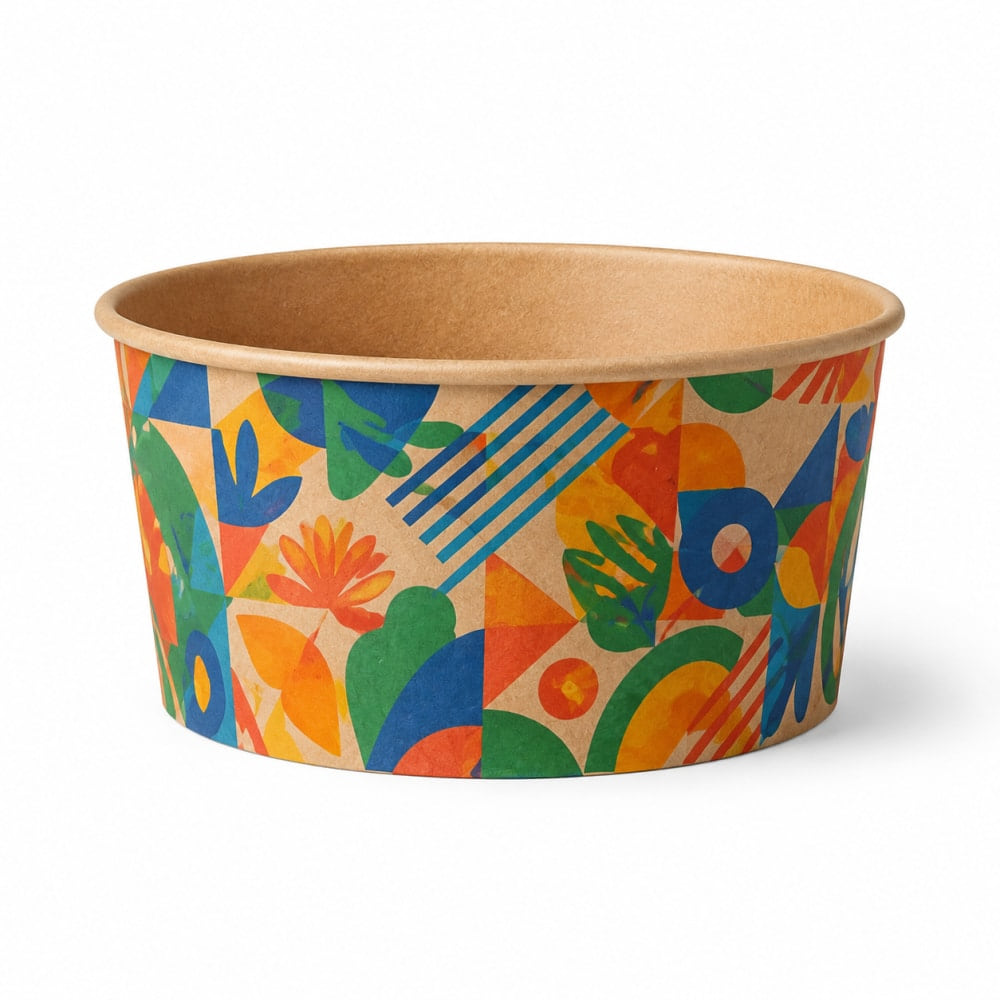
Kraft Paper Salad Bowls
A candidate for a defined bowl-meal or chilled prepared-food application supplied through the buyer’s receiving network.
Review for the enquiryTest sauce contact, lid fit, stacking and customer opening for the actual meal and hold.
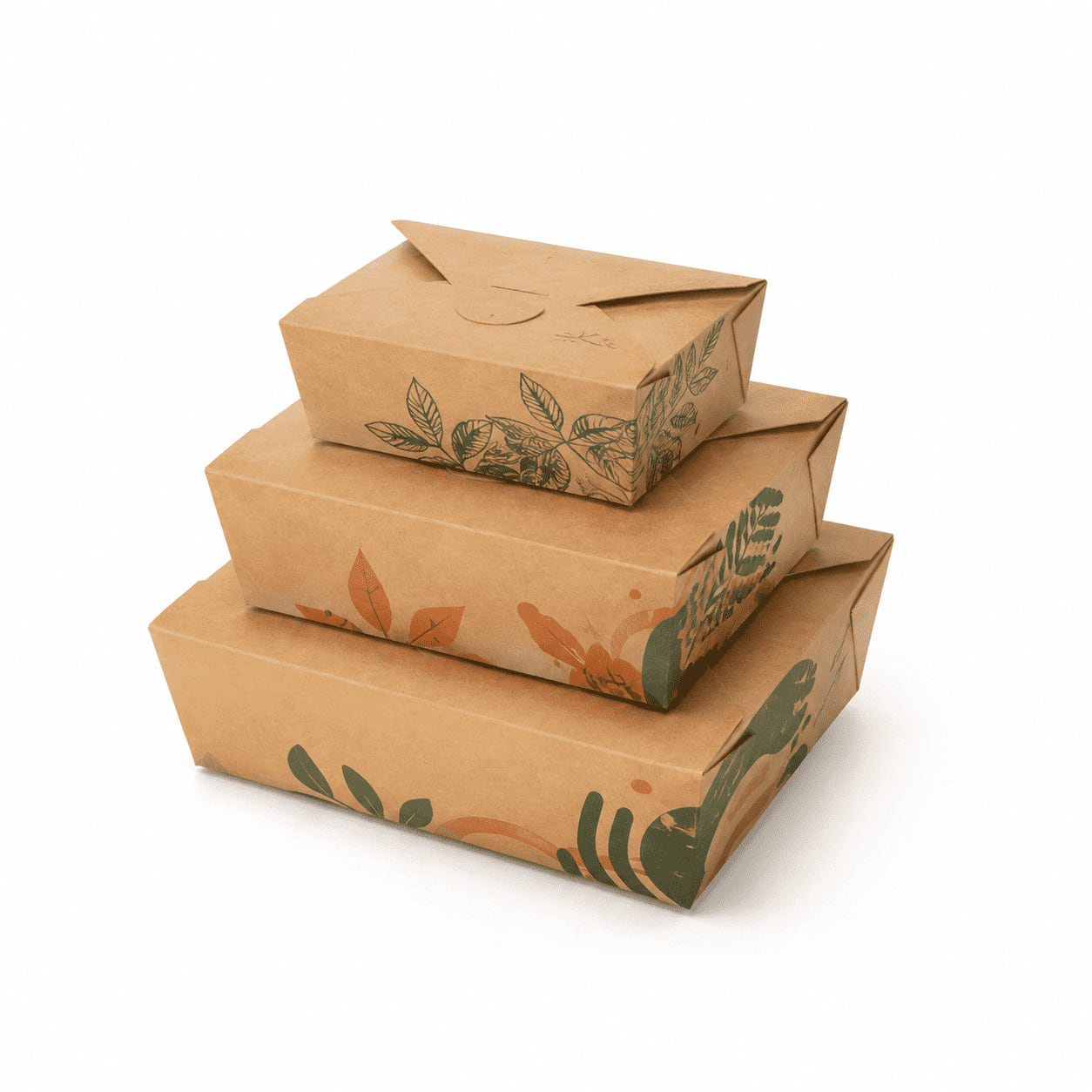
Kraft Paper Lunch Boxes
A candidate for a portioned Indonesian rice meal where a flatter pack supports the menu and service.
Review for the enquiryAssess oily accompaniments, sambal or sauce, folds and closing; use a separate suitable system for unsupported broth.
FAQs: Sourcing Paper Food Packaging in Indonesia
Can an Indonesian Small Café Order Custom Paper Cups Directly?
It can request an actual proposal once drink sizes, lids and expected consumption are clear. Compare that offer with suitable locally held stock, including storage and the work needed for added branding. Begin with a stable high-use format if several variants would create slow inventory. The right quantity and route depend on the actual supplier offer and the café’s ability to receive and replenish it.
Why Should an Indonesian Buyer Plan Packaging Stock by Destination?
A carton at a central hub may still need onward transport and allocation before another receiving network can use it. Keep stock available for local issue separate from goods waiting to move, and track matching lids with cups. Set reserves around actual demand and the confirmed route. One national total can hide a shortage at the outlet or island stock point that serves the customer.
Is BPOM Regulation 20 of 2019 Still the Reference for a New Packaging Review?
BPOM’s official registry records Regulation 11 of 2026 as in force and identifies it as repealing Regulation 20 of 2019. Have the local reviewer assess the current applicable provisions for the proposed construction and use. Registry status does not itself provide all technical limits, and an older supplier document needs an explained relationship to the current assessment.
Do Jakarta Shopping-Bag Rules Mean Every Food Container Must Be Paper?
The cited Jakarta regulation addresses shopping bags in the defined shopping-centre, self-service-store and traditional-market scope. It should not be presented as a blanket approval or ban covering all cups, lids and meal boxes. Check the actual product and operating site, then review any additional venue or customer requirements. Food-contact suitability remains a separate part of approving the chosen construction.
Does the Producer Waste Roadmap Exempt Paper Packaging from Consideration?
Do not assume a material label answers the business’s responsibilities. The roadmap covers a broader producer programme and includes paper among its referenced materials. Assign a local owner to establish what applies, then obtain controlled product information from the supplier. Compare complete packaging systems through their actual use so a proposed change preserves food performance and can be supported by reliable records.
Can One Paper Lunch Box Handle Every Indonesian Rice Meal and Sauce?
Approval should cover the actual food and packing conditions. Test oily sides, sauce contact, portion and the normal hold and delivery sequence, including the base and folds. Record any condition such as separate sauce packing. A different wet recipe or free-liquid broth needs its own assessment and may need a separate appropriate container rather than the same folding box.
What Should Be Checked on Bahasa Indonesia Packaging Artwork?
Have the nominated language owner approve wording and the relevant specialist approve technical claims. Check readable text, seams, folds, label areas and any scanning requirement on the assembled pack. Keep one numbered print-ready file, agreed colour references and the authorised release. If different accounts need variable information, consider whether a controlled label avoids unnecessary printed stock variants.
What Should an Indonesian Buyer Send to FUDE for a Useful Quotation?
Send the food or drink brief, temperatures and holding conditions, preferred formats, sizes, matching components, artwork versions and consumption by variant. Identify named receiving points, import responsibilities and local approvers. Ask for the proposed construction, sample plan, available evidence and written delivery scope. That information allows a meaningful comparison with local supply and makes the next approval steps concrete.
Send a Supplier Enquiry for Indonesia
You can include the menu, quantity by SKU and actual delivery point in your message. Enter your phone number with calling code, email and message, then choose Send Enquiry to submit directly through Zoho Forms. Your name and any product or quantity selections are optional.
Sources and Further Reading
Research checked on 22 October 2026. Official references support the local factual context; comparison frameworks and illustrative scenarios are purchasing guidance.
BPOM legal registry: Regulation 11 of 2026 on food packaging ↗
BPOM: strengthening consumer protection through updated food-packaging regulation ↗
Ministry of Environment: producer waste-reduction roadmap P.75/2019 ↗
Jakarta legal documentation: Governor Regulation 142 of 2019 ↗
Directorate General of Customs and Excise: customs registration ↗
Product images are from Fude’s existing catalogue. Sample-review scenes are AI illustrations. Confirm the proposed SKU, materials, documents, quantities and commercial terms for the actual order.
 Malaysia
 Singapore
 Vietnam