Start with the decision
The Right Pack Balances Performance, Brand and Purchasing Practicality.
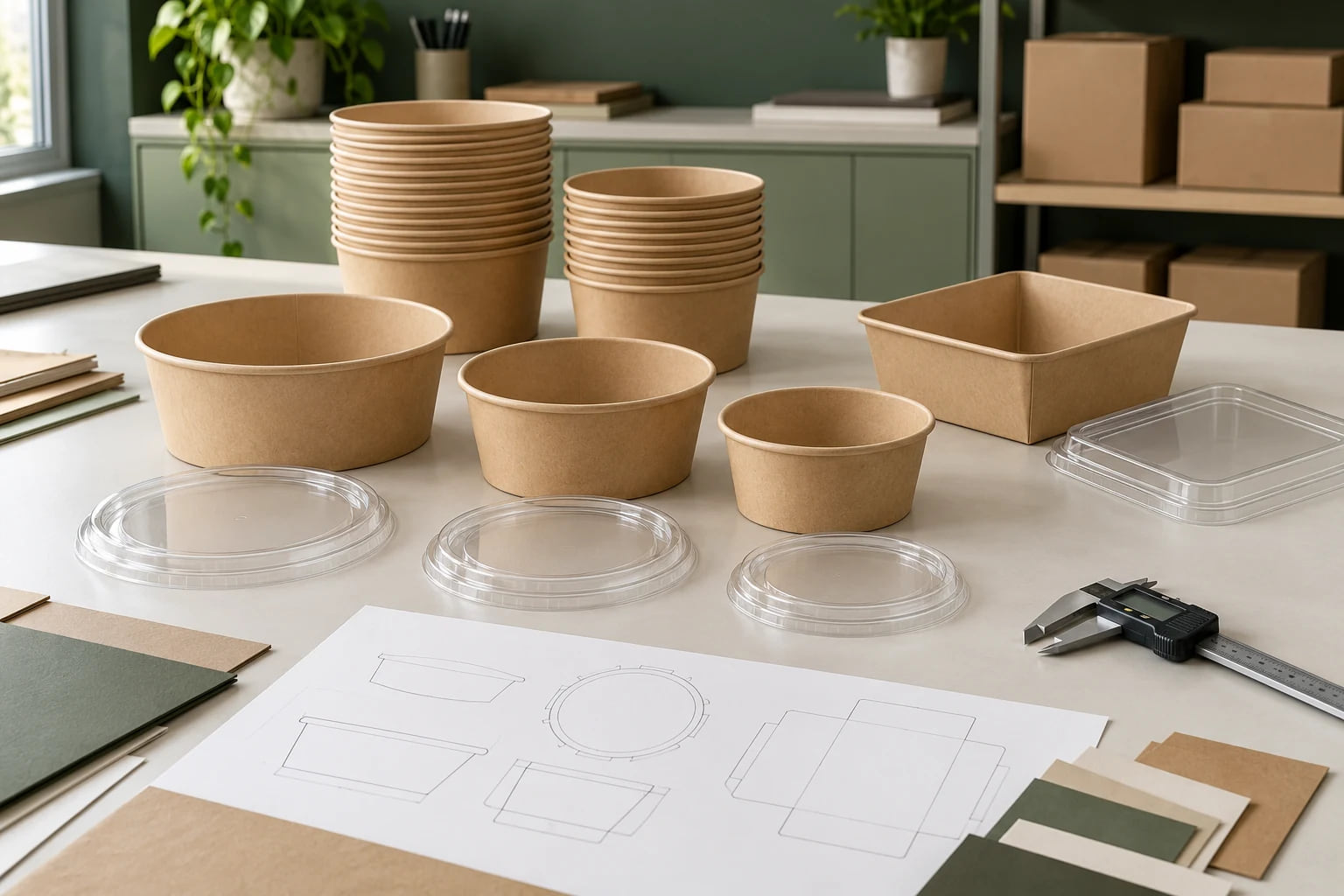
For a salad or poke business, a good starting point is a small range of paper bowls or boxes, accurately matched lids and a barrier suitable for the actual food. Then decide how much customisation the business needs.
A chain launching a permanent menu, a central kitchen filling retail salads and a distributor testing a new category may buy similar containers for different reasons. They should not automatically choose the same printed design, material route or order structure.
This guide explains what to shortlist, how to recognise a well-made pack, when custom printing is worthwhile and what to ask a manufacturer before committing to a bulk order.
Shortlist a regular and a larger meal format with their matched lids. Compare plain and printed versions of the same approved structure. Choose a more specialised material or new shape when the application or business brief justifies it.
01 / Products for this application
What Paper Packaging Does a Salad or Poke Business Need?
Build around the meals you sell and the way they reach customers. Start with the core food container and lid; add complementary items only where the menu requires them.
| Product | When to choose it | What to specify |
|---|---|---|
| Round paper salad / poke bowls | A core option for individual salads, rice-based poke and grain bowls where a wide opening suits the presentation. | Usable portion space, bowl depth, topping clearance, coating and matching lid. |
| Square paper salad boxes | Consider for chilled retail, central packing or a display with a defined shelf footprint and label position. | External dimensions, lid height, printable panels, label zone and filled-pack stacking. |
| Matched clear lids | Useful when visible ingredients are part of the display or takeaway presentation. | The exact bowl/box pairing, lid material, closure fit and intended temperature conditions. |
| Paper or fibre lid alternatives | Consider when an opaque appearance suits the brand and the complete pack meets the required use. | Material and barrier structure, fit and performance evidence; confirm actual availability. |
| Side, fruit or dessert containers | Add for side salads, fruit and desserts that form part of the same business menu. | Portions, lid combinations and ordering units. Confirm separate dressing cups if needed; do not assume every manufacturer supplies them. |
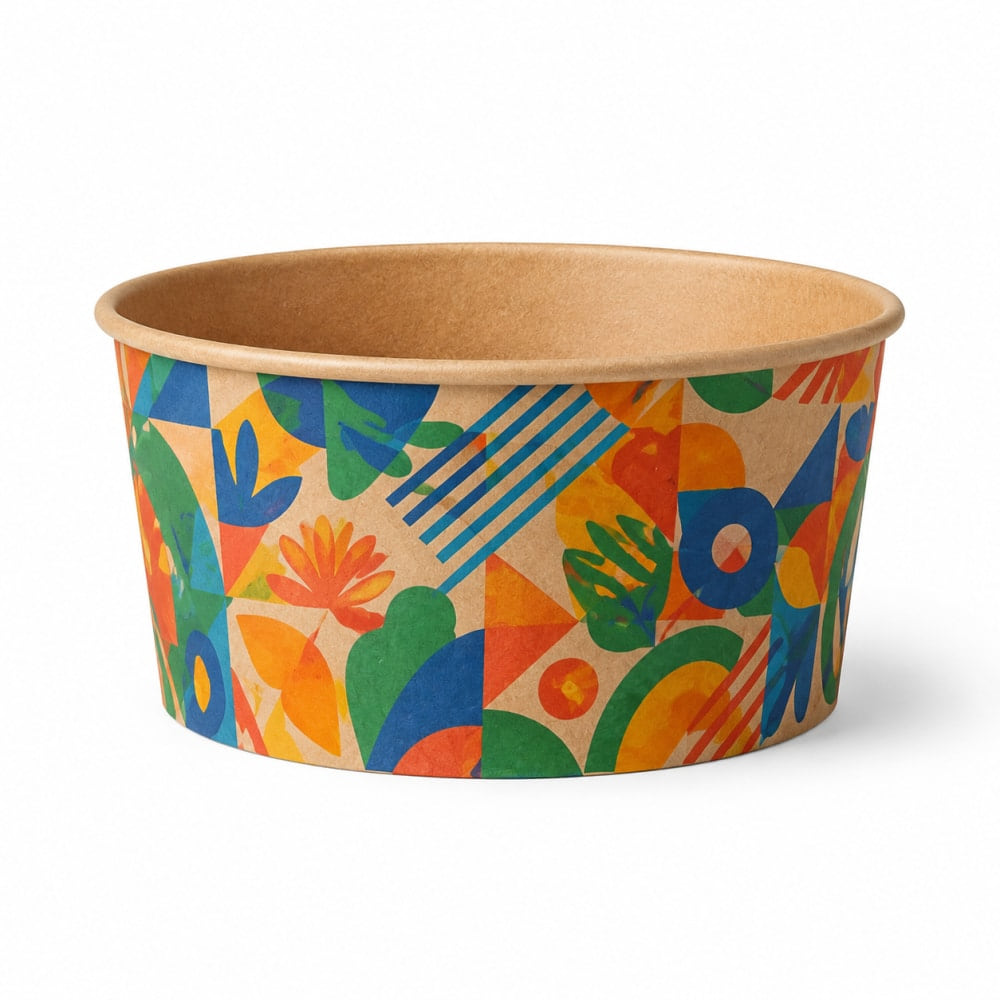
A Flexible Core Format
Test the regular and largest portions in nearby available sizes. The usable space beneath the closed lid matters more than the nominal volume alone.
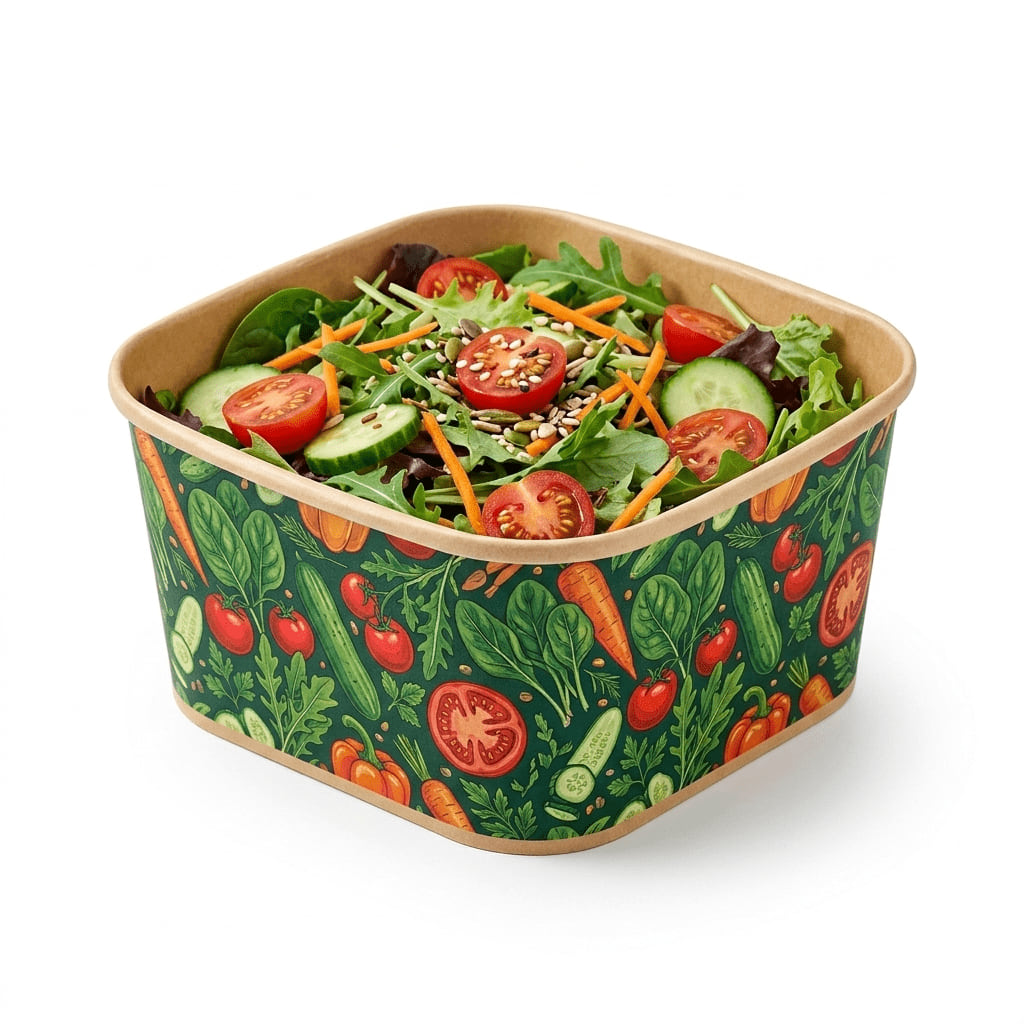
A Defined Display Footprint
Assess the complete box in the actual shelf or case layout. Include the label and the closed lid in the comparison.
For the first shortlist, cover the main meal portion and a genuinely different larger or smaller portion. Add sizes only where the menu needs them. A simpler range can make purchasing and lid matching easier, provided it still fits the food.
02 / Judge the finished pack
What Makes Paper Food Packaging Good?
Look at how the complete container behaves, not just how thick the board feels or how attractive the print looks. A heavier paper specification alone does not establish a better pack.
The Bowl and Lid Fit Consistently.
The rim should be properly formed and the intended lid should close evenly. Check several samples, then repeat after filling and normal handling. Compare the exact combination you intend to buy.
The Barrier Suits Your Actual Menu.
Use the wettest or oiliest dish, not just a dry display salad. Check for staining, softening and leakage under your intended filling, holding and delivery conditions.
The Filled Pack Stays Usable.
Evaluate wall stiffness, the base and seams, topping clearance and loaded stacking. A container that looks firm when empty may behave differently with a heavy rice-based meal.
The Finish Is Clean and Repeatable.
Review edge formation, cleanliness, odour, visible print defects and artwork placement. Agree the approved sample and the acceptance criteria that production will follow.
The Product Is Supported by Specific Information.
A useful supplier can describe the board, coating, lid and intended use, provide the relevant product information and explain how the ordered pack is identified. Generic “food-safe” or “eco” wording is not a complete specification.
Fill competing samples with the same dish, portion and dressing. Use the same holding time, temperature, packing and carrying routine. Record your observations before comparing quotations.
03 / Stock or custom?
Should Your Business Choose Plain or Custom Printed Packaging?
Choose the level of customisation that matches the stability of your menu, the role of your brand and the quantities you can order by size and design.
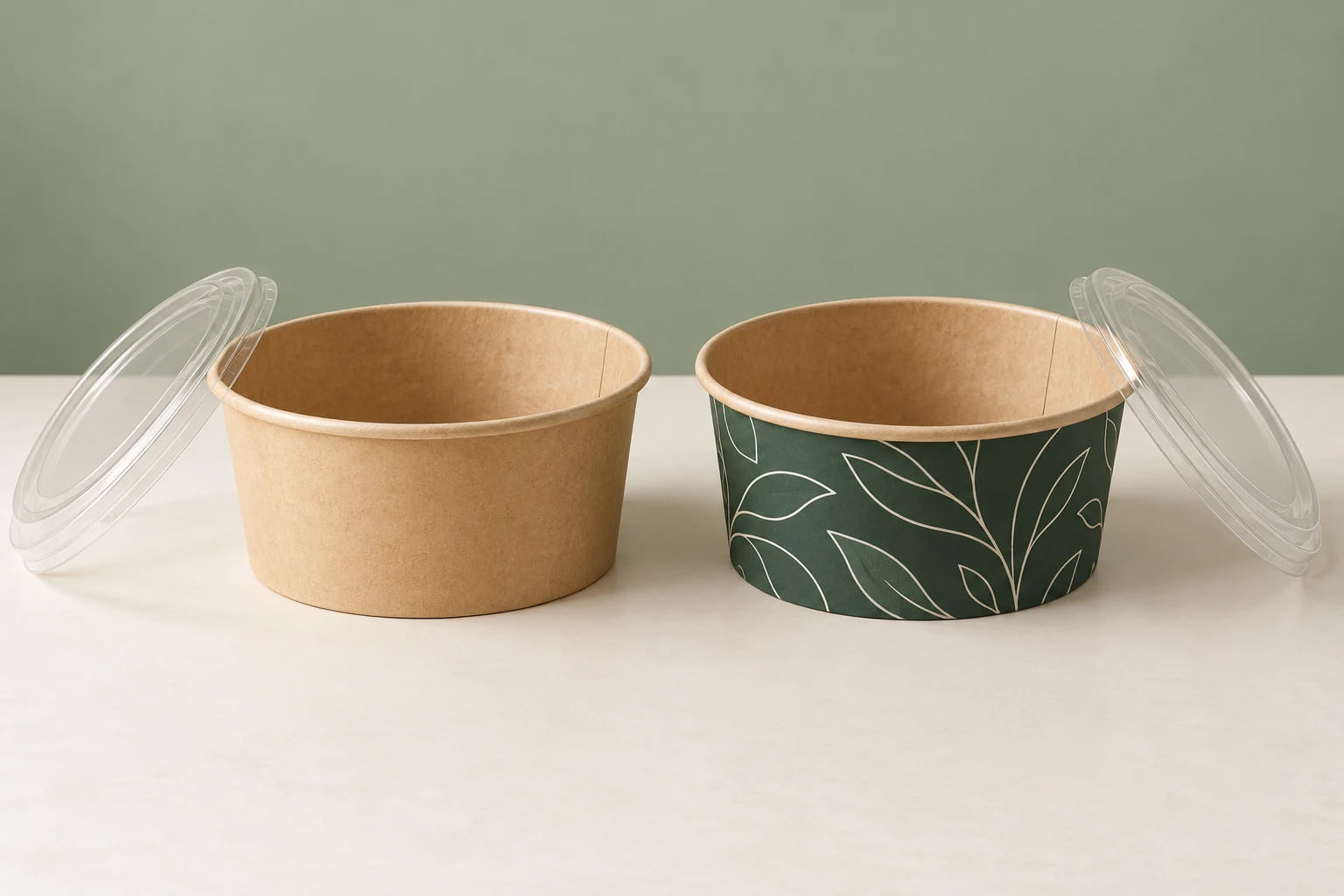
| Option | Useful for | Business benefit | Trade-off to review |
|---|---|---|---|
| Plain standard packaging | Menu trials, changing ranges or a distributor’s shared stock. | One neutral design can serve several products or customers; no printed artwork approval. | Limited brand presence. Ask about stock availability, order minimums and the need for labels. |
| Plain packaging + branded labels | Pilot launches, seasonal menus or several small brand programmes. | A common container can carry different brand or menu information. | Include label cost, application work and label behaviour under condensation. |
| Custom print on an existing format | A stable menu, chain identity or repeat private-label orders. | The pack itself carries the brand consistently across locations and deliveries. | Artwork approvals, quantity per design, printed inventory and the process for brand changes. |
| New structure or dimensions | A defined production, display or portion requirement that standard formats cannot meet. | A format developed around that functional requirement. | Development feasibility, tooling if applicable, trials, cost and order commitment. A printed logo does not require a new structure. |
What Custom Printing Can Do for an Enterprise
Keep the Brand Visible Beyond the Store.
Packaging remains a physical brand touchpoint through delivery, office lunches and retail display. Use a consistent logo, colour system and design rather than treating each size as a separate visual project.
Give Multiple Outlets One Approved Identity.
Headquarters can approve a coordinated design across bowl and box sizes. Stores and distribution partners then order against named artwork versions.
Move Fixed Brand Graphics onto the Pack.
A printed design may remove a separate branding-sticker step if that is how the business currently brands its packs. Keep variable order, ingredient or batch information on the appropriate changing label.
Support a Differentiated Private-Label Range.
Distributors and retail brands can build a recognisable packaging offer. The value depends on the commercial programme; custom print does not automatically establish better food performance or guaranteed sales growth.
Our Buying Recommendation
Testing a concept? Start with an approved standard format, plain or labelled.
Running a stable chain or private label? Compare custom print on the same existing format.
Need a different shape? First document the requirement a standard format cannot meet, then request a development proposal.
04 / Choose the material system
Compare the Paper, the Barrier and the Lid Separately.
“Kraft”, “white”, “PE-lined” and “compostable” describe different characteristics. Start with the food-contact requirement, then assess the appearance and the intended collection route.
Kraft or White Paperboard?
Natural kraft is a useful starting point when the desired appearance is a natural paper look. White board is worth comparing when the artwork needs a white background or a different visual finish. Neither colour proves better strength, a better moisture barrier or a better disposal outcome. Compare the finished structure and a printed sample.
| Barrier route | Why shortlist it? | What to check |
|---|---|---|
| PE-coated paperboard | A conventional reference option to evaluate for moisture and grease contact in salad and poke packaging. | Exact coating and board, intended food-contact conditions, application sample and local collection options. Paper appearance does not mean plastic-free.[1] |
| PLA-lined paperboard | Consider where the project calls for a specifically certified compostable pack and has an appropriate collection route. | Finished-product certification, matching lid, use conditions and the relevant composter’s acceptance. A bio-based lining alone does not certify the whole pack.[2][3] |
| Aqueous / dispersion barrier | Consider where a verified barrier design supports the programme’s material and end-of-life requirements. | Coating formulation, resistance to the actual dressing and holding time, plus evidence for any recyclability, compostability or plastic-free claim. “Water-based” alone does not establish those claims.[4] |
| Uncoated paper appearance | May suit some dry-food uses; appearance is not a material specification. | Do not select an unverified, uncoated structure for a wet or dressed salad. Ask which barrier is actually present. |
Use a proven moisture-and-grease barrier as the baseline sample. Compare PE-coated paper with available alternative structures on the same food test. If a certified disposal route is a project requirement, make it a selection condition before approving the design—not a marketing claim added later.
The Lid Needs Its Own Decision.
For ingredient visibility, evaluate a clear lid. Suppliers may offer different clear-lid polymers, such as PET or PP, with different intended uses. Confirm the specific material and temperature conditions; a lid selected for a chilled salad is not automatically a hot-fill or reheating lid. If choosing a paper or fibre lid, check the barrier and fit as part of the complete pack.[2]
These are material-selection options for the guide. They are not a statement that Fude supplies every coating or lid variant; ask for the current specification for the selected format.
05 / Shortlist the right manufacturing partner
How Do You Choose a Good Custom Paper Packaging Manufacturer?
Choose a manufacturer that can explain the product, turn your requirement into a clear proposal and support a repeatable approved result. Use the same questions with every shortlisted company.
| Check | Ask for | A useful response looks like |
|---|---|---|
| Relevant product experience | Comparable bowl/box formats and an explanation of which manufacturing steps are in-house or outsourced. | A format-specific discussion, clear scope and a factory review or other evidence appropriate to your sourcing process. |
| Material transparency | Board, barrier, lid and intended-use information for the proposed product. | A named structure and relevant finished-product information, not only generic material brochures. |
| OEM print control | Dieline, artwork requirements, proofing method and approval sequence. | A clear reference for colour, position and version, plus how changes are authorised. |
| Sample and bulk consistency | Samples, inspection approach, packing information and how production follows the approval. | An agreed specification, retained reference and a way to identify and report batch issues. |
| Commercial clarity | Quote by size and artwork, lid inclusion, setup charges, carton details and delivery scope. | Comparable line items and explicit assumptions rather than one unclear unit price. |
| Communication and support | A responsible contact, confirmation of decisions and an escalation path. | Answers specific to your project, written approvals and a defined response when something changes. |
A bowl-only price and a bowl-plus-lid price are not equivalent. Neither are quotes with different materials, printed quantities or shipment responsibilities. Resolve the specification before deciding which proposal offers better value.
06 / Communicate the requirement clearly
What Should You Tell the Manufacturer—And What Should You Clarify?
A clear first enquiry helps the supplier recommend products and prepare a meaningful quotation. It does not need a finished technical specification, but it should explain the business and application.
Describe the Food and Service.
Provide the menu, portion and dressing, fill temperature, intended holding conditions and how the order is packed or delivered. A photo of the assembled meal is useful.
State the Range and Quantities Separately.
List the expected amount by size, lid and printed design. Distinguish demand forecasts from the first order, and give the planned reorder cycle.
Explain What “Custom” Means.
Say whether you want a logo on an existing format, a new printed design, a different material or a new shape. Supply vector artwork and colour references when available.
Ask for the Complete Quotation Basis.
Confirm lid inclusion, units per carton, plain versus printed minimums, artwork/setup charges, sample arrangements, production timing and the agreed delivery point.
Approve the Pack, Not Only the Picture.
Review the physical product and printed proof as appropriate. Record the accepted specification, artwork version and any agreed performance criteria before production.
Check the Scope of Documents and Claims.
Ask which exact product and structure the supplied information covers. Discuss destination-market requirements and review any certification or environmental artwork claim before approval.
A stronger first enquiry
“We are sourcing paper packaging for a salad and poke chain. Please recommend a regular and a large bowl with matched lids, and quote plain and custom printed versions of the same structure. Our menu includes dressed salads and rice-based poke; we will provide portion photos and intended holding conditions. Quantities by size and design, the destination and our launch window are listed below. Please confirm the material, minimum order basis, samples, artwork approval and carton configuration.”
07 / A supplier to consider
Where FUDE Fits Your Salad and Poke Packaging Brief.
Fude is worth including in your shortlist when your business needs paper salad bowls or square salad containers alongside a discussion of wholesale supply and custom printing.
Its existing catalogue includes round paper salad/poke bowls and square salad containers, and its service information offers OEM/custom packaging support. That gives your team a relevant starting point for comparing a plain range with a branded version.
Use the same evaluation standard described above: request the available sizes, exact material and lid, samples, print options, quantity basis and delivery scope for your project. Confirm alternative coatings or specialist uses individually.
Discuss Your ProjectBuyer questions
Common Decisions Before Ordering.
Is Custom Packaging Always Better than a Plain Stock Range?
No. A plain or labelled range can be a better starting point for a changing menu, market test or shared distributor stock. Custom print becomes more relevant when brand consistency and repeat ordering justify the artwork, quantity and inventory commitment.
Do I Need a New Mould or Structure for a Branded Bowl?
Custom printing can use an existing format if the supplier offers that combination. A new shape is a separate development decision. Ask for the existing-format option first, then compare development only if there is a functional reason to change the structure.
Does Kraft Paper Mean the Pack Is Plastic-Free or Compostable?
No. Kraft describes the paper appearance or substrate, while the coating and lid are separate parts of the material system. Check the finished pack and evidence for the claim you intend to make.
How Can I Judge the Quality Before a Wholesale Order?
Compare samples using the same food and conditions, inspect the exact lid fit and construction, review a printed proof where relevant and record the approved specification. Agree how the bulk order will be checked against that reference.
Turn the guide into your enquiry
Compare Plain and Custom Options for Your Business.
Enter your phone number with calling code, email and message, then choose Send Enquiry to submit directly to FUDE through Zoho Forms. Your name is optional.
Material Reference Notes & Further Reading
Metsä Board: food-service boards and barrier grades ↗
Material examples inform the board/barrier comparison; they are not a statement about Fude’s material sourcing.
BioPak: paper bowl and lid material options ↗
Examples of PLA-lined/aqueous bowls and different lid materials. No BioPak performance or certification is attributed to Fude.
BPI: verify a product’s certification scope ↗
Certification is checked for the relevant product. Confirm the intended collection and treatment route separately.
Stora Enso: dispersion barrier options ↗
Performance and material claims depend on the specific coating and finished structure.
Continue Your Buying Decision