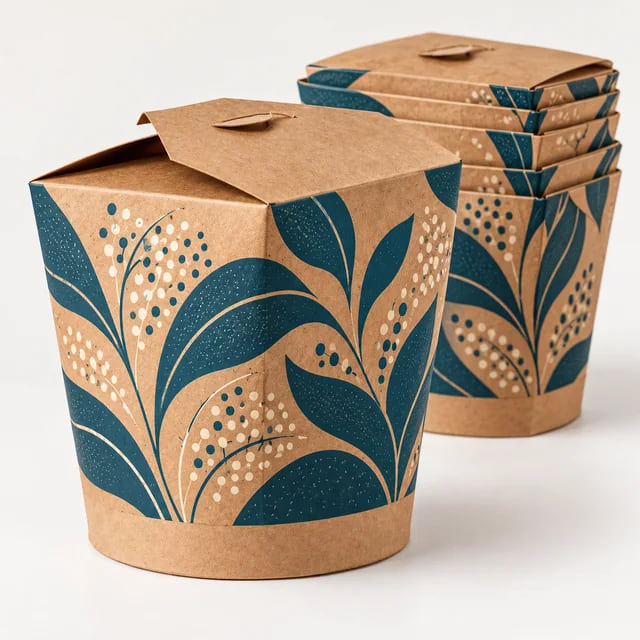
 Specification · bulk OEM
8oz Printed Noodle Boxes — Bulk Restaurant Supply
Custom-order MOQ: 50,000 / 100,000 pcs by configuration.
Explore the Buying Specification ↗
Compare compact portions after resolving the 8oz versus 12oz labeling conflict. Keep working fill and the actual closure separate from nominal oz.
Custom-order minimums: 50,000 or 100,000 pieces, confirmed by specification and artwork.
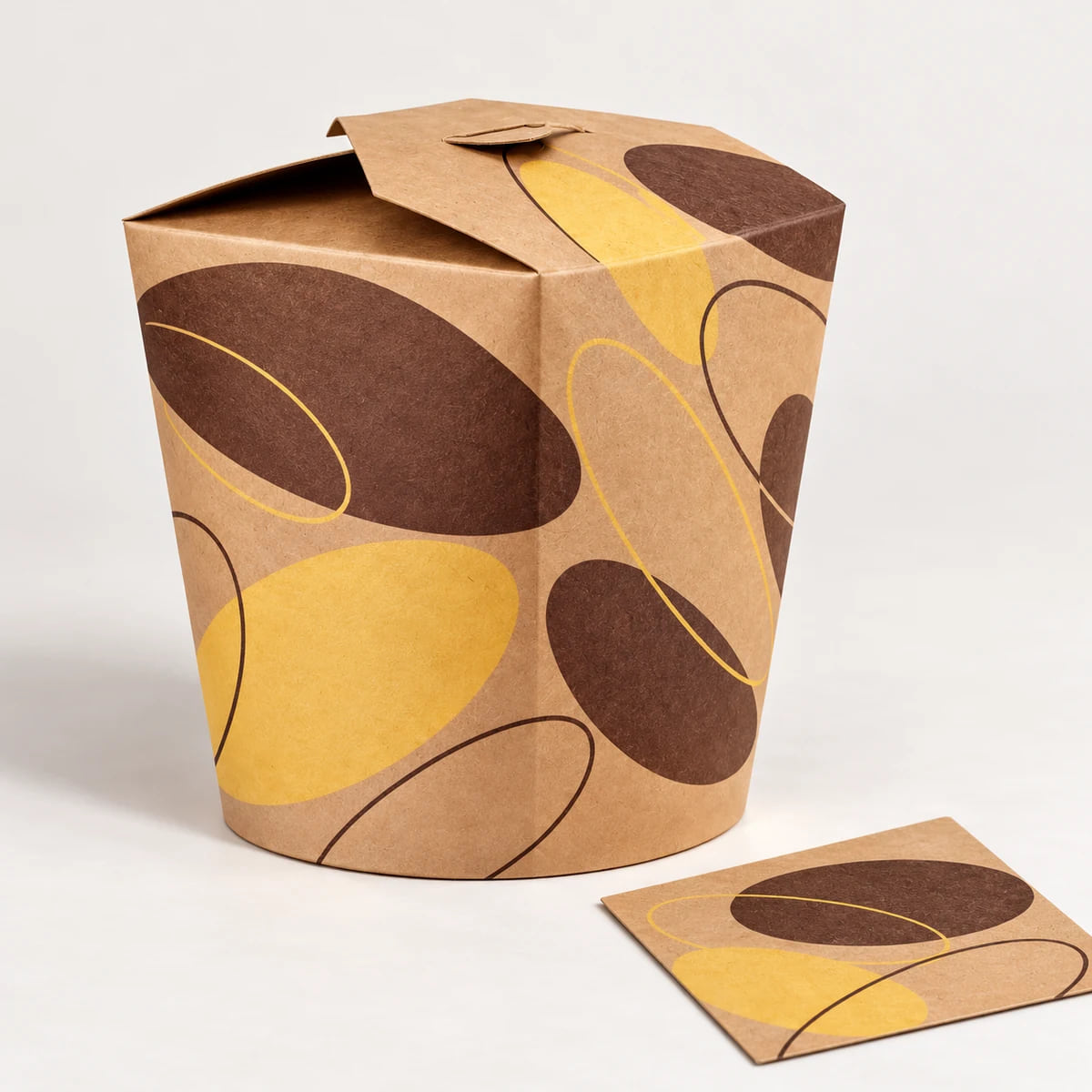
Application pages organize existing products around the buyer’s use. They are not additional physical SKUs or retail multipacks.
2 product buying pages
Specification · bulk OEMCustom-order MOQ: 50,000 / 100,000 pcs by configuration.
Explore the Buying Specification ↗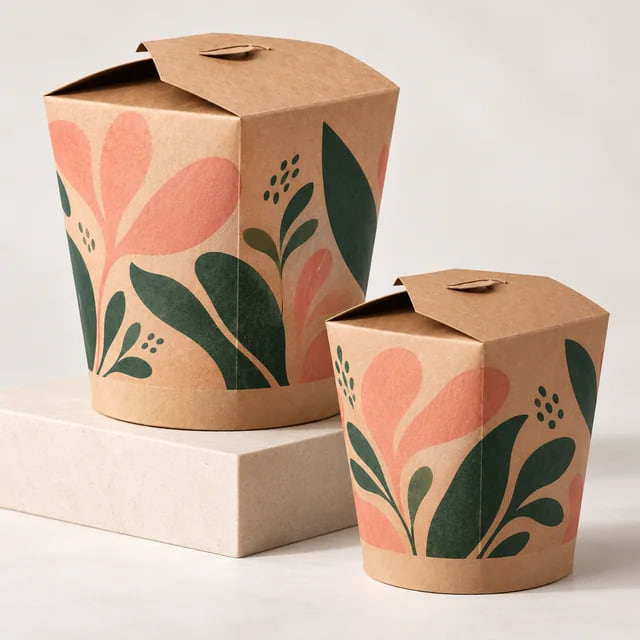 Specification · bulk OEM
Custom-order MOQ: 50,000 / 100,000 pcs by configuration.
Explore the Buying Specification ↗No matching page. Try a physical product, buyer type or application.
Compare compact portions after resolving the 8oz versus 12oz labeling conflict. Keep working fill and the actual closure separate from nominal oz.
Compare the opening, base and depth with your noodle portion, including toppings and utensil access.
Review the actual folded or covered closure and its behavior during filling and carrying. Confirm which structure is being quoted.
State sauce or broth quantity and temperature. Require a product-specific evaluation before using soup, leak-proof or spill-proof claims.
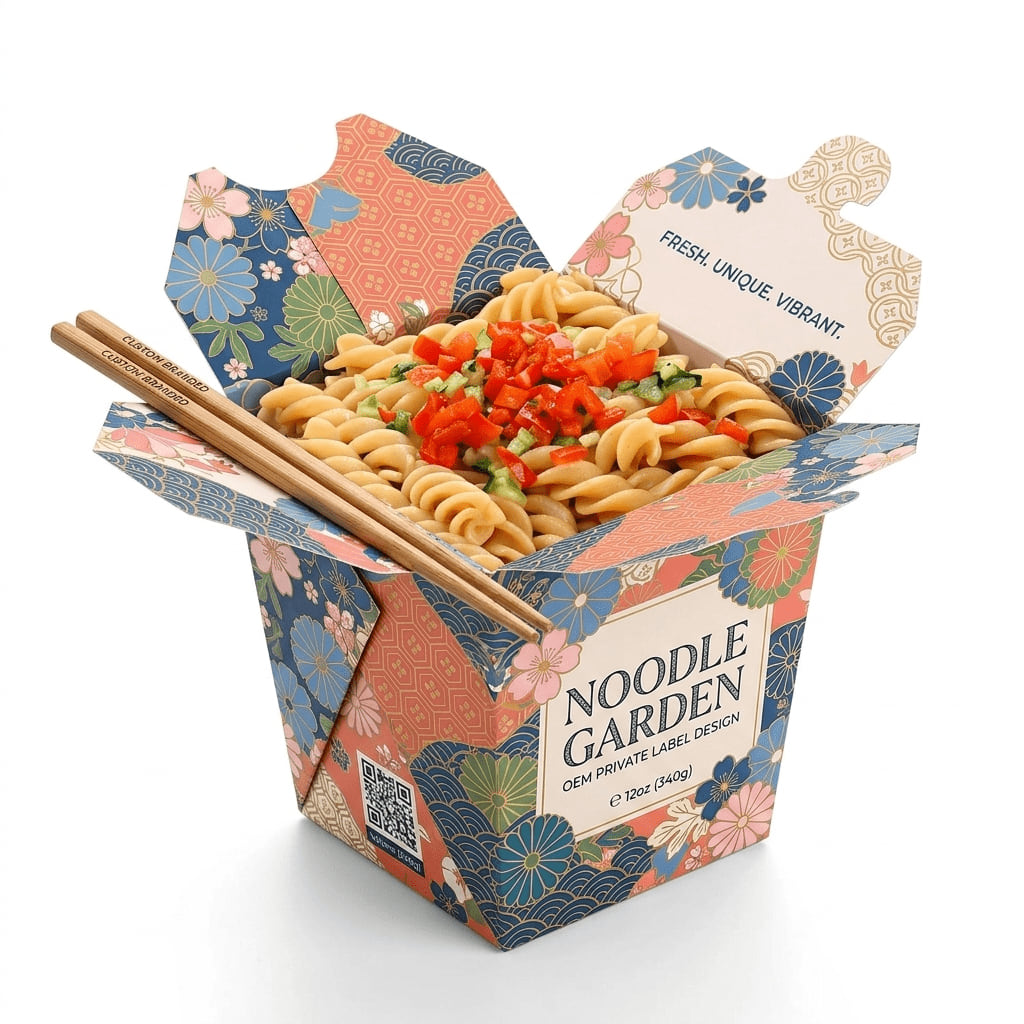
Compare the source catalog references, then approve the current drawing, material build and packing with your quotation. Dimensions are preserved in their original field order.
| Model | Material | Size | Packaging | Case size | Inner packing |
|---|---|---|---|---|---|
| 235g + 18PE | 7.5 × 6 × 6.2 | 400 | 45 × 22 × 30 | 50 bags | |
| 255g + 18PE | 9.5 × 8 × 8.5 | 400 | 48 × 25 × 33 | 50 bags |
*The column labels and values follow the source first table. Paper labels such as “300g” are not reinterpreted as a verified total material build. “50 bags” is not rewritten as 50 pieces per bag.
One source table lists 8/16/26/32oz while later pages describe 12/16/26/32oz. The 8oz row is displayed as a catalog reference with the conflict explicit. It is not renamed 12oz or equated to a metric working volume.
Uses the selected reference row. Cartons round up; the order quantity and MOQ are confirmed separately. Excludes pallets, loading gaps, freight and any separately packed lids. Volume is shown only where the source explicitly labels carton dimensions in cm.
Compare the physical packaging decision and complete served-pack cost. This is a construction and procurement comparison, not a certified performance ranking.
| Buying question | 8oz Printed Noodle Boxes — Bulk Restaurant Supply | 16oz Printed Noodle Boxes — Bulk Restaurant Supply | Approval decision |
|---|---|---|---|
| Size as listed | 7.5 × 6 × 6.2 | 9.5 × 8 × 8.5 | Confirm the dimension order, units and actual usable space |
| Source material label | 235g + 18PE | 255g + 18PE | Confirm full paper, lining and any separate parts |
| Pieces per carton | 400 | 400 | Review storage and carton handling per configuration |
| Case size as listed | 45 × 22 × 30 | 48 × 25 × 33 | Check source units and current printed packing |
| Portion and use | Small noodle-box label reconciliation | Compact regular noodle portion | Compare a filled sample with the actual food or drink |
Sample review first. Confirm the real noodle portion, liquid content, closure and carrying period before agreeing to a bulk production run.
Use the actual menu, filling process and handling route to prepare a custom-order brief. These are intended buying scenarios, not named customer endorsements.
Record the cooked portion, sauce load and closing routine. Approve the filled box and artwork before repeating a multi-location order.
Define carrying time, bag orientation and the real liquid content. Review a physical sample; the catalog name is not a delivery test.
Choose the portion range and separate each artwork quantity. Keep nominal oz labels and working food volume distinct in resale information.
Choose an application to include it in the inquiry.
Fude Packaging is a paper food packaging manufacturer in Shandong, China. Review the physical pack, print file and packing together. Custom-order minimums are 50,000 or 100,000 pieces, confirmed per specification and artwork.
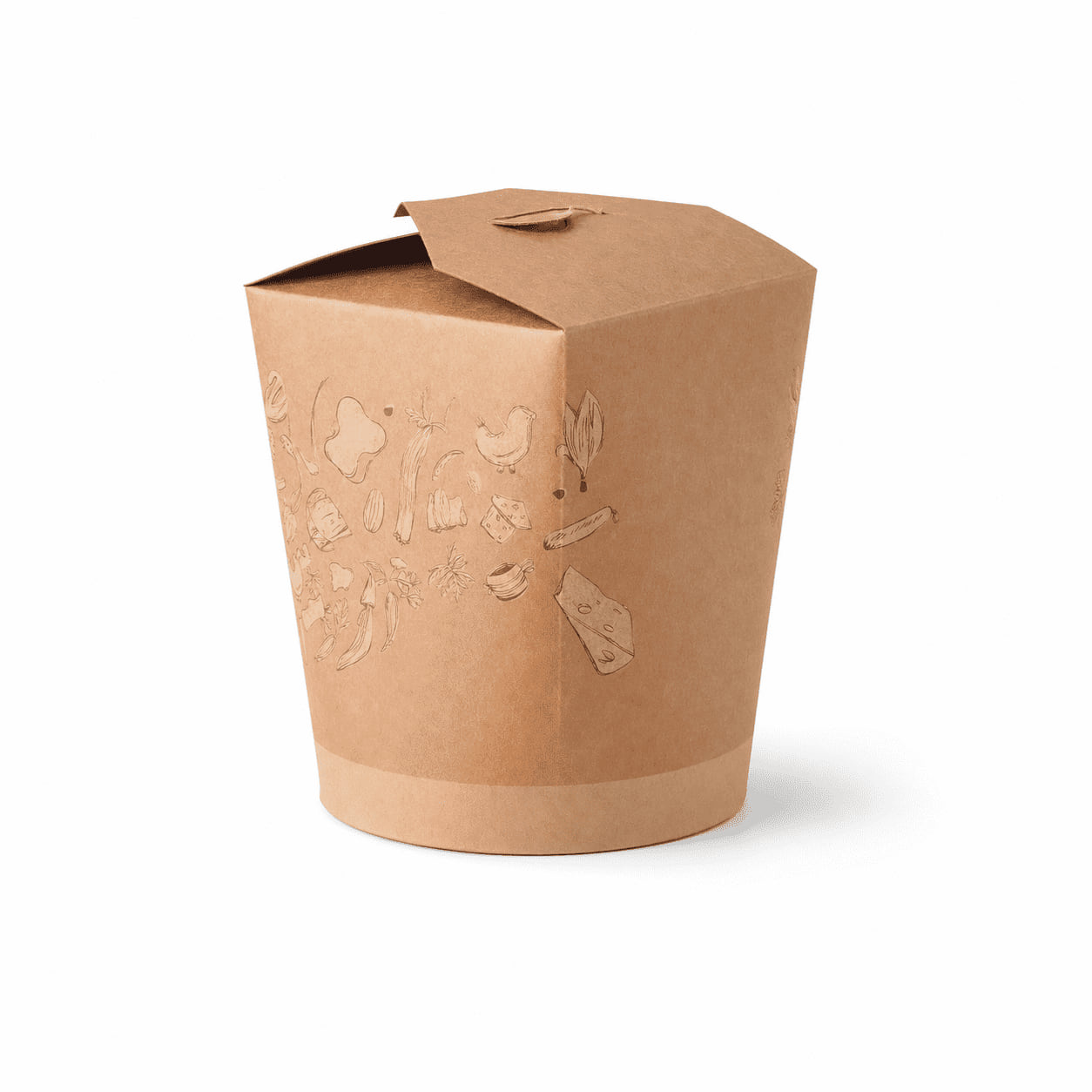
Existing catalog family design reference. Approve the exact model, construction, lid or closure and artwork sample. Printing methods and timing are confirmed in the quotation.
Review the tapered panels, fold lines and seam. Agree which panels remain visible after closing.
State the food, sauce or liquid quantity, fill temperature and hold time. Confirm the quoted closure and barrier rather than accepting a generic soup claim.
Resolve the source 8oz versus 12oz labeling before approving a size. Keep size, artwork, packing and carton references in the same order record.
Market notes help prepare a purchasing brief. They do not represent local inventory, an overseas office or automatic regulatory compliance.
State the exact country and state or province, nominal size and required working volume. Share importer document requests and the port or postcode. Confirm oz labels against the actual intended use.
For this selection, also confirm the real noodle portion, liquid content, closure and carrying period.
Name the specific importing country and artwork languages. Share working-volume needs and product-specific food-contact document requests. Review any environmental wording against the quoted construction.
For this selection, also confirm the real noodle portion, liquid content, closure and carrying period.
State the country and state or region, portion or working fill and lid / closure needs. If disposal claims are requested, identify the wording, supporting evidence and intended collection route.
For this selection, also confirm the real noodle portion, liquid content, closure and carrying period.
Specify the destination country and port. Share English or Arabic artwork needs, importer document requests and the storage or distribution route. Agree packing and delivery terms in the quotation.
For this selection, also confirm the real noodle portion, liquid content, closure and carrying period.
Select a destination to include it in the inquiry.
A catalog table starts the comparison. Approve the actual proposed sample and drawing for the food, artwork and destination requirements.
Evaluate the real noodle portion, liquid content, closure and carrying period. Agree the test method and acceptance criteria for the proposed sample.
Check actual dimensions, construction, lid or closure and any partitions as a complete pack.
Review color, print position, marks and packing against a controlled sample and artwork version.
Practical selection and custom-order questions for small noodle boxes — custom restaurant supply.
Compare compact portions after resolving the 8oz versus 12oz labeling conflict. Keep working fill and the actual closure separate from nominal oz.
One source table lists 8/16/26/32oz while later pages describe 12/16/26/32oz. The 8oz row is displayed as a catalog reference with the conflict explicit. It is not renamed 12oz or equated to a metric working volume.
Custom-order minimums are 50,000 or 100,000 pieces, depending on the specification and artwork. Confirm the applicable minimum separately for each size, material and design; do not assume a combined total across SKUs qualifies.
List every required part in the inquiry. Inclusion, compatibility, material and packing are confirmed separately for the actual configuration. A pictured cover or similarly named model does not guarantee interchangeability.
Only approve claims supported by the exact material, product evidence and destination conditions. Kraft or paper appearance does not prove recyclability, compostability, heat resistance or leak performance.
Ask which existing or custom samples can be supplied, what the charges cover and what the sample represents. Agree the drawing, artwork proof and acceptance process before bulk production.
List quantity by model and artwork. Include the actual food or beverage, closure, destination and arrival needs so the team can review the specification.
Reference selection; specification and applicable MOQ to confirm.
Continue by product evidence, application or procurement program. The same physical specification may support more than one menu.
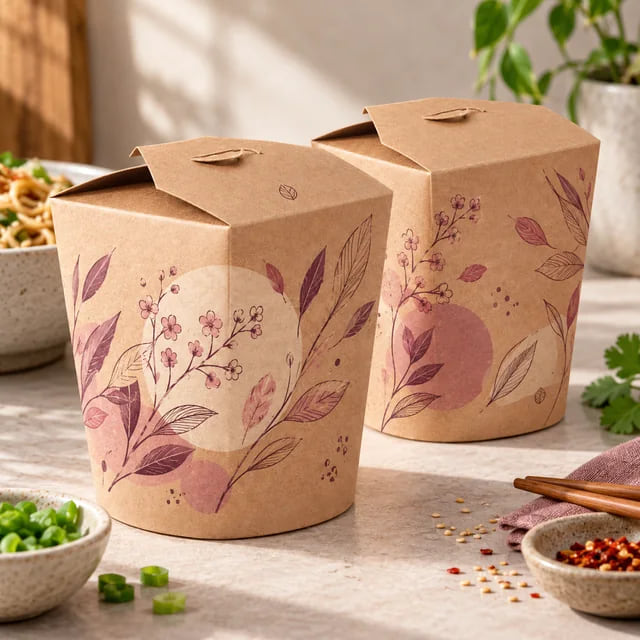 Product × application · custom OEM
Noodle-brand headquarters and restaurant-packaging importers
Explore the Buying Specification ↗Move from your buying brief to the product formats and specifications worth reviewing.