
Three Distinct Buying Decisions
Choose the Guide That Matches Your Project.
Separate open-lid beverage programmes from sealing-line projects in the first supplier enquiry.
Hot Beverage Paper Cups: Brand Sourcing Guide
A tea or cocoa brand needs cups selected around the drink it actually serves. A small tea, a large cocoa with toppings and a drink carried from a kiosk create different fill and handling requirements. Purchasing should compare complete cup-and-lid combinations before choosing a common brand design.
Read the Guide ↗Business Buying GuideJuice Chain Paper Cups: Annual Buying Guide
Juice chains should build a cold-drink range around the beverage mix and the way stores close and identify orders. Annual volume is useful for planning, but the quotation still needs separate quantities for each size and design. A cup used for a quick counter sale should not silently become a long-hold bottled-juice substitute.
Read the Guide ↗Business Buying GuideSealable Paper Cups: Beverage Line Validation Guide
A sealed-drink project starts with the filling line and closure system. An ordinary paper cup is not automatically compatible with a film sealer. The buyer needs a candidate cup, sealing material and equipment settings that can be assessed together before ordering printed stock.
Read the Guide ↗01 / Buyer guide
Start with the Relevant Product Family.
Product starting point
Hot Beverage Paper Cups
For tea and cocoa, define the serving temperature, usable fill and the intended drinking lid or handling arrangement.
View the Relevant Product Range ↗Product starting point
Cold Beverage Paper Cups
For juice and iced drinks, include the outside condensation and the actual filling-to-consumption period in sampling.
View the Relevant Product Range ↗Product starting point
A Separately Qualified Closing System
If the business uses film sealing, identify the equipment, rim geometry and seal materials before selecting the cup. A sip-lid cup is not automatically sealable.
View the Relevant Product Range ↗02 / Buyer guide
What Should Your Team Evaluate?
| Quality factor | Practical review |
|---|---|
| Actual beverage contact | Use the intended drink, not water alone, for the project’s contact and hold conditions. |
| Condensation performance | Check exterior softening, print rub and grip after the agreed cold-service period. |
| Closing consistency | Evaluate the specific sip lid or approved sealing process and inspect the whole rim. |
| Usable portion | Include ice, foam or toppings when checking headspace and the finished serving. |
03 / Buyer guide
Decide How Much Customisation Is Useful.
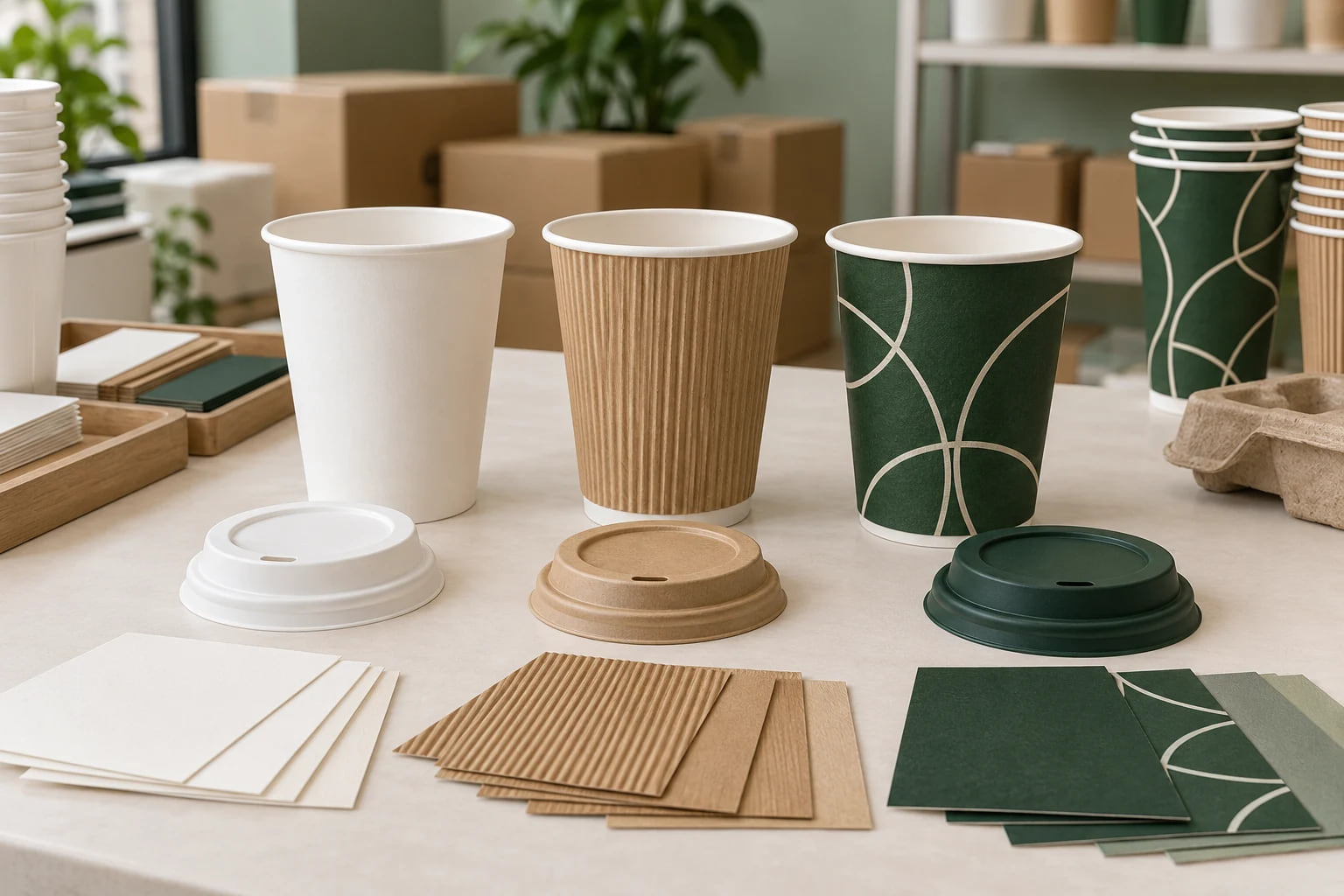
Start with an appropriate physical pack. Compare plain formats for flexibility, buyer-applied labels for changing identity, and printed existing structures for stable recurring brand demand. Treat new geometry as a separate functional development decision.
One Identity Across Drink Families
A coordinated design can make hot and cold paper-cup programmes visually related without forcing an identical material specification.
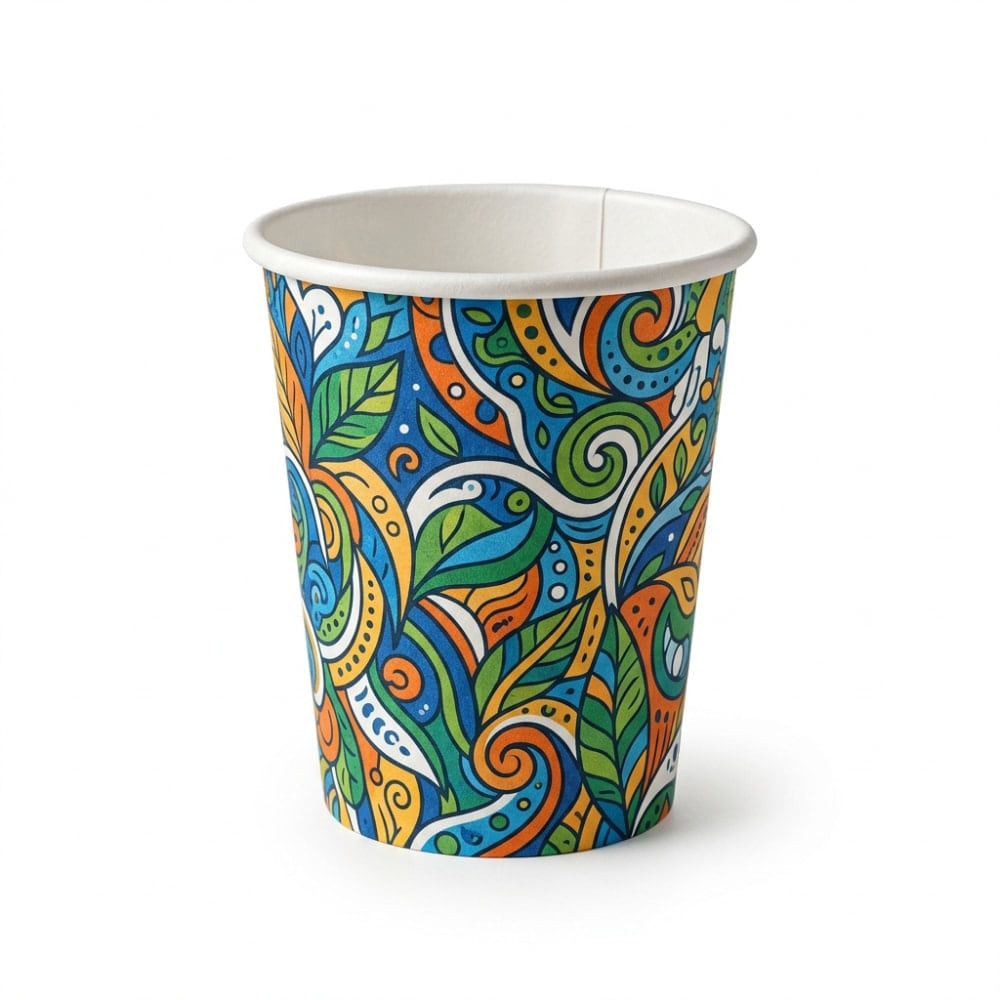
Useful Fixed Menu Graphics
A print design can carry permanent brand information while leaving room for variable drink identification.
Controlled Franchise Ordering
Approved print versions help procurement distinguish the correct cup when several brands or regions are involved.
04 / Buyer guide
Keep the Material Discussion Specific.
| Pack element | Selection priority |
|---|---|
| Paperboard and barrier | Select a finished structure for the actual hot or cold drink; identify the lining and intended conditions. |
| Natural versus white print surface | Use printed samples to compare colour appearance rather than treating a white or kraft surface as a performance rating. |
| Sealing interface | For sealed drinks, the cup surface and seal film must be qualified together on the intended process. |
| Alternative material claims | Ask for product-specific evidence and the relevant collection route before specifying a disposal statement. |
Film-sealed beverage projects require application validation. This guide does not represent Fude’s paper cup range as automatically compatible with any sealing machine.
Use the scenario guides above for actionable comparisons and sample checks. Confirm any offered alternative against the exact finished pack and intended conditions.
05 / Buyer guide
Bring the Right Questions to the Manufacturer.
| Question | Evidence to request |
|---|---|
| What conditions support the recommended cup? | Request the intended drink, temperature and contact-time scope for the proposed structure. |
| Can printing and moisture be evaluated together? | Ask for a representative finished sample for condensation and rub assessment. |
| What is required for a sealing trial? | A credible response identifies equipment and process inputs rather than promising universal film compatibility. |
A relevant manufacturer to approach
Discuss This Programme with FUDE.
Use the linked product catalogue as a starting point and Fude’s custom-packaging service for a project-specific discussion. Provide the menu, portion photos, intended use, quantities by size/design and delivery point.
Ask for available references, matched components, samples and an itemised proposal. Special-use candidates remain subject to exact-pack and buyer approval.
Contact FUDE ↗