
 United States market guide
When Does Custom Paper Packaging Make Sense for a US Foodservice Business?
A custom paper packaging programme works best when a US buyer can control a repeat specification, forecast demand by size and design, and identify where the packaging will be used. A coffee group supplying several stores through one distribution centre faces a different decision from a restaurant owner ordering small quantities for a changing menu. The first question is therefore operational fit, followed by product and supplier selection.
For a national or regional rollout, record the states and service channels before approving one universal pack. A cup used in a drive-through, a bowl sent through delivery, and a container sold through a supermarket counter may have different handling, documentation and disposal requirements. This guide explains how those differences affect sourcing. Fude is one China-based manufacturing option to evaluate after the programme has been defined; a factory-direct route is not automatically the best answer for a small or urgent requirement.
The practical objective is a package that staff can use correctly, the business can replenish reliably and the responsible parties can document. Treat the comparisons below as a way to build a purchase specification, not as a recommendation to replace every existing material with paper.
US Foodservice Packaging: Plan by Channel and State Rather than One National Assumption
Drive-Through, Off-Premise Delivery and Institutional Service Create Different Handling Needs
A drive-through beverage programme needs the cup, lid and hand-off routine assessed together. Staff may fit lids quickly during a peak, customers may place the cup in a vehicle holder, and the drink may be carried away immediately. A delivery kitchen needs a different trial that includes waiting, stacking and the journey to the customer. An office caterer may need labels and count accuracy for individual meals. These are proposed procurement scenarios, not claims that every US operator follows the same model.
For a multi-site buyer, use store-level observations rather than a broad description such as “American takeaway packaging”. Document the actual drink volumes, meal components and failure complaints. A common outer design can unify the brand while the underlying cup or box specification differs by use. Standardise only what the service can genuinely share.
A State Matrix Is Part of the Product Brief
Federal food-contact review does not eliminate state packaging obligations. California’s SB54 programme, for example, addresses packaging and single-use plastic foodservice ware within that state. Its existence should trigger a scope review for the relevant producer and assortment, not a claim that every US buyer follows California’s programme.[3]
The purchasing implication is to assign someone to maintain a destination matrix, including local restrictions, the client’s own rules and the collector’s accepted materials. A regional range limited to one service area can be simpler to approve than an assortment sold into several jurisdictions. When the sales territory expands, review the specification and artwork before shipping existing stock into the new destination.
Regional Approval vs a National Assortment: Who Is the Range Designed to Serve?
A regional distributor can build a purchasing proposition around a clearly described customer base, waste-service environment and warehouse coverage. A proposed national assortment needs a different control process because the same carton may reach accounts with different restrictions or procurement specifications. Decide whether the commercial benefit of one common item outweighs the work needed to approve it across the full territory. Alternatively, maintain a controlled regional variant and make its destination restriction visible in the ordering system. The decision is about the actual accounts being served, not a general judgement that nationwide packaging is inherently better.
Consider a hypothetical wholesaler serving independent restaurants in one metropolitan area and a second account supplying a campus network across several states. The first brief can be checked against a concentrated set of restaurant uses and collection arrangements. The second needs an account-level acceptance register, including each institution’s requirements and the person authorised to approve the pack. Both may purchase the same physical paper bowl, but the commercial approval and evidence needed to sell it responsibly can differ. Treat those requirements as part of the programme before committing to branded inventory.
Make territory expansion a change-control trigger. The sales team should tell procurement when a new state, municipality or institutional customer is added; procurement should then check whether the existing construction, evidence and wording remain appropriate. If a variant is needed, give it a distinct SKU and carton reference. This prevents a local exception from becoming an invisible substitution somewhere in a long distribution chain.
Which US Businesses Are Suited to Wholesale Custom Paper Cups and Food Containers?
A buyer does not need hundreds of outlets to justify custom packaging. The stronger signal is whether the same item is consumed predictably, purchasing is coordinated and the design will remain useful while stock is being consumed. Conversely, a large restaurant group with independent franchise ordering can create fragmented demand that makes one custom run difficult to manage.
| Buyer | Potential purpose | Approval needed before quoting |
|---|---|---|
| Regional coffee group | A consistent cup identity across a controlled store network. | Usage by cup size, lid family and distribution centre. |
| Restaurant franchise organisation | A shared core takeaway range with controlled brand artwork. | Which franchisees commit volume and who approves deviations. |
| Foodservice packaging distributor | A private-label assortment for defined customer channels. | Sales territory, state requirements, carton data and stock ownership. |
| Meal-prep or deli brand | Consistent portions and labels for a repeat chilled-food range. | Filled performance, cold holding and the selected closure. |
| Contract caterer or campus operator | A defined packaging set for a recurring service contract. | Venue rules, reuse arrangements and the contract period. |
An independent café can start with its highest-consumption cup rather than printing every size. A new food truck can keep a locally stocked box while testing whether one lunch format fits the menu. A distributor should establish which downstream accounts will buy the private-label item before using an optimistic catalogue forecast as the basis of a large import.
For each proposed SKU, identify an owner who can answer three questions: how much is used, where it is used and which change would make existing stock obsolete. Those answers are more useful to a manufacturer than a company-wide estimate that combines unrelated cups, lids and containers.
Stock Packaging vs Custom Print for US Regional and Franchise Operations
Custom printing should improve the buying programme, not merely add a logo. Consider how often the customer sees the pack, how consistently stores follow the format and whether the artwork will survive a menu or franchise change. The relevant comparison includes both the package and the work required to use it.
| Decision | Stock pack with label or sleeve | Custom-printed production |
|---|---|---|
| Testing a new site | Allows smaller replenishments while local demand develops. | Requires a credible plan for using the ordered design. |
| Franchise participation | Useful when stores have not committed to a shared range. | Works better when purchases and artwork are centrally controlled. |
| Seasonal promotion | A replaceable external label can limit obsolete core inventory. | A separate run needs a campaign-specific consumption forecast. |
| Counter labour | Include time and consistency of applying the extra branding. | Review whether the integrated print actually removes a handling step. |
| Emergency replenishment | Compatible local stock may provide a contingency. | Reserve a suitable backup plan for a delayed custom batch. |
Forecast the Design, Not Only the Product Category
As an illustrative planning exercise, a group using 12,000 cups per month across all sizes should not treat that figure as demand for one printed SKU. Split the total by store, size and artwork, then account for the stock already held at the distribution centre and locations. The slowest-moving printed variant may determine the storage and obsolescence risk of the whole proposal.
Ask whether the packaging will remain usable if a telephone number, location list or limited offer changes. A durable brand-led design may support repeat orders more easily than printing short-lived information onto the whole pack. Have the commercial team approve the planned period of use before asking the supplier to reduce unit cost by increasing quantity.
US Distributor Stock vs Overseas Factory Supply: Choose the Service Model
A US distributor can offer local stock, order consolidation and a domestic delivery relationship. An overseas manufacturing partner can offer direct discussion of product construction and a planned custom production run. Neither description tells the buyer which costs, responsibilities or stock commitments are included in the actual proposal.
| Priority | Domestic distributor route | Direct manufacturer route |
|---|---|---|
| Small store replenishments | Check available stock, mixed-case rules and delivery coverage. | Usually needs a distribution plan beyond the factory shipment. |
| Private-label control | Establish who owns the specification and manufacturing relationship. | Agree the technical file and artwork revisions directly. |
| Cash and inventory | Check call-off terms and who holds the buffer. | Model imported inventory through the distribution centre and stores. |
| Import responsibility | Confirm what has already been handled in the domestic quote. | Name the importer, broker and parties responsible for entry data. |
| Product issue | Check the domestic response and access to batch evidence. | Agree inspection records, retained samples and the remedy route. |
A hybrid arrangement can be useful: a stable imported core range combined with a tested domestic alternative for unusual demand. The backup must be technically compatible. A cup from another source with the same nominal ounce capacity may not fit the approved lid, while a similar lunch box can behave differently with a sauced meal.
If a distributor proposes a custom import on the buyer’s behalf, review it as a custom programme rather than assuming the normal stock-order service applies. Ask whether the order is cancellable, whether goods are reserved for one account and who carries stock if a restaurant location closes. Clear answers prevent a domestic invoice from concealing a long-term inventory commitment.
Single Wall vs Insulated Paper Cups for US Hot Drinks and Drive-Through Service
Cup selection is a system decision. Serving temperature, fill volume, handling time, lid application and any sleeve influence the result. A single wall cup may be appropriate for a defined cold-drink application or a hot-drink system that includes adequate handling protection. An additional outer structure should be assessed for its real benefit and its effect on storage and counter workflow.
| Construction | Reason to investigate | Trial questions |
|---|---|---|
| Single wall cup | A simple smooth-sided format for an appropriate beverage specification. | Does hot use need a sleeve, and what is the full cup-plus-sleeve cost? |
| Double wall cup | An additional outer wall for the proposed hot-drink programme. | Is hand comfort adequate at normal fill temperature and time? |
| Ripple wall cup | A textured outer wrap where grip and handling are priorities. | Does the artwork remain readable, and do staff separate stacks easily? |
| Matching lid | A component of the beverage system rather than a generic accessory. | Does it retain securely during hand-off and the intended carrying conditions? |
Ounces Alone Do Not Identify a Compatible Cup
Record nominal capacity, usable fill volume, rim diameter and the lid reference. The buyer’s menu may be sold in fluid ounces, but a factory specification should also identify the actual dimensions and agreed measurement method. Include foam or ice space where relevant. A printed size mark is not a substitute for checking how the normal recipe fits below the lid.
For a drive-through trial, observe filling, lid fitting and customer hand-off rather than testing an empty cup on a desk. For a lobby coffee station, also examine how customers handle the stack without staff assistance. Avoid asserting that a cup is suitable for every vehicle holder or drink temperature; define the conditions that the programme will actually accept.
Paper Bowls vs Folded Lunch Boxes for US Delivery, Deli and Meal-Prep Menus
The best container structure depends on the food and the selling channel. A refrigerated salad bowl has different expectations from a hot meal sent through a third-party delivery journey. Separate sauce management, steam and the position of the package in a carrier can matter more than the advertised container volume.
| Menu / channel | Candidate format | Evidence from the trial |
|---|---|---|
| Chilled deli or salad counter | Paper bowl with a suitable separate lid. | Display visibility, dressing contact and loaded stack stability. |
| Prepared hot lunch | A compatible folded lunch box. | Closure retention, condensation and base rigidity after holding. |
| Mixed components | A suitable divided format, if available and verified. | Whether components remain separated during the actual journey. |
| Walk-up snacks | An open tray or fries format where the use permits it. | Ease of eating versus protection while the order is carried. |
Test with the most demanding representative menu item, not only a convenient dry sample. Photograph the filled portion, document the holding period and inspect the pack after carrying. If staff must overfill the container to meet a menu promise, reconsider the portion-to-pack match before changing the paper weight or asking for a stronger lid.
Where one range serves both delivery and in-store pickup, establish whether the same closure is practical in both settings. A solution that works for a short pickup may fail when several meals are stacked. Record which products are approved for which menu categories so a replacement purchased during a stock shortage is not used automatically for every meal.

US Food-Contact Documentation and State Packaging Requirements Are Separate Reviews
FDA explains the regulatory status of a food-contact material through the status of its component substances and intended conditions of use. Some authorisations have manufacturer-specific scope. A buyer should therefore request a technically relevant basis for the proposed structure rather than treating a generic “FDA certificate” graphic as finished-product approval.[1]
| Question | Review focus | Supplier information |
|---|---|---|
| Federal food contact | Component authorisation and intended food / use conditions. | Composition, manufacturer traceability and relevant compliance support. |
| State packaging programme | Whether the business and pack fall within the destination programme. | Pack weights, materials and the responsible supply-chain role. |
| Restricted chemicals | The actual material and applicable destination restrictions. | A properly scoped statement and evidence for the ordered construction. |
| Local use and collection | Venue policy, local rules and accepted waste streams. | Clear product identification and appropriate disposal information. |
FDA’s PFAS information records that 35 notifications concerning PFAS grease-proofing uses in paper and paperboard were determined no longer effective in January 2025 following abandonment of those uses. That does not mean every possible food-contact use of every PFAS is covered by one statement. Review the proposed pack and the state requirements relevant to its destinations.[2]
Assign these checks to the appropriate people. Procurement can assemble the file; qualified compliance staff can assess the regulatory basis; operations can validate the actual use. The result should be an approved specification with a traceable evidence trail. Avoid asking a sales quotation to serve as the entire regulatory assessment of a multi-state programme.
Recyclable vs Compostable Claims for a US Packaging Range
The buyer should decide what can truthfully appear on the pack before artwork is approved. A paper base, a third-party logo and a supplier’s sustainability presentation do not automatically support every environmental statement. The coating, inks, adhesives, lid and local handling route can all affect the claim being made.
| Claim | What the buyer should establish | Print decision |
|---|---|---|
| Recyclable | The complete pack and relevant collection / processing availability. | Use a substantiated statement with any necessary qualification. |
| Compostable | Evidence for the product and the stated composting conditions. | Distinguish industrial conditions from home composting claims. |
| Recycled content | What component contains the stated content and how it is evidenced. | Avoid implying that the claim applies to every component. |
| Responsibly sourced fibre | The applicable sourcing evidence and permitted claim use. | Keep this separate from disposal and food-contact suitability. |
FTC guidance requires environmental claims to be truthful and supported, and explains the need to qualify claims in relevant circumstances. Use its guidance when reviewing the wording and implied meaning of a label. A certification does not remove the marketer’s responsibility for the broader impression conveyed by the design.[4]
For a regional coffee range, ask the actual waste contractor which components it accepts. For a campus or event operation, examine the complete collection system including signage and sorting. A product selected for one controlled system may need different communication when sold to consumers across many communities. Keep the marketing approval linked to the range and destinations rather than to a reusable generic artwork file.
How US Buyers Can Compare Paper Packaging Manufacturers and Private-Label Suppliers
Supplier evaluation should explain what will be delivered repeatedly, who controls changes and how an issue can be investigated. The company’s size and catalogue breadth are context; the ordered SKU, production arrangement and documentary scope are the decision evidence. Ask for specific responses that can be compared without assuming that a recognised brand or a low quote settles the quality question.
| Area | Evidence to obtain | Decision it supports |
|---|---|---|
| Production responsibility | Manufacturing location and any outsourced print or conversion stages. | Who controls the ordered construction. |
| Reference sample | A sample matching the proposed structure, with differences disclosed. | Whether the pack can be evaluated fairly. |
| Repeatability | Material-change procedure, artwork revisions and retained samples. | Whether the reorder will remain the approved product. |
| Inspection | Agreed checks, sampling approach and receiving criteria. | How delivery acceptance will be assessed. |
| Complaint handling | Batch identification, investigation steps and commercial remedy process. | What happens when a distributed batch has a defect. |
A distributor should also assess how quickly it can identify affected customer deliveries. If one imported batch is split across several warehouses, carton and batch references should survive the split. This supports a targeted response instead of treating every similar-looking cup in the network as interchangeable. Agree which records belong to the manufacturer and which the distributor maintains.
Begin the relationship with a representative programme whose acceptance can be observed. A successful printed cup order does not automatically validate a separate hot-meal container construction. Expand the range after the relevant food, closure and documentation questions have been answered, retaining the approved specification for every product family.
Custom Paper Cup and Container Artwork for US Regional Brands
The artwork file should reflect how the pack is manufactured and used. Include the correct dieline or print area, seam position, size reference, colour targets and any required marking. For a franchise range, decide which elements are fixed and which can vary locally before creating several apparently similar files that staff may confuse.
Separate Brand Approval from Production Approval
Marketing can approve the logo and campaign, while the production proof must also address print placement, readable text and the physical substrate. A smooth cup wall, ripple wrap and kraft box do not reproduce a fine design in the same way. Review actual-size text and colour expectations for each surface. A digital rendering is useful for layout but does not establish the tactile finish or the result of the proposed printing process.
Where an American place name appears in the design, ask the import specialist to review the applicable origin-marking treatment of the imported goods and cartons. Brand location and manufacturing origin answer different questions. Do not let the printer improvise country-of-origin wording or assume that a decorative locality reference resolves customs requirements.
Keep Campaign Stock from Contaminating the Core Range
Store the final approved files with a revision number that appears in the purchase order. Include the size and artwork identifier on carton labels and receiving records. If a promotional version may be used only within a particular period, agree how remaining inventory will be handled. This is especially important where a distribution centre supplies sites that launch promotions on different schedules.
How to Approve Paper Packaging Samples Before a US Rollout
A desk review is only the beginning of sample approval. Choose a test operation that represents the real service: a busy coffee counter, a delivery kitchen or a chilled-food display. Involve the people who fill and close the packages, because they can identify handling problems that an empty-pack inspection will miss.
Define the Sample’s Job and Its Limitations
Distinguish an unprinted structural sample, a printed proof and a production-representative finished sample. Record any difference in board, barrier, lid, artwork or production method. If the sample is not the final construction, identify which decisions it can support and which remain open. Do not treat a familiar shape as evidence that the proposed production material has already been approved.
For a coffee trial, include the routine fill temperature, lid application, carrying and the sleeve if proposed. For a meal trial, document food type, filled portion, holding time, stacking and delivery handling. Agree observable rejection conditions such as closure release, unacceptable leakage or loss of adequate handling rigidity. Avoid unsupported universal temperature or leakage claims; the programme needs defined conditions.
Retain an Approved Reference at Each Decision Point
Keep the agreed reference sample, specification, photographs and test record together. Before a regional launch, confirm that warehouse and store staff can identify the approved item and its matching components. If the supplier proposes a change after sampling, review whether the changed characteristic affects the prior trial rather than allowing a commercial email to overwrite technical approval.
Wholesale Paper Packaging MOQ and US Landed-Cost Comparison
Compare quotations on the same product and delivery basis. A unit price can exclude lids, print setup, samples, inspection, transport or destination handling. The importer should use current classification and trade information for the exact goods and entry date rather than accepting a generic duty percentage quoted for “paper packaging”.
| Cost component | Information to record | Comparison risk |
|---|---|---|
| Product | Pack, lid, sleeve, print and setup by SKU. | One quote omits a required component. |
| Ocean and inland logistics | Carton volume, weight, entry point and final warehouse. | Port arrival is compared with warehouse delivery. |
| Entry and brokerage | Current tariff treatment, applicable charges and filing scope. | A historical rate is applied to a different product or entry. |
| Distribution | Warehouse handling, split shipments and store replenishment. | The factory quote is assumed to include local distribution. |
| Inventory exposure | Stock months, storage and obsolete printed versions. | A lower unit price requires an impractical quantity. |
CBP explains that the importer remains ultimately responsible even when a customs broker is used. A broker can assist with entry work, but the buyer still needs accurate product descriptions, values, origin information and supporting records.[5]
Request MOQ separately for each size, construction and artwork. Combining cartons into one shipment does not prove that different products share a production minimum. For an early programme, compare the cost of one well-supported core SKU with a broader range that carries slow-moving variants. Use actual usable quantities in the cost model, including any stock that cannot serve the intended menu or period.
Multi-Warehouse Replenishment and US Store-Level Stock Control
A factory shipment and a store replenishment are different planning events. The importing buyer may receive one consolidated batch, then hold and distribute it through several warehouses. Model the time and responsibility for both parts of the chain. A favourable port-to-port estimate is insufficient if the launch requires appointment delivery, receiving inspection and onward store allocation.
Forecast Components and Destinations Separately
Track cups and lids as linked but separate inventory items. A warehouse can appear well stocked in cups while its approved lids are nearly exhausted. Identify which warehouses can share stock and which serve destinations needing a different pack or artwork. A national total conceals both an excess in one region and a shortage in another.
As a planning example, if a warehouse expects to use 20,000 packs during the confirmed replenishment period, a reorder point must cover that demand plus a consciously chosen buffer. The buffer should reflect actual uncertainty and service needs, not a fixed percentage copied from another account. Include stock already in transit and stock held by stores when calculating the next purchase.
Keep a Tested Exception Route
Agree what the business can use if an approved custom pack becomes temporarily unavailable. Document which locally stocked alternative has passed the relevant food and lid checks, how the stores will identify it and when the regular product returns. This makes emergency purchasing a controlled exception rather than a rushed substitution based only on appearance.
From a US Packaging Enquiry to the First Order and Repeat Supply
A useful first enquiry links the business objective with an observable specification. Include the service states, sales channel, menu, consumption by SKU, artwork scope and warehouse destination. Ask the supplier to identify any assumption that affects its recommendation. The response should make clear which pack is being quoted and which technical or commercial questions remain unresolved.
Approve a Pilot That Can Generate a Buying Decision
Choose a representative operation and a limited set of core formats. Compare the proposed items under the same trial conditions, keep staff feedback and identify the costs that the trial exposes. If one cup requires extra sleeves or a box slows the packing line, bring that information into the comparison before negotiating the production quantity. A pilot should answer a specific purchasing question rather than simply produce attractive photos.
Before placing the order, agree the final specification, relevant document package, artwork revisions, quantities, packing, inspection, payment stages and named delivery basis. Assign ownership of import and destination review. Make a record of who may approve substitutions and how the supplier should communicate a material or process change.
Evaluate the First Batch as a Complete Supply Programme
After receipt, review product acceptance, carton accuracy, distribution handling, stock consumption and issue response. Compare the delivered pack with the retained reference, then record any agreed correction for the next run. A repeat purchase should be based on the approved version and updated forecast, not on an unqualified instruction to “send the same again”.
FUDE Product Options for Buyers in the United States
Use these existing catalogue items as starting points for a written specification and sample review. Confirm the proposed structure, available options and supporting documents for the actual order.
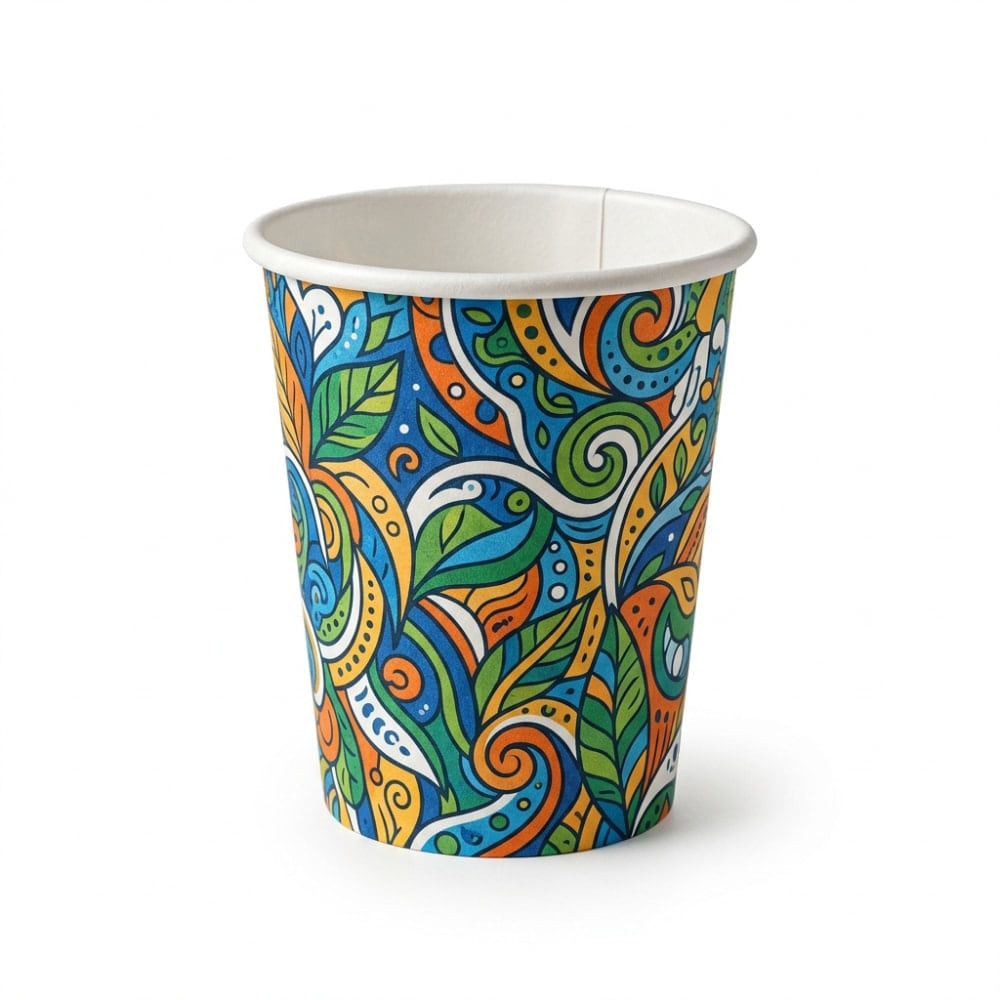
Custom Single Wall Paper Cups
A starting format for a specified beverage range where smooth artwork and a controlled cup-plus-lid system are needed.
Review for the enquiryServing volume, rim and lid reference, hot or cold conditions, sleeves and destination review.

Ripple Wall Hot Drink Cups
A candidate for hot coffee hand-off where grip and customer handling justify a textured outer wrap.
Review for the enquiryFill-temperature trial, print legibility, stack separation and lid retention.
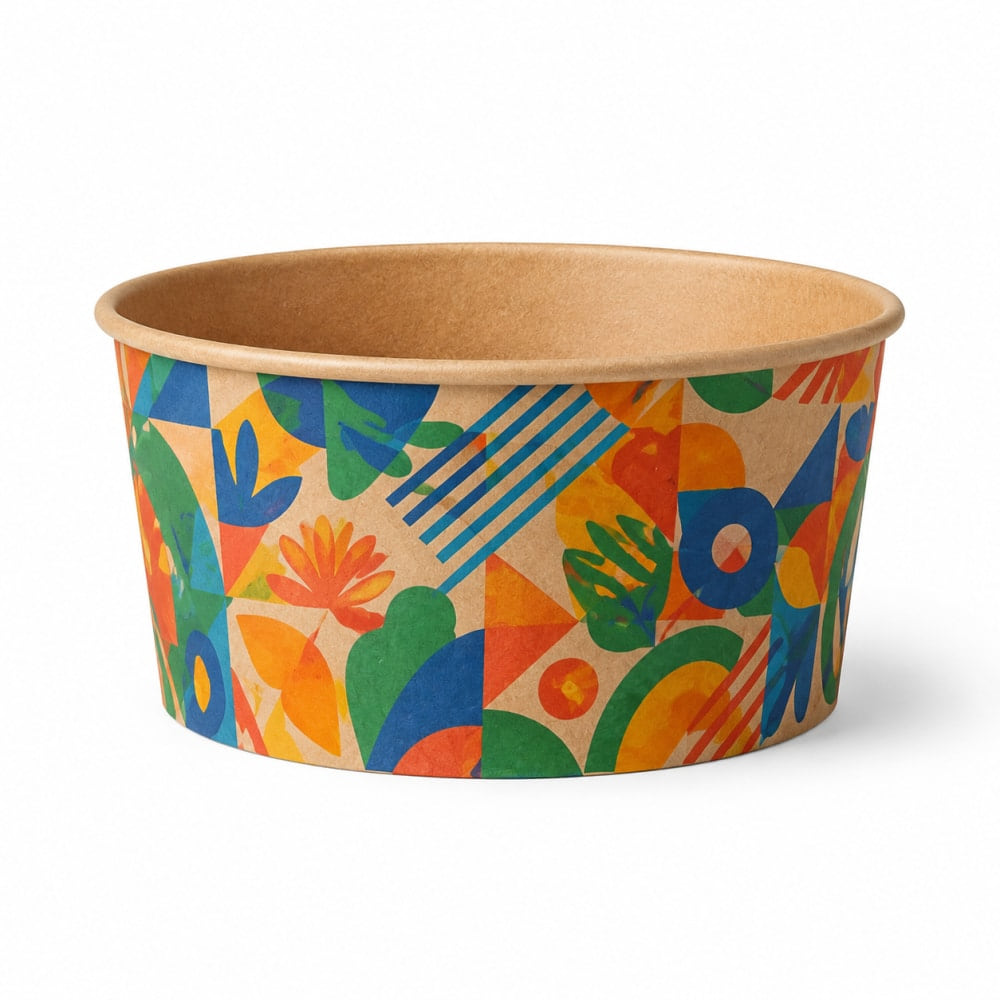
Kraft Paper Salad Bowls
A candidate for US deli, salad and meal-prep programmes with a defined bowl-and-lid presentation.
Review for the enquiryDressing contact, cold holding, closure fit and loaded distribution trial.
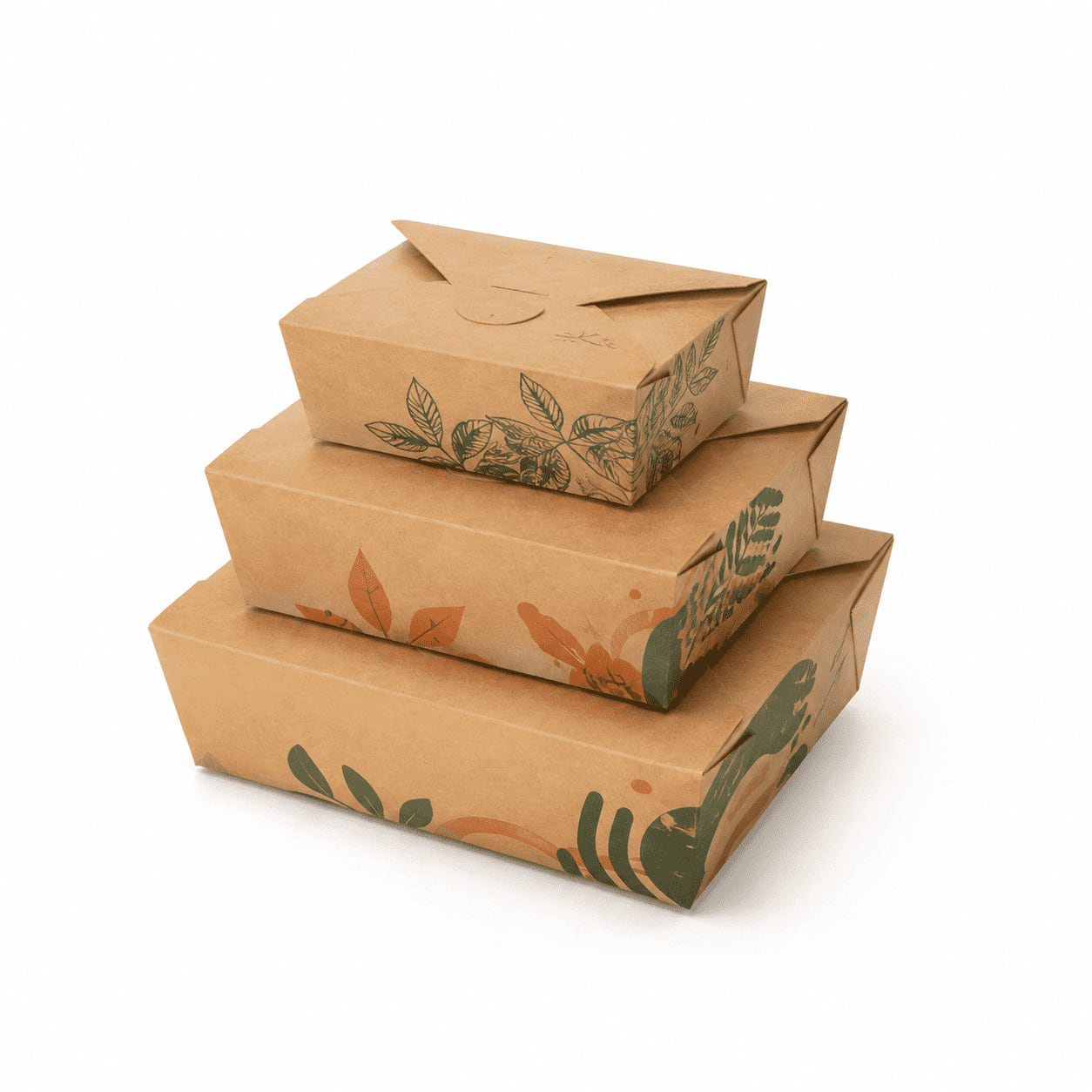
Kraft Paper Lunch Boxes
A candidate for a repeat takeaway menu where a folded box suits the portion and packing routine.
Review for the enquiryGrease and moisture, closure security, holding period and delivery stacking.
FAQs: Sourcing Paper Food Packaging in United States
Does a Finished Paper Cup Need a Generic FDA Certificate?
Do not use that description as the entire review. Ask for the regulatory basis of the proposed component materials and intended use, plus traceability where an authorisation has manufacturer-specific scope. A graphic saying FDA does not establish that every structure and food-contact condition has been covered.
Can One Custom Pack Be Used in Every US State?
Only after the relevant destination requirements, customer policies and collection arrangements have been checked. A multi-state sales territory should be recorded in the product brief. Review changes in the territory before shipping an already printed range into a new jurisdiction.
Should a Small Coffee Group Import Directly from a Factory?
Compare the actual volume per SKU, storage, working capital and import responsibilities with a distributor proposal. Direct manufacturing can suit predictable custom demand, while local stock can better serve small or urgent replenishment. The domestic invoice price and factory unit price are not equivalent delivery propositions.
Are Ripple Wall Cups Always Better than Single Wall Cups?
No. Compare the complete beverage system including serving temperature, hand comfort, lid fit, any sleeve, printing and counter handling. A more complex wall should solve a defined service need. Confirm the available construction and test representative drinks before approval.
What Makes a Useful First Sample Trial?
Use the actual menu, staff and service conditions, then record observable acceptance criteria. Separate structural, print and finished-product questions. Keep an approved reference and make any differences between the sample and proposed production explicit before ordering.
Can a Paper Bowl Be Called Recyclable Because Its Base Is Paper?
The full pack, claim wording and relevant collection context need review. A paper base can include a barrier and a separate lid. Environmental claims must be supported and qualified where necessary; a fibre-sourcing certificate answers a different question from finished-pack recyclability.
How Should MOQ Be Compared Across Suppliers?
Request the minimum for each size, construction and artwork, then compare the same combination. Check whether mixed products can share a shipment without assuming they share a production minimum. Calculate the stock months represented by the proposed quantity before increasing a run for a lower unit price.
What Should Be Ready Before a Regional Rollout?
Approve the specification, sample performance, relevant documents and artwork; agree inspection and delivery responsibilities; and give warehouses and stores a clear component list. Retain a tested backup route and make batch and carton references traceable through distribution.
Send a Supplier Enquiry for the United States
You can include the menu, quantity by SKU and actual delivery point in your message. Enter your phone number with calling code, email and message, then choose Send Enquiry to submit directly through Zoho Forms. Your name and any product or quantity selections are optional.
Sources and Further Reading
Research checked on 22 October 2026. Official references support the local factual context; comparison frameworks and illustrative scenarios are purchasing guidance.
Product images are from Fude’s existing catalogue. Sample-review scenes are AI illustrations. Confirm the proposed SKU, materials, documents, quantities and commercial terms for the actual order.
 Canada
 Germany
 United Kingdom