
 Vietnam market guide
When Should a Vietnamese Food Business Buy Custom Paper Packaging?
A useful custom-packaging programme begins with a repeat food or drink and a clear owner of the specification. A Vietnamese café group can benefit from a recognisable printed cup when its recipe volumes, lids and branch consumption are settled. A meal brand can benefit from a controlled box when portioning and delivery are consistent. A distributor needs committed customer demand before creating a private-label range.
The opening decision is therefore the business model, rather than a catalogue photograph. Is the buyer filling the packaging with its own products, distributing empty packaging, arranging contract packing or importing a complete branded product? Those arrangements create different information flows. They also matter when establishing responsibilities under Vietnam’s packaging framework. Purchasing should identify the legal entity, the operating team and the person who can approve both construction and print.
This guide uses coffee, meal and distribution examples to explain the decisions. They are proposed applications for buyers to test, rather than promises that one paper structure suits every Vietnamese menu. Start with a core range that can be forecast and trialled properly. Then extend the range only when the next format has a defined use, a workable supply route and a credible plan for consuming its stock.
Vietnamese Café and Takeaway Packaging: Translate Recipes into Purchasing Conditions
Iced Coffee Specifications Need the Recipe and the Hand-Off Routine
For an iced coffee programme, record the prepared beverage, ice quantity, final fill level and waiting period. A cup capacity expressed as a nominal volume does not describe how the actual drink fits with ice and headspace. Observe whether staff add ice before or after the drink, how they close the lid and how the customer carries the order. These details can change the useful size even when two drinks have the same menu name.
Condensation should be included in a cold-drink trial. Examine the cup surface, print appearance, grip and contact with other items in the order. If a shop serves both hot and iced versions, approve the intended use for each structure instead of carrying the hot-cup decision over to every recipe. The matching lid and carrier, where used, belong in the same operational evaluation.
Rice, Noodles and Broth Require Separate Containment Decisions
For a rice meal, identify oily accompaniments, wet sauces and foods that remain in contact with the base. For noodles, distinguish a relatively dry dish from a meal with a free-liquid broth. A box that handles one application may be unsuitable for another. Where a separate broth component is needed, procure an appropriate system rather than forcing every component into the selected paper lunch box. This preserves the food brief as the controlling document.
Ask kitchen staff to show the supplier the regular difficult dish and the customer’s unpacking sequence. Trial the portion after its normal hold, not only immediately after filling. The result should explain what the chosen cup, bowl or box can do for this operator, including any conditions that staff must follow.
Which Vietnamese Buyers Are Ready for Custom Cups, Bowls and Lunch Boxes?
A business is ready for custom print when it can make a decision at SKU level. Total packaging expenditure alone says little about whether a particular cup size or artwork can be consumed before the next menu change. Create one line for each size, construction, artwork and use. Assign both a demand owner and a technical approver.
| Business model | Reason to consider custom packaging | Evidence needed before committing |
|---|---|---|
| Multi-branch coffee business | Recognisable cups and a repeat hand-off system. | Recipe trial, lid compatibility and consumption by branch. |
| Rice / prepared-meal brand | A controlled portion, closing method and brand surface. | Food-contact conditions and a packed-meal delivery trial. |
| Central kitchen supplying other sites | Common packing instructions for several receiving teams. | Acceptance at the receiving site as well as at the kitchen. |
| Packaging distributor | An assortment matched to repeat foodservice accounts. | Customer acceptance of material, size and storage quantities. |
| Contract-packed food brand | A shared specification between brand and packer. | Approval authority, packaging data access and change control. |
An independent shop still learning its portion sizes can use suitable stock packaging while gathering this information. A chain can choose one high-use format for the first controlled custom order. Neither needs to redesign the entire assortment at once. A narrower trial often reveals whether the internal approval process works before more sizes and designs are added.
The distributor’s task is different from the café’s task. It needs to know which customer types will accept the same product and which need a separate construction. A general enquiry for “Vietnam paper bowls” is too broad to support that decision. Identify intended food and channel, then turn the accepted applications into a manageable range.
Commissioned Packaging vs Buying a Packed Product: Who Needs the Vietnam EPR Data?
Vietnam’s Government published a July 2026 answer to a packaging manufacturer asking who holds recycling responsibility when packaging is made to customer order. The Ministry’s answer identifies the customer buying packaging to use or pack its products as the responsible party in that situation. A buyer should therefore resolve its role early instead of assuming that commissioning an empty pack transfers every obligation to the converter.[2]
| Arrangement | Question to resolve | Information to obtain from the supply chain |
|---|---|---|
| A brand buys empty printed cups and fills them | Which entity places the packed drink on the Vietnam market? | Material and component weights, delivered quantities and approved construction. |
| A brand commissions a packer | How do the contractual and statutory roles apply? | Who supplies packaging data and reconciles packed-product quantities. |
| A trader imports a finished packed product | Which importing and labelling entity is responsible? | Product, packaging composition and market-placement records. |
| A distributor sells empty containers | What does the downstream customer require to assess its role? | A controlled specification and reliable component information. |
Use that question as a contract requirement for information, not as a reason to insert an unsupported legal conclusion into every purchase order. The actual product category, entity, market placement and applicable exemptions still need review. The practical result is a named person who owns the decision and a supplier who knows what supporting data it must deliver.
For a contract-packed meal, the brand, packer and packaging supplier should agree who retains the latest material record and who reports a change. Otherwise a lighter lid or different barrier may enter production without reaching the team maintaining the packaging file. Link the supplied data to a revision and effective shipment so records can follow the product actually used.
Local Stock vs Factory Custom Print for a Vietnamese Foodservice Range
Stock packaging can be valuable while a business tests the menu, opens an initial location or serves an uncertain event. Custom print becomes more attractive when consumption and brand identity are sufficiently stable. Compare the whole workflow, including label application or sleeves, rather than treating the printed unit price as the complete decision.
| Decision point | Suitable locally held stock | Factory custom print |
|---|---|---|
| Recipe or portion still changing | Can support a short trial of alternative formats. | Should follow a stable capacity and structure. |
| Brand message changes frequently | A controlled added label may preserve flexibility. | Each design needs its own consumption plan. |
| Repeat core drink or meal | Compare available continuity and staff handling. | Can create a coordinated identity after product approval. |
| Promotional edition | Check application effort and leftover base stock. | Separate campaign stock from the permanent range. |
| Several branches | Confirm the same product is supplied each time. | Control distribution and revision use across branches. |
Ask for quantities per artwork and size. If one design is used at only a few locations, calculate its inventory separately from the group’s total. Several small artwork runs may divide a large apparent requirement into slow-moving stock. A clear shared design with a suitable local label area may be commercially easier, provided it also meets the customer’s actual needs.
Discuss the transition between existing stock and new print. State whether both versions may be used during a defined period and how staff distinguish them. The first custom order should remove ambiguity about the approved construction and design. It should also show that the buyer can receive, store and issue the quantity it is asking a factory to produce.
Vietnam Local Converter, Distributor or Overseas Manufacturer: Compare the Service Scope
The buying route should follow the programme’s operational needs. A local distributor can be useful where small replenishments, mixed formats or immediate access to stock matter. A converter may offer a closer development process for the proposed application. An overseas manufacturer can be worth evaluating for a stable repeat range where the buyer can organise import review, inventory and onward distribution.
| Scope | Local stocked supply | Direct custom manufacturing |
|---|---|---|
| Product development | Confirm whether the seller controls the actual construction. | Agree the structure and food-use evidence before print. |
| Replenishment | Check stock ownership and continuity of the specific SKU. | Plan the order cycle and a compatible contingency. |
| Documentation | Obtain files for the item actually supplied. | Connect reports and specifications with the factory revision. |
| Delivery | State the named receiving point and unloading scope. | Allocate freight, import work and final inland delivery. |
| Problem resolution | Know who can stop or replace a batch. | Agree investigation, evidence and remedies in the order. |
A low overseas quote is incomplete if nobody has priced the buyer’s local responsibilities. Likewise, local availability is not enough if the seller can substitute the construction without notice. Ask every candidate the same questions and record exclusions. This makes a comparison useful even where the suppliers offer different services.
For a distributor serving more than one receiving region, request a supply plan that fits the actual customer network. One delivered factory quantity may be efficient to manufacture but inconvenient to allocate. Discuss whether the buyer can hold and split it, and confirm the stock locations before describing the order as available to all accounts.
Custom Paper Cups in Vietnam: Compare Hot Coffee, Iced Recipes and Outer-Wall Choices
Select the inner cup and matching closure before deciding how much outer-wall insulation or texture is needed. A single-wall and a ripple-wall cup are different constructions, but neither description settles the full food-contact use or the fit of the lid. The supplier should identify the actual cup, barrier and components proposed for each drink.
| Service application | What to compare | Practical approval exercise |
|---|---|---|
| Hot coffee / tea takeaway | Cup structure, grip and whether an additional sleeve is needed. | Serve the actual drink and observe handling at hand-off. |
| Iced coffee with a set recipe | Useful fill volume, headspace and condensation behaviour. | Prepare the normal ice and drink sequence, then carry it. |
| Several drink sizes | Rim and lid system, stock complexity and recipe fit. | Check every approved size and lid combination. |
| Printed café cup | Colour, seam, print area and information readability. | Inspect the assembled sample rather than a flat mockup. |
| Delivery drinks | Closure, carrier and the complete order arrangement. | Simulate the normal route and inspect customer arrival. |
Do not interpret a comfortable grip trial as proof of liquid containment. Keep the observations separate so a weak result is not hidden by an attractive surface. A cup can look good but require a different lid or fill instruction. Conversely, a workable drink system may benefit from simpler artwork that staff and customers can read when the cup is held.
Where the menu includes toppings or another special closure, describe that assembly explicitly. Obtain confirmation that the proposed cup system supports it before approving artwork. An enquiry for a paper cup with a logo should therefore include the recipe, useful fill and closure method, not only the number of colours.
Paper Bowls vs Lunch Boxes for Vietnamese Rice, Noodle and Mixed-Meal Service
Match the format to containment and eating method. A bowl may suit a defined meal eaten directly from the container. A folding lunch box may suit a portion that needs a flatter presentation. Those are starting points for testing; the food’s liquid and oil behaviour, hold and delivery conditions determine the final approval.
| Menu condition | Possible format to evaluate | Important limitation or trial |
|---|---|---|
| Rice with oily accompaniments | A suitably constructed lunch box. | Inspect base, folds and corners after the normal hold. |
| A bowl meal with dressing | A suitable paper bowl and matching lid. | Test dressing contact and closure after stacking. |
| Noodles with free-liquid broth | A separately specified appropriate container system. | Do not assume an ordinary folding box contains broth. |
| Mixed items with different moisture | A separation or packing method suited to the food. | Assess food quality as well as external leakage. |
| Chilled prepared meal | A bowl or box with a reviewed cold-use structure. | Include storage, condensation and customer opening. |
Use the normal portion weight and order configuration. Staff should close and stack the pack as they would during service. A flat laboratory hold can support one observation, but it does not reproduce a meal placed beside a drink and carried to a customer. Keep both product evidence and the operational trial in the approval file.
If one format performs well for a rice dish, document exactly which sauces and hold conditions were included. New menu items should be screened against that envelope. This is more efficient than restarting the entire project for every recipe, while still preventing a new broth or reheating step from being accepted without assessment.
Vietnam Food-Contact Packaging Review: Identify the Material and Intended Use
Vietnam Food Administration publishes technical-regulation information for food-contact packaging. That is a starting point for identifying the applicable requirement, not a universal certificate for anything described as paper. A composite cup or bowl can involve board, a barrier, printing and separate components. Have the local reviewer determine the current requirements for the offered construction and use.[3]
VFA’s April 2025 guidance also emphasises the origin and suitability of food packaging and cautions against using plastic packaging for hot foods unless the intended heat use is identified. For a buyer, the useful action is to demand a clear intended-use statement and a traceable construction before accepting a broad food-safe description.[4]
Create a File the Local Reviewer Can Actually Assess
Send the material description, drawing and intended food conditions together. State contact temperature, duration, whether the food is oily or acidic, and whether the pack is held chilled or reheated. Ask which part of the submitted evidence covers each component. A report for a different size, material or supplier needs an explained relationship to the proposed product, rather than being accepted because the photograph looks similar.
Keep use restrictions visible to operations. If the approved application excludes a heating process, the instruction should reach the kitchen or shop team rather than staying in the purchasing folder. A later material substitution should return to the reviewer before it reaches the menu. Overseas statements can contribute evidence, but the responsible buyer still needs a locally appropriate assessment and any required procedure for the actual product.
Vietnam Packaging EPR in 2026: Establish Responsibility Before the First Order
Decree 110/2026/ND-CP took effect on 25 May 2026 and provides the researched current framework for product and packaging recycling and waste-treatment responsibilities. Its scope includes relevant producers and importers, with specific rules for arrangements such as contract processing and entrusted imports. The actual category, commercial packaging, market placement and exemptions determine the analysis; buying a small paper cup does not itself answer every question.[1]
Turn the Responsibility Review into a Repeatable Data Handover
Assign a local owner to determine applicability before finalising the commercial programme. Then give the supplier a data request appropriate to that decision. Useful purchasing records include component description, unit mass, composition, delivery quantities and the date a revised construction starts. A statement that the pack is recyclable is a different piece of information from the records needed to understand what the business placed on the market.
Separate samples, production quantities, returns and obsolete stock in internal records as the applicable process requires. Procurement should be able to explain the basis of its quantities, while the responsible reviewer determines how the rules treat them. Do not copy a historic online threshold or another company’s conclusion into the contract without checking it against the current framework and the buyer’s own arrangement.
A material-change clause helps both the operational and environmental files. Require notice of a changed barrier, lid or component mass, identify which documents need updating and agree who authorises release. This avoids a successful sourcing improvement creating inconsistent records elsewhere in the business. Put the data owner in the supplier contact list so a change reaches the right team without relying on the original salesperson.
How to Assess a Packaging Supplier for a Vietnam Custom Programme

Use a technical conversation to distinguish a specific offer from a generic sales reply. Give the supplier one realistic drink or meal brief and ask it to explain the proposed structure, the relevant evidence, the sample process and the points that still need confirmation. A useful answer identifies the limits of its proposal and the decisions the buyer must make.
| Assessment area | Useful evidence | Follow-up question |
|---|---|---|
| Construction control | An identifiable specification and revision. | Who approves a barrier or board change? |
| Food application | Intended-use evidence for the proposed product. | Which part covers the buyer’s food and hold? |
| Print process | A proof and an agreed route to a printed sample. | What can differ between proof and production? |
| Batch control | Traceable carton or batch information. | Can a complaint be traced to the affected supply? |
| Data support | Defined component and quantity information. | Who maintains it after the first sale? |
| Commercial scope | A quote with named delivery and exclusions. | Which import and inland tasks remain with the buyer? |
Evaluate communication through the trial. Does the candidate answer the actual issue when a lid is difficult to fit, or simply send another catalogue? Can it distinguish an artwork adjustment from a construction change? Those responses help show whether the supplier can support a repeat order after the first attractive sample has been delivered.
The buyer should also make its own approval process credible. Provide one consolidated decision rather than conflicting comments from marketing, purchasing and operations. If several downstream accounts must approve a distributor’s product, state that before scheduling production. Supplier evaluation works best when both parties can see who has the authority to close an issue.
Vietnam Paper Packaging Sample Tests: Use Three Complete Buyer Scenarios
Scenario One: A Vietnamese Iced-Coffee Group
Choose a core recipe and the branch team that prepares it. Fill the proposed size with the actual ice and drink, fit the nominated lid and follow the normal waiting and hand-off sequence. Inspect closure, grip, print and arrival condition. Repeat with the normal staff technique, then record any required change to the fill or assembly instruction. Approve the cup system only when the result is reproducible.
Scenario Two: A Rice-Meal Delivery Operator
Pack the regular demanding meal with its usual sauce arrangement. Observe the base and corners after holding, stacking and the representative delivery sequence. Ask the receiving tester to open and eat from the pack as a customer would. Distinguish a containment failure from a food-quality problem or a packing mistake so the solution addresses the cause rather than simply making the board heavier.
Scenario Three: A Distributor Developing a Private-Label Bowl
Select downstream accounts with genuinely different uses and obtain written feedback on each approved application. A bowl accepted for a chilled salad should not be marketed to a hot broth customer on that evidence. Keep a simple application list alongside the SKU and ensure sales staff know the accepted uses. This turns the trial into a useful selling and replenishment record.
For every scenario, retain identified samples, photographs, filling conditions, test observations and the decision. Set acceptance criteria before testing so attractive printing does not move the standard afterwards. If the structure changes, repeat the affected assessment. If only the artwork changes, still check whether the print area or information affects the assembled pack and the user’s handling.
Vietnamese Packaging Artwork Approval: Protect Diacritics, Size and Version Control
Vietnamese copy needs review in the actual fonts and production file. Diacritics must remain legible, small text should survive at the chosen size, and line breaks should make sense on the assembled cup or container. A translated text document and an attractive screen mockup do not show what happens at a seam, fold or curved surface.
| Approval stage | What the buyer checks | What to retain |
|---|---|---|
| Copy | Language, diacritics, names, claims and customer details. | A signed or recorded final text version. |
| Layout | Text size, fold / seam positions and useful blank areas. | The numbered print-ready artwork. |
| Technical proof | Print boundaries, colour references and production constraints. | Supplier comments and the agreed proof. |
| Physical sample | Readability, colour and any required scan or label operation. | An identified approved sample or agreed reference. |
| Release | Matching artwork, structure and order quantity. | A final instruction issued by the authorised approver. |
A brand using English alongside Vietnamese should nominate who approves each language. Keep legal or technical wording with its qualified reviewer and brand presentation with the marketing owner, then consolidate the result. The supplier should receive one controlled file rather than several message attachments that each appear to be final.
Variable labels can be useful where the same base pack supports different foods, but check the real label application area. Oil, condensation or a fold may affect where staff can place information. Trial the label during the food-service test. A packaging design is successful when it works in that routine as well as in a product photograph.
Custom Packaging Quotations for Vietnam: Compare the Complete Usable Cost
Ask each candidate to quote the same structure, size, artwork and components, with a named delivery point and clear scope. Record whether tooling, proofs, samples, printing preparation, packing and freight are included. Where the buyer imports, obtain a classification and procedure review for the actual construction from the responsible local professional before treating the quotation as a final landed offer.
Allocate Tasks Instead of Hiding Them in a Single Unit Price
State who books freight, supplies shipping documents, completes the import work, pays applicable charges and delivers to the warehouse. Use confirmed terms for the actual order; do not assume a particular tax treatment or clearance path from another paper product. A mixed-material cup, a box and a separately supplied lid can raise different classification questions that need an informed answer.
Then compare cost per usable unit through the operation. This can include an additional sleeve, label application, a matching lid and normal handling or rejection. Keep assumptions visible. A lower purchase price that requires more staff work or leaves a slow size in storage may not be the better programme for the buyer.
Payment and remedy terms should follow the same clarity. Specify the agreed inspection, documentary evidence for a complaint, the handling of a disputed batch and who authorises any replacement. Obtain the supplier’s written confirmation before ordering. A buyer can negotiate commercially without pretending that a quotation removes its local responsibilities or that every possible delay has already been priced.
Vietnam Packaging Delivery and Storage: Plan Each Receiving Point Separately
For a business supplying locations in more than one part of Vietnam, identify the actual receiving points and transfer sequence. A carton at a central warehouse is not yet a cup at the branch that needs it. Separate goods available for issue from goods still awaiting transport, inspection or a matching component. Use the real route when setting reserves instead of assigning a generic national transit time.
Protect the Pack Through Transfers and Outlet Storage
Ask warehouse staff how cartons will be received, stacked, opened and issued. Check exposure to water, dust, odours and handling damage at the actual site. If a route or storage area creates a moisture risk, agree suitable protection and receiving checks for that condition. This is more useful than assuming a single seasonal rule applies to every Vietnamese location and shipment.
Plan stock by SKU and component pair. A branch with cups but no accepted lids has a service shortage even if its overall packaging inventory looks healthy. Set a replenishment trigger from consumption and the confirmed supply uncertainty, and maintain a separately approved contingency where needed. A substitute should pass its relevant product and customer checks before an urgent shortage occurs.
For a custom printed range, retain visibility of artwork versions at each stock location. Agree which older stock can still be used and where it may be issued. Transfers between branches should preserve batch identification and protect opened cartons. This allows the buyer to consolidate a manufacturing order while keeping the final local replenishment decisions realistic and accountable.
Working with FUDE on Vietnam Custom Paper Packaging: From First Brief to Controlled Reorder
Fude can be considered for a defined custom-manufacturing enquiry alongside other suitable supply options. Send the drink or food conditions, requested format, approximate demand by size and design, matching components and named receiving points. Identify whether the buyer fills its own products, acts as a distributor or works with a packer so the documentation and data discussion starts with the actual arrangement.
Make the First Order Establish the Repeat Process
Agree the sequence of structure selection, evidence review, sample trial, artwork approval and commercial release. Confirm which decisions are still open and who must close them. Do not schedule a brand launch on an assumed production or transport duration; obtain an actual plan from the supplier and logistics parties after the specification is sufficiently defined.
At receipt, compare the supplied SKU, construction, artwork, counts and carton condition with the approved records. Open representative cartons and perform the agreed checks before releasing the batch into normal stock. Record a problem while batch information and samples are available. A clear first receiving record becomes the reference for later deliveries.
For a reorder, send the current revision and confirm whether recipes, branches, legal review, artwork or material requirements have changed. Review consumption by variant and revise the quantity accordingly. The outcome should be a range the Vietnamese operator can use consistently and support with reliable records, rather than a one-time shipment whose approvals have to be reconstructed when the next order is needed.
FUDE Product Options for Buyers in Vietnam
Use these existing catalogue items as starting points for a written specification and sample review. Confirm the proposed structure, available options and supporting documents for the actual order.
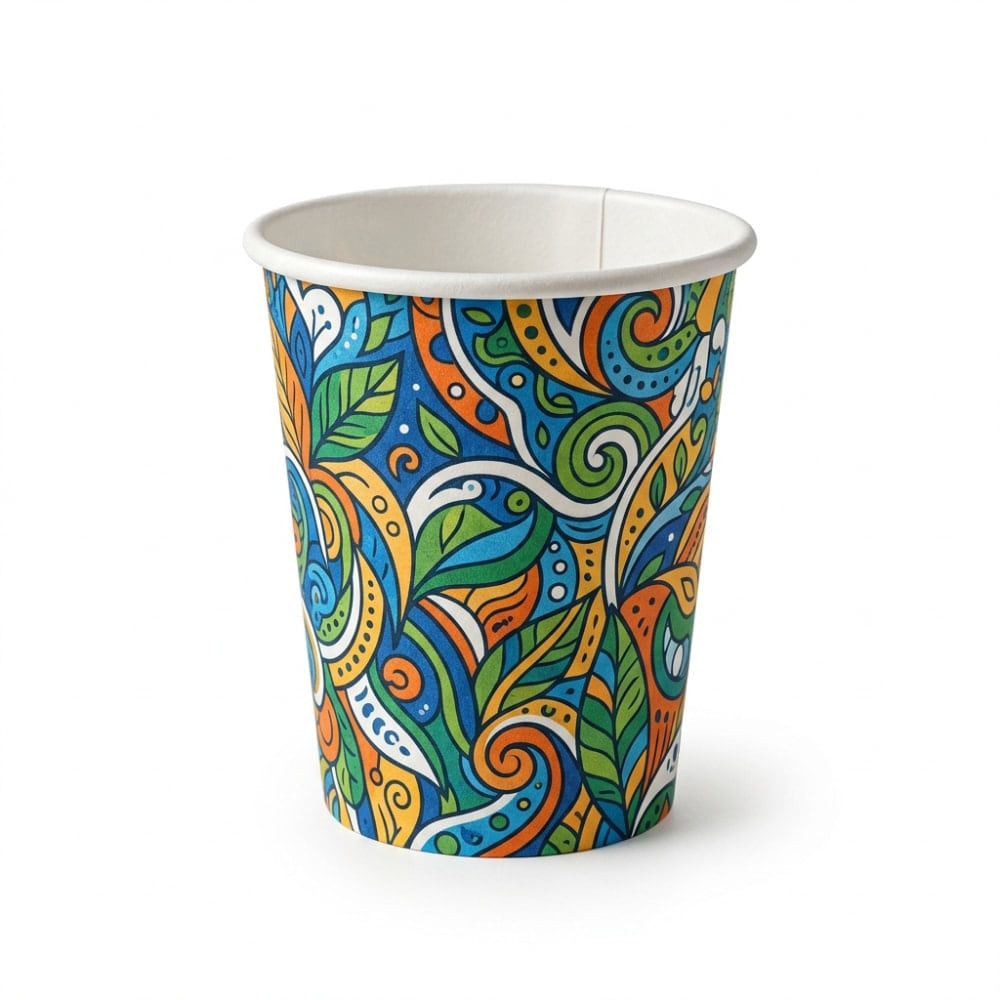
Custom Single Wall Paper Cups
A candidate for a defined Vietnamese café drink programme where recipe, useful fill and outer handling are established.
Review for the enquiryReview hot or cold intended use separately; trial the actual ice recipe, lid, grip and print.

Ripple Wall Hot Drink Cups
A format to evaluate for a repeated hot takeaway drink where the operator wants to assess outer-wall grip and presentation.
Review for the enquiryTest the actual serving conditions and confirm the complete cup-and-lid construction rather than relying on texture.
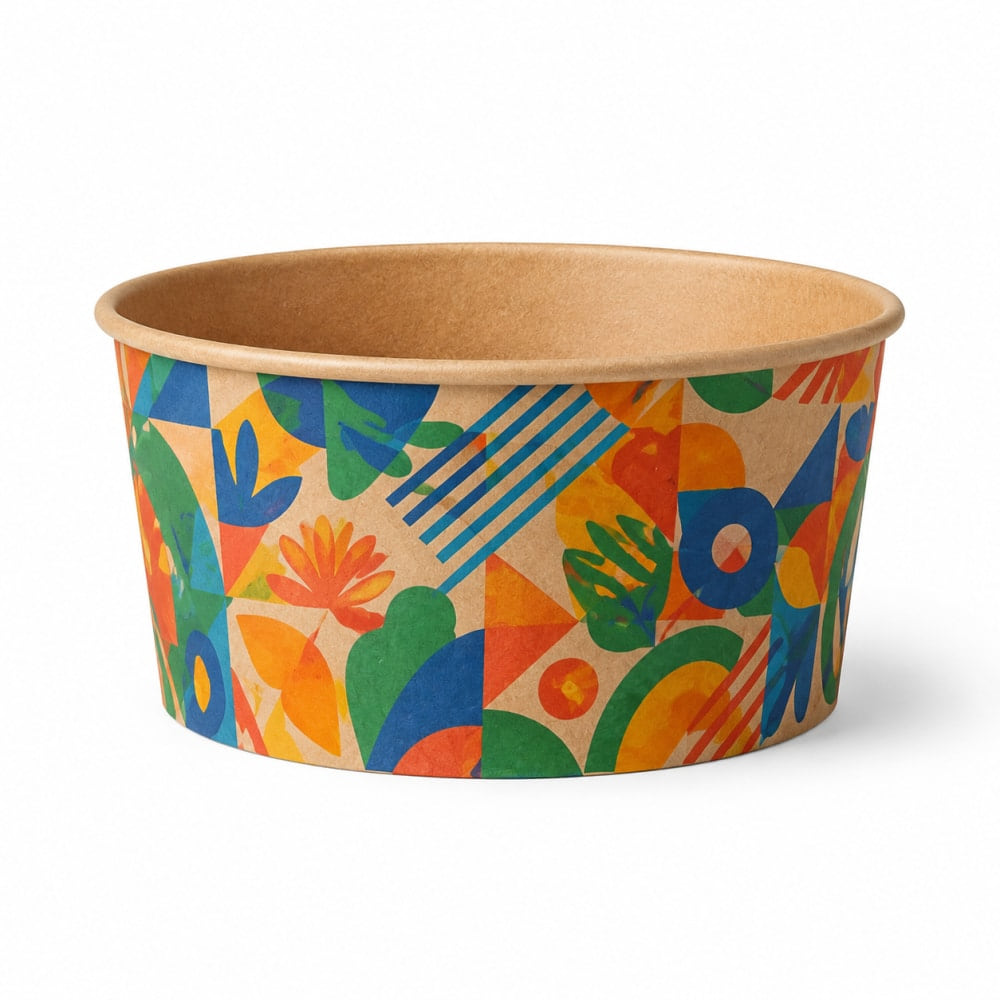
Kraft Paper Salad Bowls
A candidate for a defined bowl meal or chilled prepared-food range with controlled sauce and portion.
Review for the enquiryReview barrier, dressing contact, lid fit and stacking through the real hold and delivery sequence.
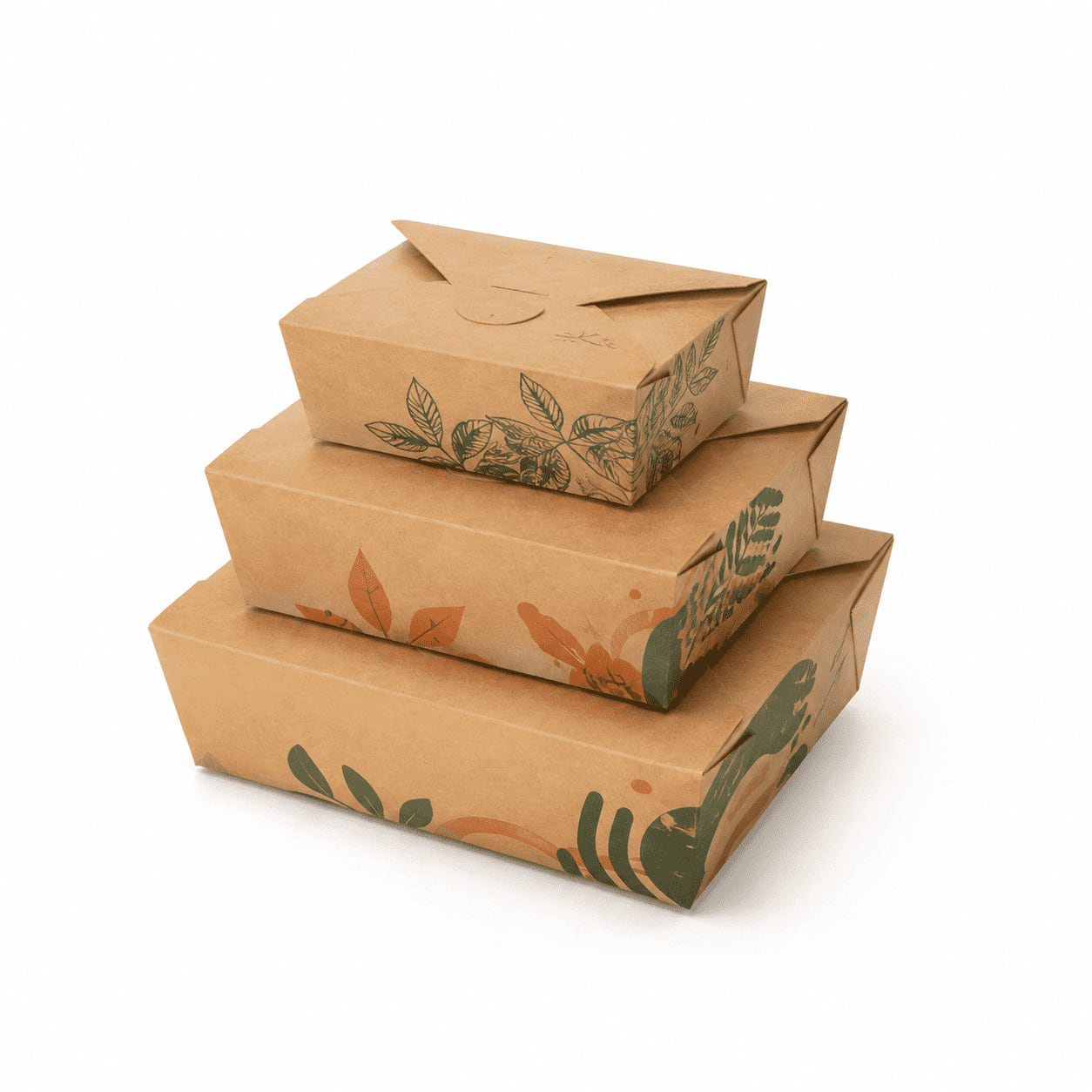
Kraft Paper Lunch Boxes
A candidate for portioned rice or other meals where a flatter takeaway presentation supports the menu.
Review for the enquiryTrial oils, sauces, folds and closing; specify broth separately if the structure is unsuitable.
FAQs: Sourcing Paper Food Packaging in Vietnam
Is Custom Printing Suitable for a Small Vietnamese Café?
It can be suitable after the café has stable cup sizes, recipes and expected use for each design. First compare a suitable stock cup with the full custom programme, including lids, storage and artwork commitments. A single high-use format is easier to control than several slow variants. Obtain the actual supplier quantity and delivery proposal rather than assuming every café needs a factory run.
Should an Iced-Coffee Cup Use the Same Specification as a Hot-Coffee Cup?
Approve each intended use. The iced recipe needs sufficient useful volume for the drink and ice, a compatible closure and a trial including condensation and carrying. Hot service requires its own temperature and handling assessment. The same outer branding can be retained where appropriate, but a matching logo is not evidence that both applications have been reviewed.
Who Handles EPR When a Vietnamese Brand Orders Custom Empty Packaging?
A July 2026 Government answer explains that the customer buying commissioned packaging to use or pack its products holds the responsibility in the situation it addresses. The business should review its actual category, role and exemptions under Decree 110/2026/ND-CP. Purchasing should secure controlled material and quantity information from the supplier and assign a local owner to determine the applicable process.
Does a Paper Bowl Automatically Comply with Vietnamese Food-Contact Requirements?
No general material name settles compliance. Identify the actual board, barrier, printing and separate components, then review the intended food, temperature and contact period against the applicable current requirements. Keep the evidence linked to the offered construction. A food-service trial demonstrates operation, while the food-contact review addresses the relevant material and use requirements; both belong in approval.
Can One Lunch Box Serve Rice Meals and Noodle Broth?
Only if the specific construction is appropriate and approved for both applications. Free liquid creates a different containment demand from rice with a limited sauce component. Test the actual dish through the normal hold and delivery routine. Where the lunch box is unsuitable for broth, specify a separate appropriate system rather than extending the rice-meal approval to a different use.
What Should a Vietnamese Artwork Proof Include?
Use final Vietnamese copy with the correct diacritics, the actual fonts and readable type size. Review the assembled pack for seams, folds and label areas. Identify who approves each language and any technical claims. Keep a numbered print file and an agreed colour reference. Confirm any required scan or label operation on a physical sample before releasing the artwork.
How Should a Multi-Region Vietnamese Operator Set Packaging Reserves?
Use demand and confirmed replenishment uncertainty at each receiving point. Separate stock waiting for onward movement from stock available to outlets, and track cups with their accepted lids. Review real storage and handling conditions rather than inventing a national delivery allowance. A shared production order can still require different local stock decisions and a practical contingency for each service network.
What Information Makes an Enquiry to FUDE Useful?
Provide the food or drink, filling conditions, desired format, current problems, sizes, artwork versions and approximate use by variant. Include matching components, receiving locations and the party responsible for local review. Request the proposed construction, sample route, available supporting evidence and a written commercial scope. These details allow a meaningful comparison with local supply and clarify the decisions required before an order.
Send a Supplier Enquiry for Vietnam
You can include the menu, quantity by SKU and actual delivery point in your message. Enter your phone number with calling code, email and message, then choose Send Enquiry to submit directly through Zoho Forms. Your name and any product or quantity selections are optional.
Sources and Further Reading
Research checked on 22 October 2026. Official references support the local factual context; comparison frameworks and illustrative scenarios are purchasing guidance.
Ministry of Industry and Trade ASEMConnect: Decree 110/2026/ND-CP ↗
Government of Vietnam: who holds recycling responsibility for commissioned packaging? ↗
Vietnam Food Administration: food-contact packaging technical regulation listing ↗
Vietnam Food Administration: caution when using poor-quality food packaging ↗
Product images are from Fude’s existing catalogue. Sample-review scenes are AI illustrations. Confirm the proposed SKU, materials, documents, quantities and commercial terms for the actual order.
 Malaysia
 Singapore
 Indonesia