
Three Distinct Buying Decisions
Choose the Guide That Matches Your Project.
Prioritise cup/lid compatibility before extending artwork across stores or launching seasonal versions.
Coffee Chain Packaging: A Rollout Buying Guide
When a chain adds outlets, the purchasing decision is a repeatable cup-and-lid range, not a new design for every shop. Start with the existing drink menu, identify the sizes actually needed and decide which references every new store should use. Keep launch demand separate from the ongoing branch order cycle.
Read the Guide ↗Business Buying GuideSeasonal Coffee Cup Printing: A B2B Buying Guide
A seasonal cup project is primarily a design, timing and inventory decision. The core cup should continue to serve the approved drink; the campaign changes what appears on it and when it is used. Begin by deciding which sizes carry the campaign and which remain in the permanent design.
Read the Guide ↗Business Buying GuideCoffee Packaging Across Regions: Specification Guide
A regional coffee programme should separate the elements that can be shared from those that need local review. A common logo does not make different lids, serving volumes or destination requirements identical. Build a core specification and a short list of controlled regional differences before requesting quotations.
Read the Guide ↗01 / Buyer guide
Start with the Relevant Product Family.
Product starting point
A Hot-Drink Cup Format
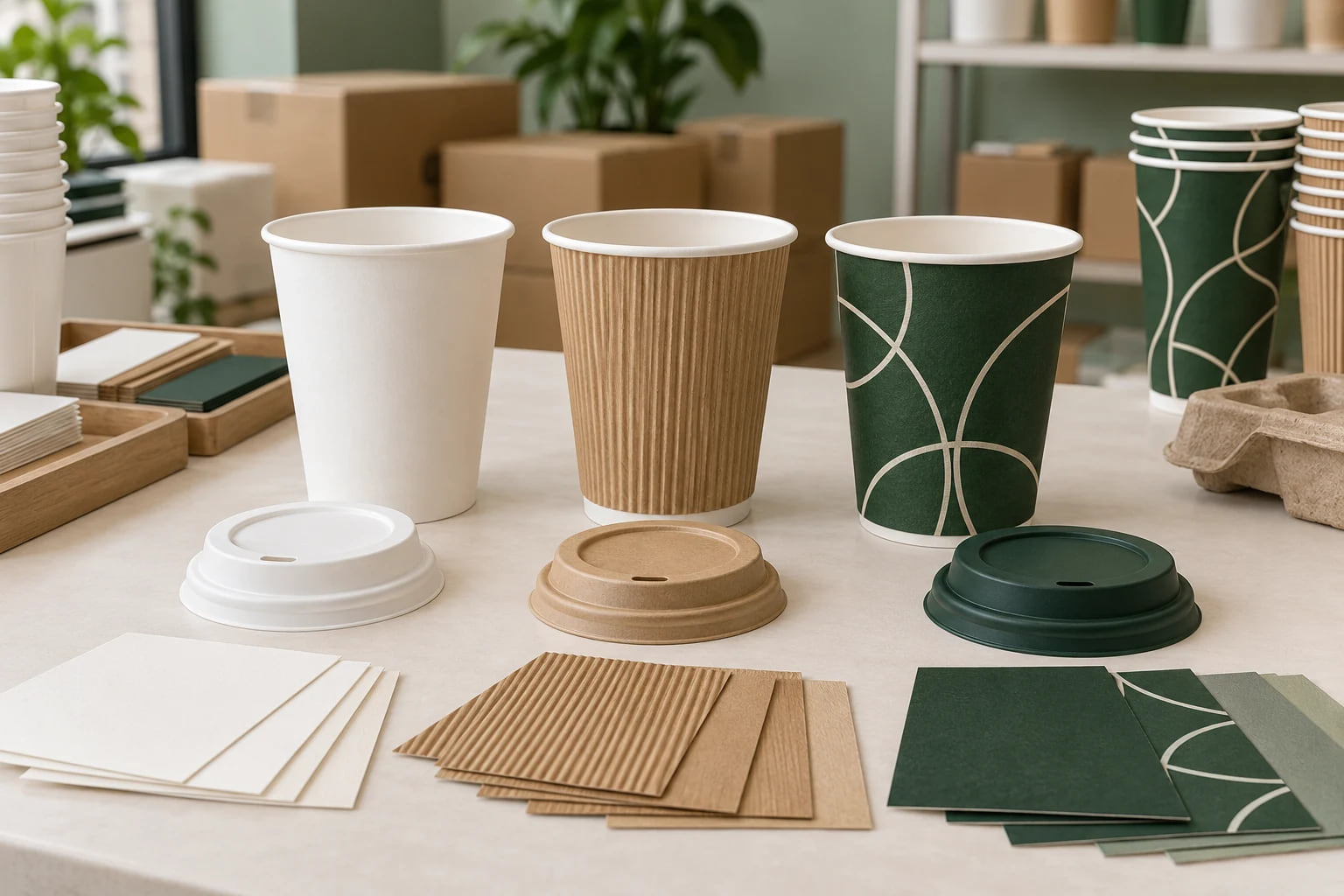
Evaluate a suitable textured-wall cup for hot service, with the exact sip lid. Use normal filling temperature to assess hand comfort and handling.
View the Relevant Product Range ↗Product starting point
A Separate Cold-Drink Specification
If paper cups are used for iced drinks, assess condensation, ice displacement and the intended lid. A hot-drink approval does not qualify a cold-drink combination automatically.
View the Relevant Product Range ↗Product starting point
A Controlled Size-and-Lid Range
Start with the sizes that cover the actual menu. Record rim references, usable fill and the lids staff must order; nominal ounces are not a compatibility code.
View the Relevant Product Range ↗02 / Buyer guide
What Should Your Team Evaluate?
| Quality factor | Practical review |
|---|---|
| Lid retention | Close the actual lid around the full rim and check it after filling, carrying and normal counter handling. |
| Hand comfort | Evaluate the selected wall construction or separately sourced sleeve with the drink temperature used in service. |
| Stack separation | Check that nested cups separate cleanly and remain round during the store’s normal dispensing routine. |
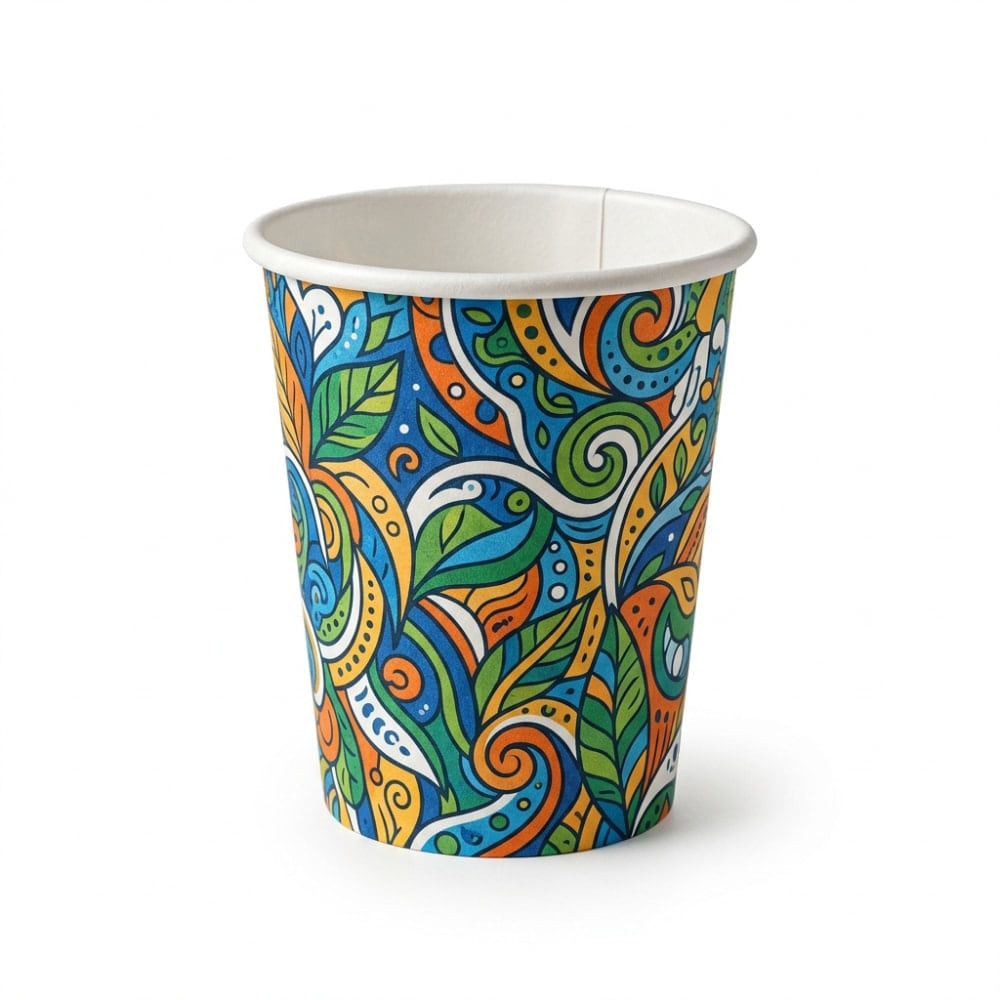
| Print legibility | Review the artwork on the actual surface: a textured outer wrap presents fine graphics differently from a smooth wall. |
03 / Buyer guide
Decide How Much Customisation Is Useful.
Start with an appropriate physical pack. Compare plain formats for flexibility, buyer-applied labels for changing identity, and printed existing structures for stable recurring brand demand. Treat new geometry as a separate functional development decision.
A Recognisable Takeaway Cup
A permanent printed identity travels with the coffee and can be shared across appropriately scaled cup sizes.
A Controlled Store Catalogue
Naming the approved structure and artwork version gives franchisees a clearer reordering reference.
Separate Permanent and Changing Information
Keep core brand graphics on the cup while allowing the store to record drink-specific information separately.
04 / Buyer guide
Keep the Material Discussion Specific.
| Pack element | Selection priority |
|---|---|
| Board and moisture barrier | Use a specified beverage-cup structure for the drink and contact conditions. Compare the finished cup rather than paper colour alone. |
| Outer wall and sleeve | Choose a handling solution around hot-drink service; do not assume an extra layer eliminates every need for staff evaluation. |
| Lid material | Ask for the exact lid polymer or fibre structure, rim match and intended temperature conditions. |
| Alternative barriers | Consider a documented alternative where the destination brief calls for it; verify the complete cup and local collection route. |
This guide discusses paper beverage cups. Confirm the precise wall construction, lids and use conditions with Fude; accessories and alternative barriers are not assumed to be available.
Use the scenario guides above for actionable comparisons and sample checks. Confirm any offered alternative against the exact finished pack and intended conditions.
05 / Buyer guide
Bring the Right Questions to the Manufacturer.
| Question | Evidence to request |
|---|---|
| Can the manufacturer demonstrate the proposed cup-and-lid pair? | Request dimensions, paired references and samples; an approximate rim measurement is insufficient. |
| How is the outer surface printed? | Compare proofs on the actual smooth or textured construction and ask who approves colour and position. |
| How are design quantities quoted? | Ask for the quantity basis for each size and artwork, rather than applying the total chain volume to every version. |
A relevant manufacturer to approach
Discuss This Programme with FUDE.
Use the linked product catalogue as a starting point and Fude’s custom-packaging service for a project-specific discussion. Provide the menu, portion photos, intended use, quantities by size/design and delivery point.
Ask for available references, matched components, samples and an itemised proposal. Special-use candidates remain subject to exact-pack and buyer approval.
Contact FUDE ↗