
 United Arab Emirates market guide
When Does Custom Paper Food Packaging Make Sense for a UAE Business?
Custom packaging can be a useful part of a UAE café, restaurant or hospitality programme when the service is repeatable and the business can commit to a defined size, artwork and stock plan. It is less useful when the menu, opening date or customer channel is still uncertain. Begin with where and how the pack will be used, then decide whether custom manufacturing is the right buying route.
A Dubai takeaway coffee brand, an Abu Dhabi hotel caterer and a trading business re-exporting cartons to another country may all buy paper cups, but they need different approval and delivery plans. The emirate of use, final destination and role of the local importer should be visible in the brief. A general request for packaging suitable for the Gulf leaves important questions unanswered.
This guide explains how to select a practical range, compare local stock with direct manufacturing, evaluate samples and establish a controlled repeat-order relationship. Fude’s existing cup, bowl and box range can provide starting candidates, but the ordered structure and its local suitability must be confirmed for the actual programme. The goal is a usable packaging system supported by clear decisions and records.
UAE Packaging Procurement: Establish the Emirate and the Final Customer Channel
Hospitality, Delivery and Trading Are Different Programmes
A hotel may need a coordinated set of packs for takeaway breakfast, event food and a coffee outlet, while each service has a different period of use and approval owner. A delivery brand may need several kitchens to apply the same portion and closure routine. A wholesaler may need cartons that can be split for small local customers. The buyer should describe these channels before reducing a broad range to a price list.
For hospitality, identify the operator or venue policy and the actual event or service dates. A temporary activation can require a different stock commitment from a permanent café. For delivery, map the time from filling through collection to the customer. For a trading assortment, identify the final market before approving materials or artwork. A UAE warehouse address alone does not describe the regulatory or operational destination of the packaging.
Use Local Requirements as Design Inputs
Dubai Municipality’s official notice identifies a final phase of restrictions effective 1 January 2026, including single-use plastic beverage cups and their lids among the listed groups. It also distinguishes products covered in earlier phases. Review the actual product and current guide when planning a replacement range.[1]
The practical response is to establish the composition and classification of every proposed component. A paperboard body does not itself answer how a coated cup or a separate lid is treated. Ask the competent local reviewer to resolve that question before a design or production order is approved. This avoids committing to printed stock whose material description is too vague to support local acceptance.
Use Three Procurement Scenarios to Expose the Missing Decisions
For a hypothetical Dubai café expansion, begin with the cup-and-lid specification, local classification review and committed usage at the existing stores. The new locations may not reach their forecast immediately, so distinguish their launch stock from normal repeat demand. Ask the project owner whether the same artwork can be used at every outlet and which local-stock substitute has been tested if the opening schedule moves. This turns the expansion plan into a specific purchasing brief rather than an optimistic volume for the whole brand.
For an Abu Dhabi hotel catering contract, obtain the operator’s menu and service sequence, including where the meal is filled and when guests receive it. The hotel brand, catering contractor and receiving team may have different approval responsibilities. Name the final decision-maker and retain the agreed standard. The contract period also matters: a run that is economical over a year may be impractical for a shorter appointment if the remaining artwork cannot be used elsewhere.
For a trader selling onward into another country, ask the downstream buyer to approve the final-market specification before the goods are printed. Keep that approval separate from UAE local-consumption stock. The useful evidence is the named customer’s requirements, not a general description such as GCC ready or export quality. Where several final markets are involved, decide whether one product can be supported across them or whether distinct variants are necessary.
Which UAE Companies Are Suited to Custom Paper Cups, Bowls and Takeaway Boxes?
Predictable consumption, approval authority and the ability to manage stock are the strongest signals. A small specialist café with one established cup can be a better first custom programme than a large portfolio of outlets that has not agreed on sizes. Assess the range by SKU and customer commitment rather than by a company’s overall purchasing spend.
| Buyer | Reason to consider custom supply | Question to settle first |
|---|---|---|
| Café or bakery group | A common branded takeaway cup across approved outlets. | Which drink sizes, lids and emirates does the range serve? |
| Restaurant / delivery brand | A consistent meal presentation and closure routine. | What happens to the filled meal during collection and delivery? |
| Hotel or hospitality operator | Coordinated packs for recurring outlets or contracted service. | Who approves the pack for each service and venue? |
| Foodservice importer / wholesaler | A private-label range for committed customer segments. | Which cartons are for local sale and which for re-export? |
| Event caterer | A planned range with known service conditions. | Will the run be used before the event or design becomes obsolete? |
A new outlet can retain locally stocked packaging while testing portion sizes and service flow. Once the most stable item is established, a controlled custom run can be reviewed. A wholesaler should obtain realistic demand by item from its downstream accounts instead of assuming every catalogue addition will turn at the same speed.
Where a hotel group owns several concepts, decide whether shared branding is desirable and whether a common physical specification is possible. The same cup may carry different artwork for different outlets, which can separate production quantities and stock exposure. Make that distinction visible when asking for an MOQ or a consolidated quotation.
Dubai vs Abu Dhabi Packaging Requirements: Why One Approval Cannot Stand for Every Emirate
The buying file should distinguish federal requirements, emirate measures and venue-specific acceptance. These layers can affect the same product for different reasons. A statement from one customer or one authority should be recorded with its scope rather than expanded into a claim that all UAE locations have approved the item.
| Layer | Information to establish | Action for procurement |
|---|---|---|
| Federal measures | Current national scope and the relevant product category. | Include the complete material and component description. |
| Dubai requirements | How the ordered product is treated under the current Dubai measures. | Resolve classification before printing and production. |
| Abu Dhabi requirements | The current policy and category-specific requirements. | Use Abu Dhabi guidance for Abu Dhabi operations. |
| Venue or client rule | Additional accepted-material or reuse requirements. | Obtain the project owner’s written acceptance criteria. |
Abu Dhabi’s official policy guidance identifies expanded-polystyrene product restrictions effective from 1 July 2024. That is a specific material and product scope, not proof that an arbitrary replacement cup or box is suitable. Review the current Abu Dhabi requirements alongside the food-contact and use conditions of the proposed alternative.[2]
Document the Reasoning for a Composite Pack
If a supplier describes a product as paper, request the board, barrier and lid details. Give that description to the local reviewer and record the response, including any limitations. Where a ruling or policy interpretation is needed, obtain it through the responsible local route. Keep the approval tied to the exact construction so that a later coating or lid change can trigger another review.
UAE Local-Consumption Stock vs Re-Export Stock: Separate the Buying Specification
A UAE trading business can receive goods for local distribution or for onward sale to a different market. These are separate purchasing propositions. Final-use requirements, artwork, documentation and customs movement should be established for the destination, while the warehouse needs a way to keep the assortments identifiable.
| Decision | Local-consumption range | Re-export range |
|---|---|---|
| Destination approval | Review the UAE and relevant emirate of use. | Review the final country and customer’s requirements. |
| Artwork | Use approved local-market wording and brand files. | Keep destination language and claims under that market’s approval. |
| Customs planning | Identify the local-import movement and responsible parties. | Confirm the correct re-export or other applicable procedure. |
| Stock coding | Identify the accepted local construction and customer range. | Prevent a destination-specific variant from entering local stock by mistake. |
| Demand forecast | Use committed local customer consumption. | Use the onward customer’s order and replenishment plan. |
Dubai Customs provides different declaration regimes for import, export, transit, transfer and temporary admission. The importer and broker should select the correct procedure and supporting documents for the actual movement; a warehouse location or a freight quotation does not settle the customs treatment.[3]
For a mixed business, give each destination-specific variant a distinct SKU and carton label. If two packs look similar, receiving staff still need to know whether a material, language or marking difference limits where they can be sold. Keep the customer order and final-market approval linked to the stock code rather than relying on memory or an informal note attached to the shipment.
Stock Packaging vs Custom Print for UAE Cafés, Hotels and Seasonal Events
The value of custom print depends on the period over which the design can be used. A permanent café identity, a one-week activation and a hotel-branded event collection have different stock risks. Compare the branding method against the actual service period and the business’s ability to redirect remaining inventory.
| Situation | Local stock with an external branding element | Custom-printed manufacturing |
|---|---|---|
| New café launch | Keeps a size change manageable during testing. | Needs a stable menu and reliable demand estimate. |
| Hotel core outlet | May be practical for smaller or changing requirements. | Can support a consistent identity when consumption is predictable. |
| Short event / activation | Allows a temporary label or sleeve where suitable. | Needs a firm run forecast and a leftover-stock plan. |
| Several brand concepts | Can share a suitable plain specification. | Separate artworks may create separate minimums. |
| Urgent replacement | Depends on available compatible local stock. | A new production run needs the full approval and delivery schedule. |
Ramadan, a planned conference or a holiday promotion can be important to a particular buyer’s calendar, but the business should use its own demand forecast. Do not assume an automatic volume increase or a fixed lead time. Work backwards from the approved service date through sample review, artwork, production, shipment and receiving.
For a campaign design, ask whether the remaining packs can still be used after the event. If the answer is no, compare the financial and storage exposure of a large run with a simpler temporary branding approach. For a permanent design, avoid printing information likely to change before the cartons have been consumed.
UAE Local Packaging Distributor vs Direct Factory Supply
A local distributor can provide stock availability and smaller customer deliveries, while a factory relationship can give direct visibility over the manufacturing specification. The useful comparison concerns the actual service, inventory commitment and responsibilities. A domestic seller may still be coordinating a custom import rather than supplying freely available stock.
| Priority | UAE distributor | Direct manufacturing partner |
|---|---|---|
| Frequent outlet deliveries | Check delivery coverage, minimum drop and available stock. | Arrange local warehousing and onward delivery. |
| Custom construction | Ask who communicates specifications and approves changes. | Agree material and artwork control directly. |
| Local classification | Clarify what review has actually been completed. | Arrange the local review with the responsible importer / customer. |
| Inventory ownership | Distinguish stock orders from reserved custom runs. | Model the quantity and remaining-use period of each artwork. |
| Issue resolution | Check the response route and link to batch records. | Agree the evidence, inspection and remedy process. |
A hybrid model can provide a stable custom range for regular use and a tested local-stock contingency. The backup should have relevant food-use and component approval. A similar-looking cup cannot be assumed to fit the same lid, and a different barrier can affect the review of both performance and local classification.
When comparing manufacturers, identify how the proposed shipment becomes usable stock at the final warehouse. Include customs, receiving, local inspection and distribution. A quote ending at a port should not be presented as equivalent to a distributor’s delivered service. Ask for clarification of omissions before negotiating the price.
Paper Cup Construction for UAE Hot Coffee and Cold Beverage Service
A UAE beverage range may need to cover hot drinks, iced recipes and different hand-over conditions, but each application should be specified. The normal fill volume, temperature, condensation and carrying arrangement are better selection criteria than a generic claim that a cup is premium or heat resistant.
| Construction | Possible purpose | What to validate |
|---|---|---|
| Single wall cup | A defined beverage structure with a smooth branding surface. | Food conditions, condensation, any sleeve and the matched lid. |
| Double wall cup | An additional outer wall for a hot-drink application. | Hand comfort, stack handling and the exact available construction. |
| Ripple wall cup | Textured grip for an appropriate hot beverage programme. | Artwork readability, outer wrap and handling at normal fill conditions. |
| Lid / accessory combination | The complete takeaway hand-off system. | Local classification, retention, fit and carrying trial. |
Treat Environmental Exposure as a Test Condition, Not a Broad Promise
If drinks are carried through an outdoor hand-over area, include that route in the trial and record the relevant conditions. If cold cups wait in an air-conditioned preparation area before being collected, assess the actual sequence and moisture exposure. A general description of Gulf heat does not define a temperature rating for the packaging.
Specify nominal and usable volume, rim dimensions and the lid reference. Include ice or foam clearance and ask staff to repeat the filling and closure routine during a representative service period. Keep the approved component list available to every outlet so a shortage does not cause an unreviewed cup or lid substitution.
Paper Bowls vs Lunch Boxes for UAE Delivery and Hospitality Meals
Container choice should follow the meal’s moisture, oil, free liquid and presentation requirements. A salad sold from a chilled counter, a prepared lunch carried to an office and a hotel takeaway breakfast need not share one structure. Define the demanding representative use for each candidate pack.
| Service | Candidate | Trial focus |
|---|---|---|
| Salad / chilled fresh-food counter | Bowl with an appropriate separate lid. | Dressing contact, visibility and loaded stacking. |
| Compatible prepared meal | Folded lunch box. | Closure security, grease and condensation after holding. |
| Delivered meal with sauces | A specified main pack and separate components as needed. | Whole-order carrying, leakage points and menu separation. |
| Hotel or event hand-over | Format selected for the exact menu and guest routine. | Packing speed, count accuracy, labels and service duration. |
Run the trial with the actual portion and complete carrying arrangement. A package that closes when empty may distort when overfilled. If several packs are stacked or held before dispatch, include that sequence. Record the condition at the time the customer would receive the meal, not only immediately after packing.
Where hot or chilled holding, reheating or extended storage is intended, make those requirements explicit and obtain relevant confirmation. Avoid extrapolating from one dry-food test to a liquid-rich meal. The approved use should be clear enough that kitchen staff know which menu items belong in the pack and which need a different arrangement.
Food-Contact Evidence and UAE Local Acceptance: Build Two Linked Files
The first file explains the packaging itself: paper, barrier, inks, adhesives, lid, intended food use and relevant evidence. The second records how the proposed pack has been reviewed for the actual UAE customer and destination. Keeping these files linked makes it easier to evaluate a material change or a new service application later.
Give the Reviewer a Complete Product Description
A description such as kraft paper bowl is incomplete if the food contacts a polymer barrier and the pack includes a separate lid. Ask the supplier for the full construction and the documents relevant to the ordered configuration. Explain the food, temperature and contact time so the evidence can be assessed meaningfully. A report for another structure should have a clear reason for being considered relevant.
The UAE Government’s food-safety information identifies the national framework and local responsible bodies. Its discussion of food-product registration should not be reinterpreted as proof that every empty packaging item follows the same registration procedure. Establish the applicable route for the exact goods with the competent local reviewer and importer.[4]
Review Changes Before Stock Is Produced
If a coating, ink or lid source changes, ask whether the change affects intended-use evidence, local classification or the previous trial. Update the product master and approval record before the next run. This is a more useful long-term control than collecting a company-level certificate once and treating every future pack as automatically covered.
Paper-Based vs Alternative Materials: Compare the Complete Pack in the UAE
Material selection should connect the foodservice job with local acceptance and a credible end-of-use statement. A natural appearance, fibre-sourcing certificate and compostability claim describe different characteristics. The buyer should ask what applies to the actual pack rather than accepting several logos as one general assurance.
| Option / claim | Information required | Buying decision |
|---|---|---|
| Paperboard with barrier | Board, barrier and other relevant components. | Is the complete structure suitable and locally acceptable? |
| Alternative coating | Exact material and evidence for the offered SKU. | Does the proposed alternative solve the intended requirement? |
| Separate lid | Material, fit and applicable category. | Can the whole pack be approved together? |
| Recyclable or compostable wording | Scope, evidence and actual receiving route. | What can truthfully be printed for this service? |
For a controlled hotel or event operation, ask the venue how used packaging is collected and handled. For a public takeaway outlet, the customer may leave with the item and dispose of it elsewhere. Those settings can support different statements and should not be treated as a single closed collection system.
Ask the supplier to distinguish available material options from speculative future development. A catalogue mention of an alternative coating does not establish that it is available for the proposed size, print and order quantity. Confirm the exact construction, sample and evidence before using an environmental claim as the main reason to purchase it.
How UAE Importers and Hospitality Buyers Can Assess a Packaging Manufacturer

Assess the relationship through a defined programme rather than a broad promise of global compliance. The buyer needs to know who makes the pack, who controls changes, which documents correspond to it and what happens if a distributed batch has a problem. A supplier should be able to describe these points in writing.
| Area | Evidence to request | Why it matters |
|---|---|---|
| Production scope | Manufacturing location and outsourced stages. | Identifies responsibility for the approved construction. |
| Relevant sample | Specification and differences from proposed production. | Shows what the operational trial can approve. |
| Local review support | Complete material and component data. | Allows the UAE reviewer to assess actual scope. |
| Repeat-order control | Artwork versions, retained references and material-change rules. | Prevents silent changes between runs. |
| Complaint route | Batch details, investigation evidence and remedy terms. | Makes an issue actionable after local distribution. |
A hospitality buyer should include the staff or contracted operator who receives and uses the packaging. The brand owner may approve appearance while a separate caterer discovers packing difficulties. Clarify whose acceptance is required and how a proposed correction is communicated across the parties.
An importer supplying several customers needs a way to trace the delivered batch through local distribution. Keep carton references and customer issue records so affected stock can be identified. Agree the evidence needed for an investigation in advance, including photographs, retained samples and order references, rather than trying to reconstruct it after the goods have been consumed.
Arabic and English Artwork for Custom Paper Packaging in the UAE
The buyer should approve the full wording and layout, including Arabic and English where the programme uses both. Language, reading direction, line breaks and font support need a competent review. The printer can explain production constraints but should not be left to decide what the brand intends to say or whether a claim is locally appropriate.
Check the Design on the Actual Shape
Review the artwork at actual size on the relevant cup, wrap or folded box panels. Confirm seam placement, clear areas, logo orientation and the appearance when the lid is fitted. Fine Arabic or English text may need a different treatment on textured ripple material than on a smooth wall. Assess readability rather than relying only on a large digital rendering.
For a hotel group or a group of café concepts, identify whether one physical specification can carry several approved designs. If artwork is separated by outlet or campaign, give each version a clear reference and forecast. A common pack shape does not guarantee a common production minimum across different print files.
Keep Temporary Messages Away from the Core Stock Decision
Decide whether an event date, menu offer or outlet address is permanent enough to print on the full run. A temporary label or sleeve may be worth comparing where suitable. Whatever method is chosen, retain one signed-off version and link it to the order, carton identification and next-run approval process.
How to Approve Samples for UAE Restaurant, Café and Hotel Service
Use a representative service to evaluate the proposed pack. Include the real staff, filling routine, portion, waiting period and carrying arrangement. A desk sample helps identify dimensions and appearance, but it cannot answer every question about a hot drink hand-over or a meal packed and delivered later.
Choose the Sample According to the Decision Being Made
An unprinted sample may answer structural questions, a digital proof may help with placement and a production-representative sample may be needed for other approvals. Record any difference in paper, barrier, lid, ink or process. The approval should state what was actually reviewed and what remains subject to confirmation.
For a hotel or event trial, include the anticipated preparation and hand-over sequence. For a delivery kitchen, test the full order rather than one container in isolation. For a coffee outlet, observe consecutive servings and the lid-application routine. Record objective failures such as closure release or unacceptable leakage under the agreed conditions, and identify which party decides whether the result is acceptable.
Retain the Reference Through Production and Receiving
Keep the approved sample, specification, artwork and trial record together. Agree receiving checks before the shipment is sent. If the supplier proposes a correction, ask which characteristic has changed and whether another trial is needed. The aim is a repeatable acceptance baseline, not an informal statement that the sample looked good.
MOQ, Landed Cost and Warehouse Delivery for UAE Paper Packaging Imports
Compare the complete programme at the agreed destination. Include the pack and matching components, print setup, samples, inspection, freight, customs-related costs, local delivery and stockholding. Ask the importer or broker to confirm current classification and tax treatment for the actual goods. Avoid applying a generic percentage or a historical rate to every paper product.
Separate Port Arrival from Usable Warehouse Stock
The quotation should identify the named place and the responsibilities attached to it. A shipment arriving at a port still needs clearance, receiving, any agreed inspection and movement to the warehouse or outlet. Free-zone and mainland movements should be planned with the responsible local parties. Keep the document description consistent with the physical assortment and packing list.
Request carton dimensions, gross weights and quantities by SKU. Large nested items can create a meaningful volume cost even when unit weight is low. Compare the number of cartons and local handling steps rather than assuming that a smaller product price produces a lower delivered cost. Include the effect of lids or sleeves quoted separately.
Negotiate Quantity with a Consumption Plan
Ask for minimum quantities for each size, structure and artwork, then calculate how long the proposed run will last for the committed customers. A hotel concept change or event cancellation can leave printed stock without a use. Clarify ownership of that inventory, cancellation limits and any local call-off arrangement before increasing the order to obtain a lower unit price.
Replenishment, Campaign Calendars and Long-Term UAE Supplier Cooperation
Create a calendar that separates permanent core demand from planned events, seasonal designs and new outlet openings. Ask each account for a realistic forecast and approval date, then build a schedule backwards through samples, artwork, production, shipment and local receiving. Use the confirmed project schedule; do not promise one standard transit period for all orders.
Track Linked Components Without Merging Their Stock Records
A café can run short of approved lids while still holding cups, and a hotel can hold an event-specific box that cannot serve another outlet. Maintain stock by component and artwork, including goods in transit and customer-held inventory. Use the expected consumption during the confirmed replenishment period plus an explicitly chosen buffer as a planning relationship.
For an illustrative account using 8,000 packs per month, an additional 24,000-piece run represents three months of demand before existing stock is considered. That arithmetic does not establish a suitable MOQ or inventory policy. The buyer must decide whether the design, storage and working-capital commitment remain appropriate for the period involved.
Review the First Delivery Before Expanding the Relationship
Compare the delivered batch with the approved reference, review packing accuracy and local distribution, and record service feedback. Update the specification and forecast through an agreed change process. Expand into other formats or destinations only after their own use and local-review questions are answered. A stable partnership comes from these repeatable decisions rather than from an unqualified instruction to send the same packaging again.
FUDE Product Options for Buyers in the United Arab Emirates
Use these existing catalogue items as starting points for a written specification and sample review. Confirm the proposed structure, available options and supporting documents for the actual order.

Custom Single Wall Paper Cups
A candidate for a clearly specified beverage range after the complete cup and lid construction is locally reviewed.
Review for the enquiryBarrier and lid materials, local scope, recipe fill volume, condensation and handling.

Ripple Wall Hot Drink Cups
A candidate for hot coffee hand-off where grip and outer texture suit the actual service.
Review for the enquiryLocal component acceptance, Arabic/English print readability, temperature trial and stack handling.
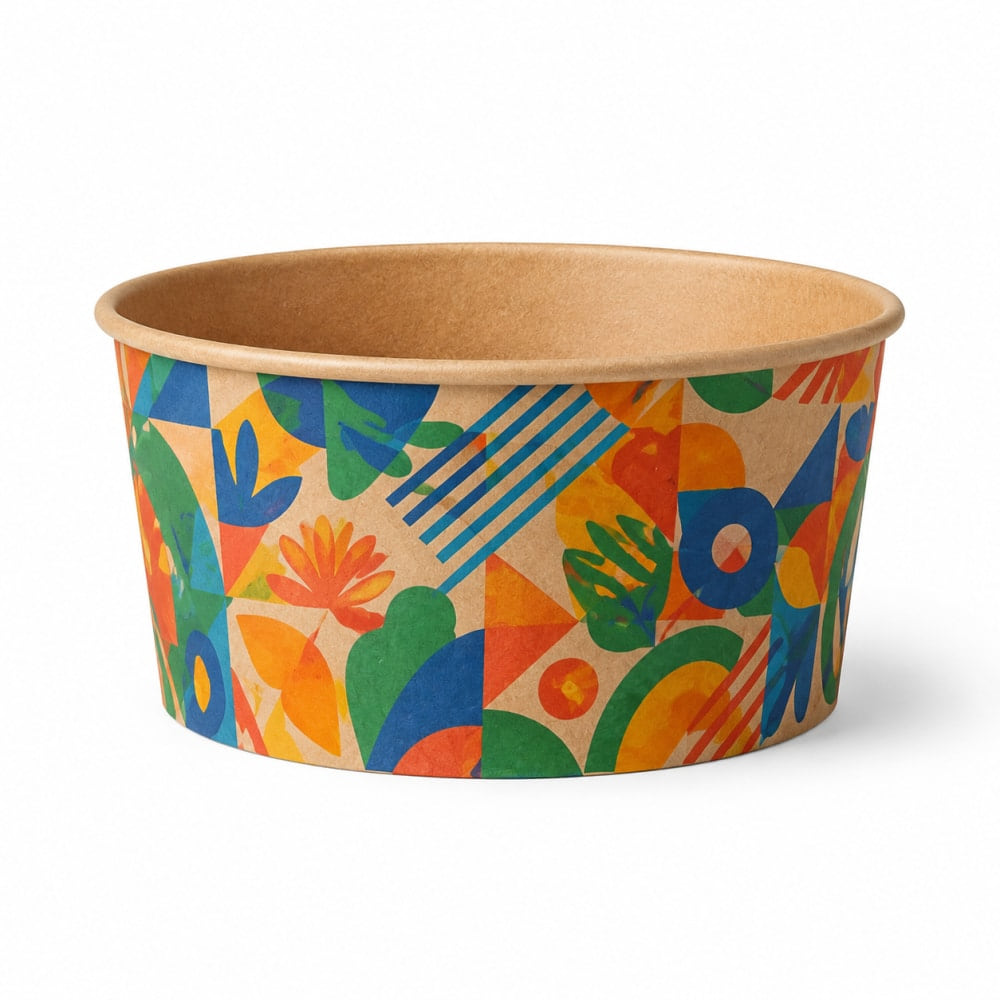
Kraft Paper Salad Bowls
A candidate for salad, deli or hospitality fresh-food service using an approved bowl-and-lid pair.
Review for the enquiryComplete composition, dressing contact, cold holding, lid fit and loaded carrying.
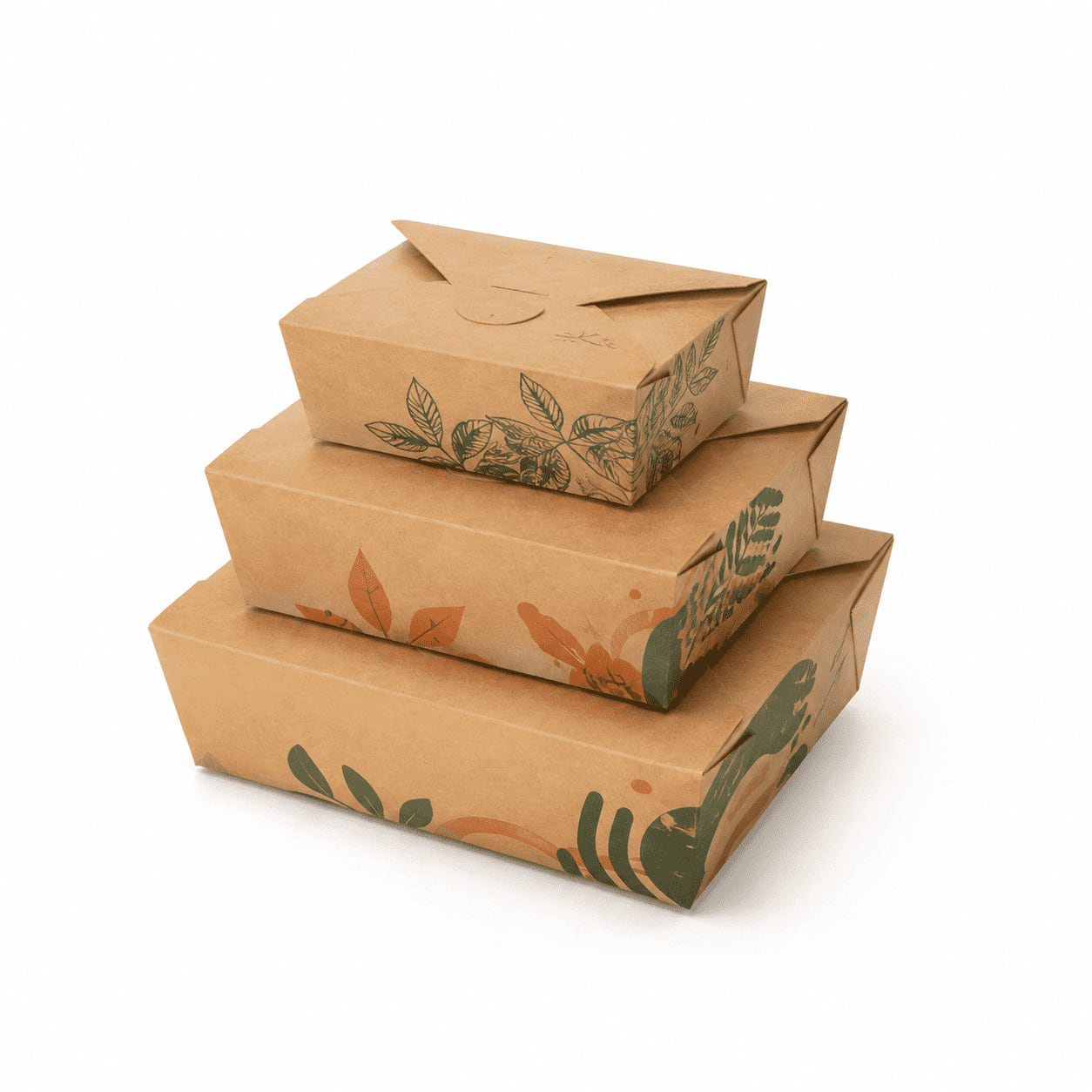
Kraft Paper Lunch Boxes
A candidate for a repeat takeaway or catering menu where a folded structure fits the meal.
Review for the enquiryLocal classification, food-use evidence, closure, moisture, event stock period and delivery trial.
FAQs: Sourcing Paper Food Packaging in United Arab Emirates
Does a Paper Cup Automatically Fall Outside UAE Single-Use Restrictions?
Do not decide from appearance alone. Obtain the full cup, barrier and lid description and review the applicable federal and emirate scope for the exact product. Dubai’s 2026 notice identifies plastic beverage cups and lids among restricted groups; local classification should be resolved before a custom run is approved.
Can a Dubai Approval Be Used for an Abu Dhabi Customer?
Record the scope of each review and check the relevant emirate requirements and customer policy. The same construction may be proposed, but approval for one setting should not be expanded into a blanket UAE claim without the appropriate review.
Should Re-Export Packaging Use the Same Specification as UAE Local Stock?
Only where the final destination and customer have approved that specification and artwork. Identify the final market before production, select the appropriate customs movement and use distinct stock codes for variants whose sale or use is limited to a destination.
When Is Locally Stocked Packaging Preferable to a Custom Import?
It can be practical for a small or uncertain menu, an urgent replacement or a short event where remaining printed stock would be difficult to use. Compare the complete delivered service, compatibility and branding method rather than the package unit price alone.
How Should Arabic and English Artwork Be Approved?
The buyer should provide final reviewed wording and approve the full actual-size layout. Check reading direction, fonts, fine text, seams and the physical surface. Keep the approved file reference linked to the production order and receiving record.
Can One Bowl Be Approved for Both Salad and Hot Takeaway Meals?
The complete bowl, barrier and lid must be assessed for each intended food and holding condition. Trial the actual menu and carrying sequence. Approval of a chilled salad use does not establish suitability for a liquid-rich hot meal or reheating.
What Should a UAE Importer Ask for Before Shipping?
Obtain the agreed specification, material description, relevant evidence, approved artwork, packing data and commercial documents. Confirm the importer, applicable local review, correct customs procedure and named delivery point with responsible parties before the goods move.
How Can an Event Caterer Avoid Excessive Custom Stock?
Separate the event-specific forecast from permanent demand, work backwards from the service date and agree how unused inventory will be handled. Compare temporary branding with a separate printed run and do not assume that another outlet can absorb the same artwork or format.
Send a Supplier Enquiry for the United Arab Emirates
You can include the menu, quantity by SKU and actual delivery point in your message. Enter your phone number with calling code, email and message, then choose Send Enquiry to submit directly through Zoho Forms. Your name and any product or quantity selections are optional.
Sources and Further Reading
Research checked on 22 October 2026. Official references support the local factual context; comparison frameworks and illustrative scenarios are purchasing guidance.
Dubai Municipality: final phase of single-use plastic restrictions from 2026 ↗
Environment Agency Abu Dhabi: single-use plastics policy guidance ↗
Product images are from Fude’s existing catalogue. Sample-review scenes are AI illustrations. Confirm the proposed SKU, materials, documents, quantities and commercial terms for the actual order.
 Saudi Arabia
 Germany
 United States