 Germany market guide
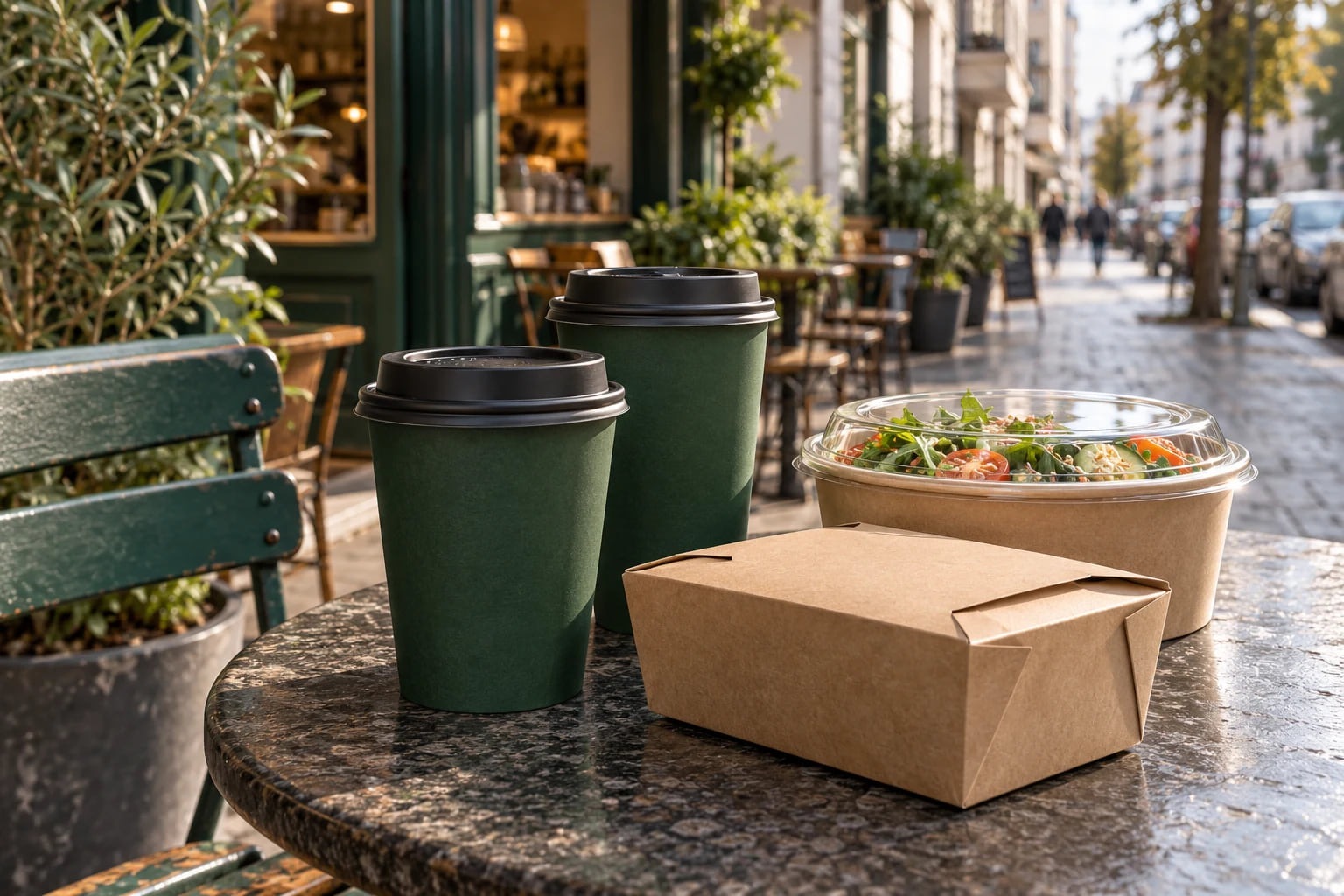
When Should a German Business Order Custom Paper Packaging?
Custom paper cups, bowls and takeaway boxes make the most sense when a business has repeat demand, a stable menu and enough visibility over future sales to use a production run without tying up excessive stock.
For a German coffee chain, this might mean one branded cup range shared across several locations. For a foodservice wholesaler, it could mean a private-label collection with consistent carton data and reorder specifications. For a new independent café still testing its menu, locally stocked packaging may be the more practical first purchase.
This guide explains which German businesses are suited to custom paper food packaging, how to compare products and suppliers, and how to move from an initial sample to reliable repeat orders. The comparison tables are purchasing frameworks, not claims that one material or sourcing country is always better.
Germany’s Food Packaging Market: What Buyers Need to Consider
Buying paper packaging for Germany involves more than translating a logo or naming a German delivery port. The useful local questions concern the sales channel, reusable alternatives, product documentation and the economics of replenishment.
Coffee-to-Go, Bakery Counters and Takeaway Menus Need Different Specifications
A bakery combining coffee with breakfast service needs fast cup handling, a suitable lid and manageable storage behind the counter. A lunch-delivery operation needs a container that performs after filling, waiting and transport. A fresh-food retailer may prioritise food visibility, label placement and loaded stacking in a refrigerated display. These are different purchasing briefs even when all three buyers describe their requirement as “sustainable food packaging”.
Use the actual menu to organise the range: hot drinks, cold drinks, chilled salads, oily snacks and sauced meals. A wide catalogue becomes useful only after each product has a defined service job. Fewer well-matched formats can also simplify staff training and repeat ordering.
Reusable Service Affects the Role of Disposable Packaging
German takeaway planning should account for reusable options. The German Environment Agency explains that the reusable-offer requirements introduced in 2023 have been carried into the VerpackDG framework.[1] Check the scope and any applicable exceptions for the business. Switching from a plastic cup to a paper cup should not be treated as an automatic way to avoid reusable-service obligations.
The practical purchasing consequence is to estimate the disposable volume that remains after the business’s reusable offer, customer-owned containers and any venue rules are considered. A workplace catering site with a functioning return loop may need a smaller disposable range than an otherwise similar takeaway counter.
Price Comparisons Should Reflect Margin and Inventory Pressure
Destatis reported that Germany’s hospitality turnover fell by 2.1% in real terms in 2025 compared with 2024. This refers to hospitality overall, not a measured decline in demand for paper packaging.[2] For purchasing decisions, the relevant question is how a packaging programme affects total operating cost: sleeves, lids, packing time, storage, wastage and cash committed to printed stock all matter alongside the unit price.
Regional delivery details belong in that calculation. A buyer receiving goods at a Hamburg warehouse faces a different inland journey from a business replenishing stores around Munich. The city name alone does not establish what product the business needs or how quickly it can consume a custom run.
Which German Businesses Are Suited to Custom Paper Food Packaging?
The strongest candidates are businesses that can describe a recurring packaging requirement and control the specification across orders. Company size alone is a poor test: a focused independent brand with predictable sales may be easier to supply than a larger organisation with frequently changing artwork and fragmented purchasing.
| Business type | Where custom packaging can help | What to confirm first |
|---|---|---|
| Coffee chains and multi-site bakeries | A recognisable cup range and consistent serving format across locations. | Shared sizes, lid compatibility, annual demand by size and central artwork control. |
| Independent cafés with repeat demand | A branded coffee-to-go presentation where the core menu is already stable. | How long each printed size will remain in stock and where cartons will be stored. |
| Restaurant and takeaway groups | Consistent bowls and boxes for a repeat menu and common packing routine. | Food conditions, delivery trials, closure performance and store-level usage. |
| Packaging importers and wholesalers | A private-label range with repeat specifications for several downstream customers. | Demand by SKU, resale labelling, carton data, stockholding and supply-chain responsibilities. |
| Salad, deli and fresh-food brands | Coordinated bowl or box presentation with suitable display and label space. | Filled volume, lid type, refrigerated holding and food-contact conditions. |
| Caterers and event operators | Consistent packaging for recurring contracts or a planned event programme. | Venue requirements, reusable arrangements, delivery dates and leftover-stock risk. |
When Local Stock Packaging Is the Better Starting Point
A short pop-up, uncertain opening date, changing menu or small one-off event may not justify a factory-produced custom run. Plain packaging with an appropriate label or sleeve can allow a business to test demand before fixing a print design. Check the suitability and full cost of that branding method rather than assuming it is always cheaper.
Before asking a manufacturer for a quotation, estimate usage for each size and design. A request for 100,000 pieces is incomplete if the order actually contains five sizes and four artworks. Each combination can create a separate production and inventory decision.
Stock vs Custom-Printed Paper Packaging: Which Is Right for the Business?
Custom printing is a commercial choice rather than a default upgrade. Its value depends on how often customers see the pack, how stable the branding is and whether the business can use the ordered quantity within a sensible period.
| Decision factor | Stock / plain packaging | Custom-printed packaging |
|---|---|---|
| Demand visibility | Useful while sales, portions or opening plans are still being tested. | More suitable when repeat demand can support a defined run by SKU. |
| Brand presentation | Can use a compatible label or sleeve, with additional materials and handling. | Integrates the artwork into the pack, subject to the chosen print process. |
| Artwork changes | Plain stock is easier to retain when a brand or offer changes. | Unused printed inventory may become obsolete after a redesign or campaign. |
| Purchasing effort | Often simpler when buying an available local format in small replenishments. | Needs specification, artwork approval, production planning and change control. |
| True cost | Include labels, sleeves, application labour and the purchased lid. | Include setup, proofs, freight, stockholding and potential unused print stock. |
Use Sales per Printed SKU to Test the Decision
As an illustrative calculation, a café using 400 cups on each of 240 trading days consumes 96,000 cups a year. That does not mean one 96,000-cup custom run is appropriate. If demand is split across two sizes and seasonal designs, each version sells more slowly and needs its own stock plan. This arithmetic is a planning example, not a stated market average or a supplier MOQ.
A practical first custom programme often keeps the core artwork stable and limits avoidable size variations. Seasonal messages can then be reviewed separately. Ask suppliers to explain the cost and minimum quantity for the actual size-and-design combination, not simply for “printed paper cups”.
German Packaging Distributor vs Direct Manufacturer: How to Choose a Sourcing Route
A German distributor, a European converter and an overseas manufacturer offer different combinations of stock access, production control and purchasing responsibility. Compare the proposed service rather than assuming that a domestic address guarantees local production or that a factory quote guarantees a lower landed cost.
| Buying priority | German / EU distributor | Direct manufacturing partner |
|---|---|---|
| Small or urgent replenishment | Can be a practical route where the exact item is already stocked nearby. | A new production run may not match an urgent or fragmented requirement. |
| Repeat custom range | May coordinate a custom programme; confirm who controls the specification. | Allows a direct discussion of production, artwork, materials and repeat runs. |
| Stock and cash exposure | Clarify call-off terms, available stock and who carries the inventory. | Model the order quantity, storage and cash committed before goods are consumed. |
| Import coordination | Confirm which import and delivery tasks are included in the price. | Agree Incoterms, importer arrangements, documents and the named delivery point. |
| Quality and complaints | Assess the local response process and the route back to production records. | Agree batch identification, acceptance criteria and the remedy process directly. |
A mixed sourcing model may suit a growing business: a planned custom range for predictable demand, with a compatible locally stocked option for exceptional replenishment. Check that the backup cup or container has actually been tested with the intended lids and food. Similar appearance does not establish compatibility.
Fude is a China-based manufacturing option for this comparison. The relevant question is whether the proposed specification, evidence, production quantities and delivery arrangement suit the buyer’s German operation. Review Fude’s company information and packaging services against the same criteria used for alternative suppliers.
Single Wall vs Double Wall vs Ripple Wall Paper Cups for Coffee-to-Go
For German cafés and bakery counters, cup selection should start with the beverage, fill temperature, service routine and customer handling. A heavier or more complex wall is not automatically the best choice for every drink.
| Cup type | Why a buyer might choose it | What to check in a trial |
|---|---|---|
| Single wall paper cup | A simple structure for a defined hot- or cold-drink specification; a smooth surface for artwork. | Hand comfort for hot service, any sleeve needed, coating specification and cup/lid fit. |
| Double wall paper cup | An additional outer wall for hot-drink handling and a relatively smooth branding surface. | Comfort at the actual fill temperature, separation from the stack, carton use and print proof. |
| Ripple wall paper cup | A textured outer wrap where grip and hot-drink handling are priorities. | Print legibility over the texture, hand comfort, stacking and the chosen lid’s retention. |
Compare the Complete Cup System, Including the Lid
Record serving volume in millilitres, the cup’s nominal capacity, rim diameter and lid reference. An “8 oz” label is not a complete German menu specification, and cups sold under the same nominal size may have different dimensions. Check usable fill space, milk foam and the clearance needed below the lid.
Run the trial at the counter: separate cups from a stack, fill them, apply lids and carry them as customers do. Compare a single wall cup plus sleeve against an insulated cup as complete service systems, including the extra handling. Confirm the exact double-wall configuration and availability with the shortlisted supplier rather than assuming every catalogue format is offered by every manufacturer.
Paper Bowls vs Lunch Boxes vs Trays for German Takeaway Menus
A container should be selected around the meal’s behaviour, not only its advertised volume. Dressing, hot oil, free liquid, condensation and time between packing and eating can change which format performs adequately.
| Format | Useful starting applications | Key trade-off to assess |
|---|---|---|
| Paper bowl with a separate lid | Salads, grain bowls and other meals where a bowl presentation suits the portion. | Food visibility, lid material, fit, filled stack stability and sauce contact. |
| Folded paper lunch box | Prepared takeaway meals where the menu and closure are compatible. | Fast packing versus closure security, condensation and the food’s grease or moisture load. |
| Compartment meal container | Meals needing separate components during handling. | Actual separation performance and the space each menu component requires. |
| Open food tray or fries cup | Counter-served snacks eaten soon after purchase. | Access and presentation versus protection during a longer carrying or delivery journey. |
Specify the Filled Meal, Not an Empty-Container Photograph
Ask kitchen staff to pack the normal portion and observe the result after the normal holding period. A lid that fits an empty bowl may behave differently when the bowl is overfilled, warm or loaded with other packs. A sample photographed immediately after filling cannot establish how a sauced meal will arrive after delivery.
Record the test conditions and the failures that would make the pack unacceptable. For a chilled salad, that could include dressing leakage or a lid that moves during stacking. For a hot lunch, it could include closure opening or a base losing adequate rigidity. These are proposed acceptance checks; the supplier must confirm the intended use of the ordered structure.
Paper vs Plastic vs Reusable Packaging: Compare the Service System
Paper appearance does not establish a product’s composition or environmental outcome. A paper cup can contain a polymer barrier; a kraft bowl can be supplied with a plastic lid. The complete pack and the local handling route belong in the comparison.
| Option or claim | Purchasing question | Evidence to review |
|---|---|---|
| Coated paper packaging | Does the full structure fit the food, temperature, branding and collection route? | Paper and barrier composition, lid information, intended-use conditions and applicable test evidence. |
| Plastic packaging | Is the exact format permitted and appropriate for this application? | Material-specific requirements, food-contact documents and any applicable product restrictions. |
| Compostability claim | What has been tested, under which conditions, and will the local route accept it? | A product-specific claim and its scope, including the coating, print and any separate components. |
| Reusable system | Can the operation support returns, washing, storage and redistribution? | A workable return process, suitable cleaning arrangements and the venue’s operating requirements. |
Keep Fibre Sourcing, Recyclability and Compostability Separate
A fibre-sourcing certification does not by itself establish finished-pack recyclability or compostability. For a recycling claim, examine the complete packaging design against the relevant assessment and collection context. ZSVR publishes a German minimum standard for assessing packaging design for recyclability; its current edition is a useful reference for that discussion.[3]
Likewise, an alternative coating should be assessed as a specified material rather than accepted as “plastic-free” from a sales description. If a supplier offers several barriers, request the available options, performance limits and evidence for the actual SKU. Keep claims on the printed pack aligned with what can be supported.
For purchasing, the outcome should be a clear description such as “paperboard with the specified barrier and matching lid, approved for the agreed food-contact conditions”. Broad terms such as “eco-friendly” are less useful when comparing otherwise different quotations.
How to Choose a Paper Packaging Manufacturer for a German Business
A supplier shortlist should be based on the ability to deliver an agreed product repeatedly. A broad catalogue, an attractive factory photograph or a company-level certificate cannot answer every question about the pack being purchased.
| Review area | What to request | Why it matters |
|---|---|---|
| Product and production scope | The proposed SKU, structure, production location and explanation of any outsourced stages. | Establishes who makes the ordered pack and who controls specification changes. |
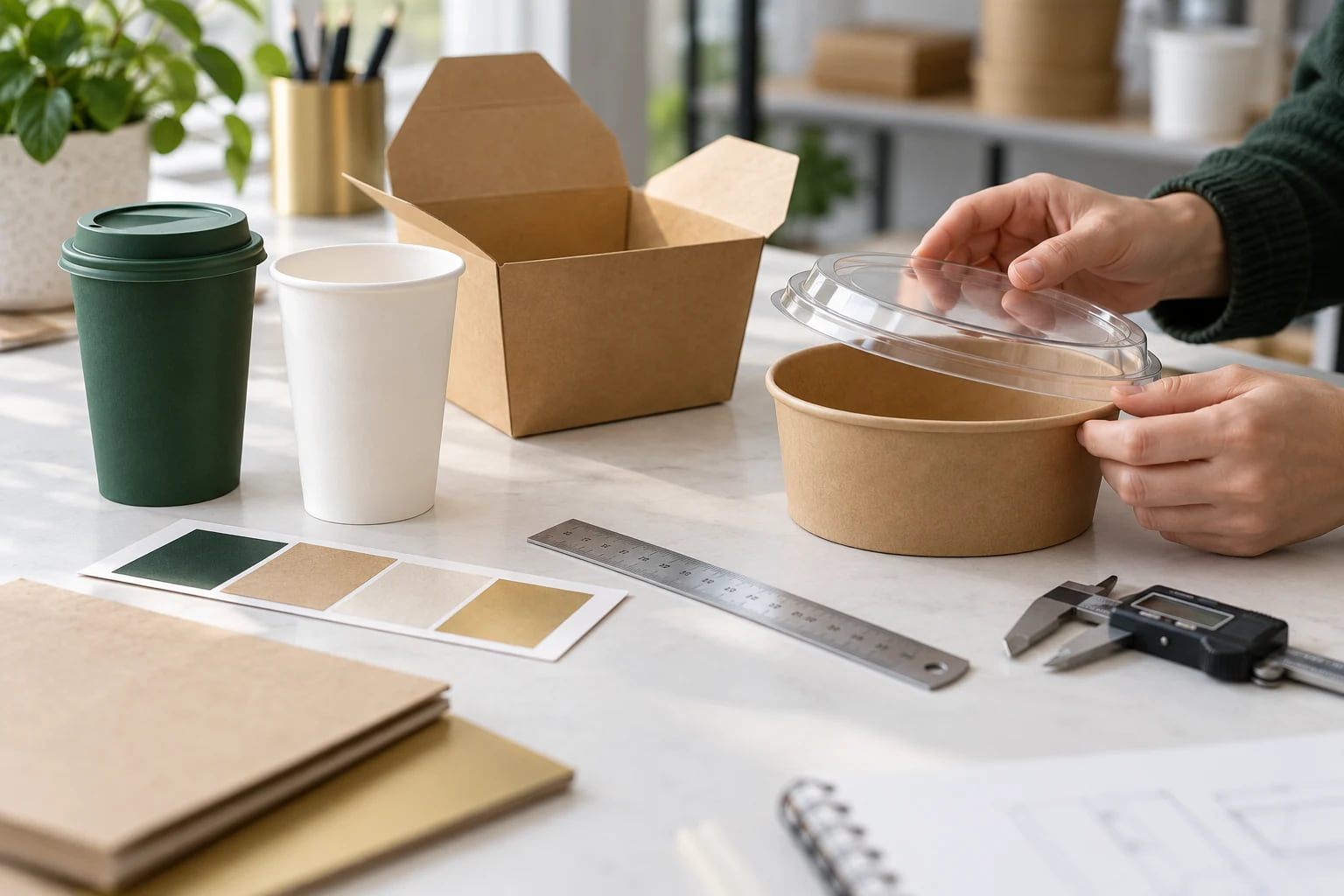
| Sample performance | Samples matching the proposed specification and a record of the intended conditions. | Allows the buyer to evaluate actual counter, kitchen or delivery use. |
| Relevant documentation | Reports, declarations and technical information linked to the actual material and product scope. | Supports a meaningful review rather than reliance on generic compliance badges. |
| Repeat-order control | Artwork revisions, material-change approval, agreed tolerances and batch identification. | Helps prevent an apparently identical reorder from becoming a different product. |
| Commercial and complaint process | MOQ by SKU, payment stages, inspection arrangements and a documented issue-resolution route. | Makes competing proposals comparable before an order is placed. |
Ask What Happens When the Specification Changes
A reliable comparison includes less convenient questions: what happens if a lid source changes, a coating becomes unavailable or a print colour needs correction? Ask which changes require approval, how retained samples are identified and how the next batch is checked against the approved version.
For a first order, evaluate the supplier on one representative packaging programme before expanding to a large assortment. The purpose is to establish a working specification and communication process. A larger first purchase is not evidence that the cooperation is ready to scale.
Custom Paper Cup Printing and Takeaway Branding for Germany
Good customisation starts with a usable product. Select the cup, bowl or box first, then prepare artwork for its actual printable area. Applying one flat design file to several differently shaped packs can produce inconsistent results.
Approve German Text, Markings and the Print Layout Together
For a project described as Pappbecher mit Logo, the brief should identify cup size, artwork version, colour references, print process and the required information on the pack. Where markings apply to a plastic-containing beverage cup, review the appropriate German-market artwork requirements before production.[4] A buyer-approved logo is not the same as an approved complete print layout.
Use readable type and review the design at actual size, including the seam, wrap and lid position. Confirm how fine details reproduce on a ripple surface. If colour consistency is critical across cups, bowls and boxes, agree the proof and acceptance method for each substrate.
Decide What Kind of Sample Is Being Approved
An unprinted structural sample helps assess handling and dimensions. A digital mock-up helps visualise artwork placement. A printed proof or production-representative sample addresses other questions. Ask which of these is included, whether any sample differs from the proposed production material, and what still needs approval before the run begins.
Keep one final specification and artwork register with a clear revision reference. If several German stores or franchisees order the same pack, identify who can authorise a change. This reduces the risk of an older file being used for a later purchase.
German Packaging Documentation: Food Contact, LUCID and PPWR
Documentation should be reviewed for the actual product, intended use and supply chain. Food-contact suitability, packaging conformity and extended producer responsibility are connected purchasing topics, but they are not interchangeable certificates.
| Review topic | What the buyer needs to establish | Information to obtain |
|---|---|---|
| Food-contact use | The ordered structure is assessed for the specified food, temperature and contact time under applicable rules. | Product specification, relevant reports and declarations; the EU framework and GMP are starting references.[5] |
| PPWR / VerpackDG roles | Which parties carry the relevant conformity and producer-responsibility obligations. | Named supply-chain parties, technical documentation and applicable declarations; review current ZSVR guidance.[6] |
| LUCID and system participation | The responsible business has addressed registration, participation and reporting as applicable. | Material fractions, component weights and quantities from the supplier; confirm the responsibility for the actual transaction.[7] |
| PPWR product requirements | The pack meets the requirements applicable at the time it is placed on the market. | Current evidence for the product, including relevant food-contact PFAS restrictions; implementation is phased.[8] |
Under the post-August-2026 framework, review the roles associated with private-label packaging and imported service packaging carefully. A purchase described as “licensed”, “FSC” or “EU compliant” does not by itself complete that review. Ask the responsible staff or adviser to assess the actual supply arrangement using current official guidance.
Make the document trail match the order.Record the supplier, ordered SKU, material structure, intended food use, artwork revision and batch reference. Where a document covers a family of products, confirm why that scope includes the ordered configuration.
How to Work with a Custom Paper Packaging Supplier: From Brief to Repeat Orders
A successful cooperation has clear approval points. The buyer should be able to see what is being selected, what is being tested and what has been authorised before the supplier proceeds.
Share the Menu and Demand Forecast
Describe food or drink, fill conditions, serving volumes, lids, annual usage and quantity per size and artwork. Include the German delivery postcode and required launch date.
Keep: one agreed requirement sheet.
Compare Written Specifications and Quotations
Ask shortlisted suppliers to quote the same structure, print scope, packing and delivery basis. Identify differences before comparing the totals.
Keep: a specification and quotation comparison.
Test Samples in the Real Operation
Run representative counter, kitchen and delivery trials. Check food performance, lids, packing speed and storage with the staff who will use the packaging.
Keep: a test record and approved reference samples.
Approve Artwork and the Production Order
Confirm text, print layout, evidence, quantities, tolerances, inspection, payment stages and the delivery terms. Make unresolved points visible before authorising production.
Keep: the approved order and artwork revisions.
Inspect and Receive the First Delivery
Review agreed checks before shipment and on receipt. Identify cartons and batches, document any issues and compare the delivered packs with the approved specification.
Keep: inspection and receiving records.
Review Performance Before Reordering
Compare actual consumption, store feedback, defects, stock use and delivery experience. Approve any changes before the next run rather than allowing silent substitutions.
Keep: a reorder specification and updated forecast.
These stages need not become a slow administrative exercise. A simple shared record is often enough to make ownership clear: the buyer approves menu fit and artwork; the supplier confirms the proposed product and production scope; relevant specialists review documents and import arrangements. Assign names and dates to the outstanding decisions.
MOQ and Landed Cost: How to Compare Wholesale Paper Packaging Quotes
There is no useful universal MOQ for “custom packaging”. Minimum quantities can depend on size, structure, coating, artwork and print setup. Ask for the MOQ of each requested combination and clarify whether different items can share a shipment. A mixed shipment does not necessarily mean a mixed production minimum.
| Cost group | Include in the comparison | Common mismatch to resolve |
|---|---|---|
| Product and branding | Pack, lid, sleeve or label, printing, setup and sampling charges. | One quote includes a lid while the other prices the container only. |
| Packing and freight | Pieces per carton, carton dimensions, gross weight and the quoted transport scope. | Similar unit prices create different shipment volumes or handling needs. |
| Import and destination costs | Applicable duties, brokerage, inland delivery, handling and import VAT cash-flow treatment. | FOB, CIF and delivered quotations are treated as if they include the same services. |
| Use and stockholding | Storage, additional handling, unusable packs and obsolete printed stock. | A cheaper larger run remains in storage or outlasts the artwork. |
For budgeting, compare total relevant cost divided by the quantity of usable packs, using the same assumptions for every supplier. Separate recoverable tax from permanent cost according to the buyer’s circumstances, and check customs classification and tax treatment with the appropriate adviser rather than accepting a generic online rate.
Before reducing unit cost by increasing the order, calculate how many months the additional stock represents. If the lower price requires more space, finance and obsolescence exposure than the business can support, the commercial saving may not translate into a better purchasing decision.
Lead Times and Replenishment Planning for Packaging Delivered to Germany
For a German buyer sourcing from overseas, “lead time” should be broken into artwork approval, sampling, production, shipment, customs handling and inland delivery. Ask which activities can overlap and which only begin after approval or payment. A production estimate is not a promised warehouse arrival date.
Use the Final German Delivery Point When Planning Transport
If the proposed route uses Hamburg or Bremerhaven, include the final warehouse postcode and receiving restrictions in the enquiry. A Berlin store, a Rhine-Ruhr distributor and a Munich fulfilment warehouse can have different inland and receiving arrangements. Confirm the named place, delivery appointment, unloading needs and responsibility for each part of the route.
Set Reorder Points Using Consumption and Confirmed Replenishment Time
A basic planning relationship is expected consumption during replenishment time plus an agreed buffer. As an illustration, usage of 30,000 packs a month over a confirmed two-month replenishment period consumes 60,000 packs before any buffer. The example does not assert that a Fude order takes two months; the actual schedule and uncertainty must be agreed for the project.
Track cups, lids and boxes separately. There is little value in having several weeks of cups if the matching lids are exhausted. For a multi-location business, include stock already held by stores and any variation between sites before placing a central reorder.
Keep core artwork stable enough to support repeat purchases. For seasonal campaigns or short menu trials, compare the stock implications of a separate print run against a smaller temporary branding element. The objective is a range that can be replenished consistently, not the largest possible first shipment.
FUDE Product Options for Buyers in Germany
Use these existing catalogue items as starting points for a written specification and sample review. Confirm the proposed structure, available options and supporting documents for the actual order.
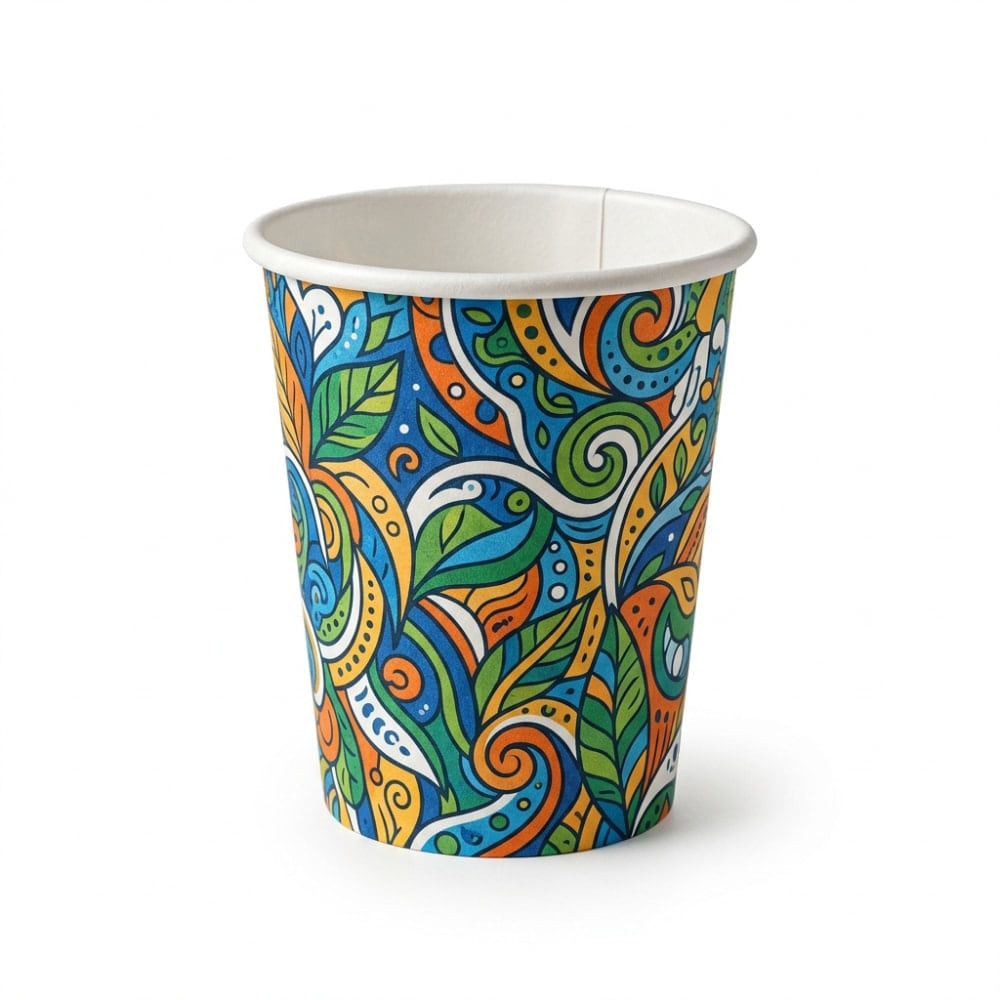
Custom Single Wall Paper Cups
A starting point for branded beverage programmes. Specify hot or cold use, serving volume and the lid pairing.
Review for the enquiryNominal oz versus usable ml, cup rim diameter, coating and sleeve requirements.
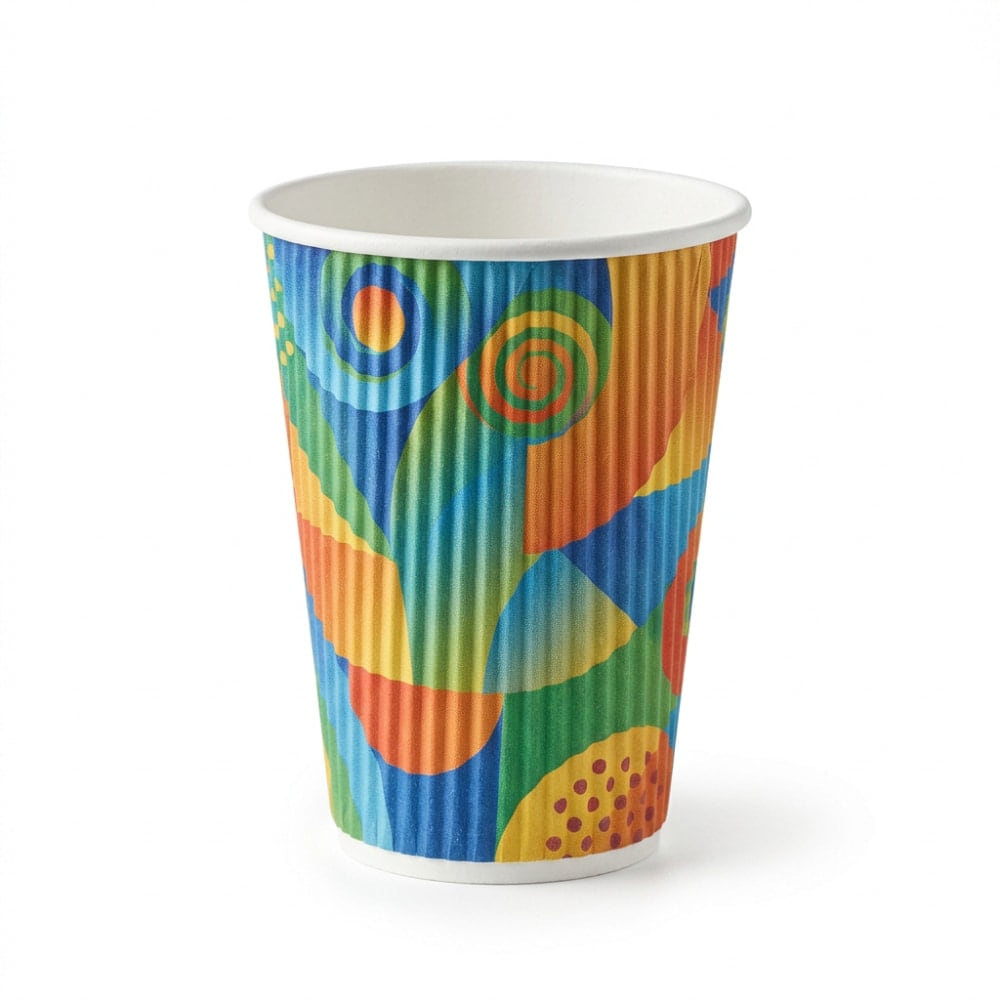
Ripple Wall Hot Drink Cups
A textured outer layer adds grip for takeaway hot drinks. Assess hand comfort using your normal fill temperature.
Review for the enquiryOuter print appearance, serving temperature, stacking and lid retention.
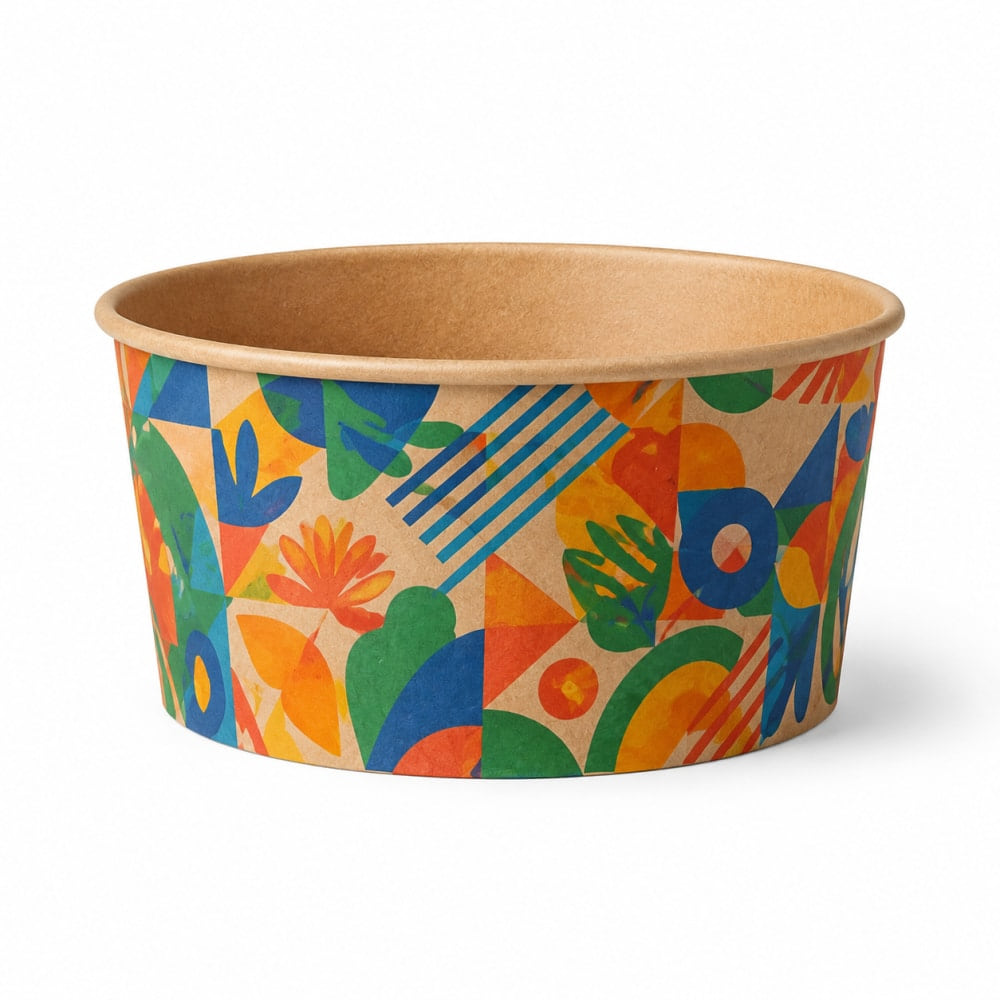
Kraft Paper Salad Bowls
Build a bowl-and-lid combination around portion size, display needs and carrying conditions.
Review for the enquiryBowl and lid compatibility, dressing contact, chilled holding and loaded stacking.
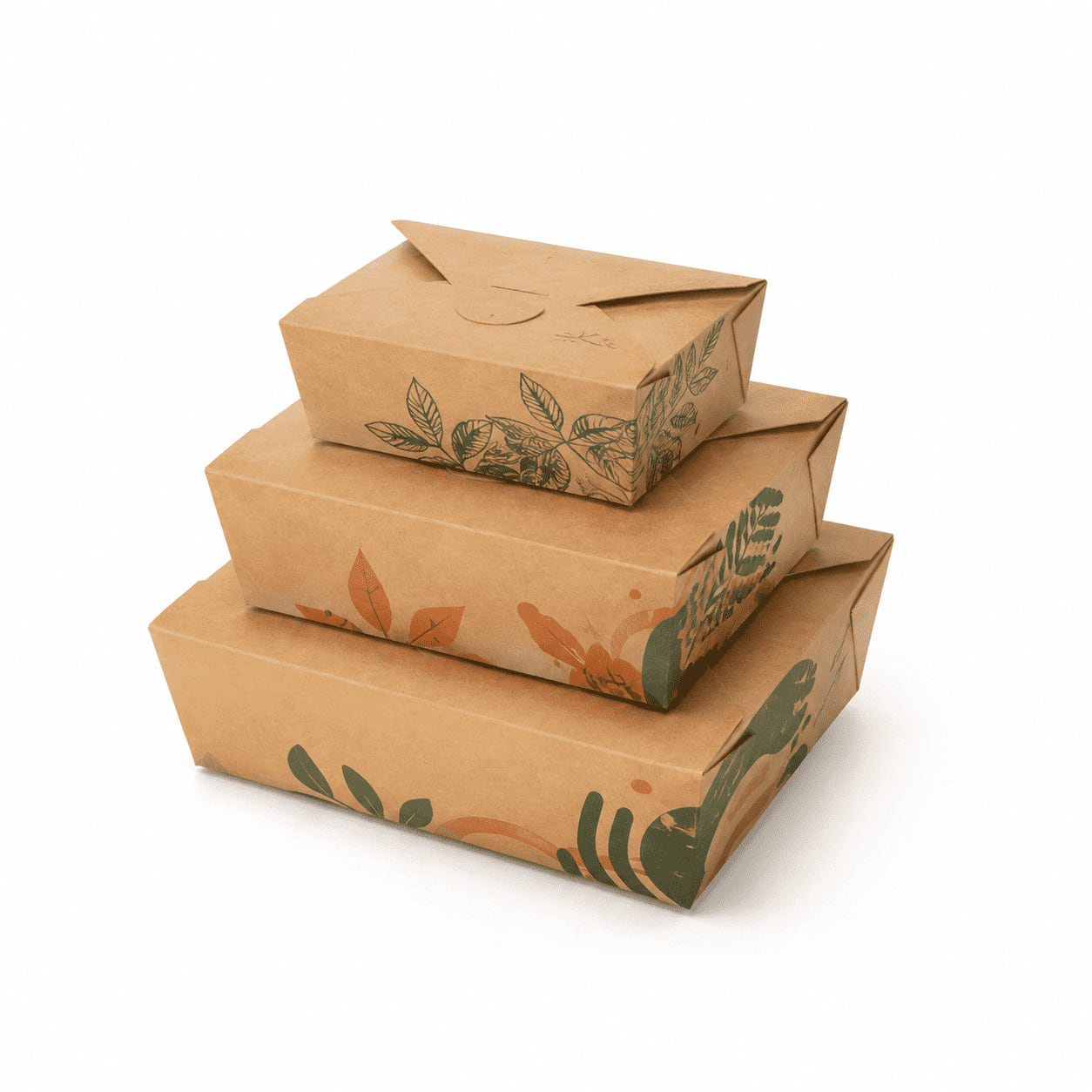
Kraft Paper Lunch Boxes
Consider a folded box for prepared meals where format, portion and packing speed matter.
Review for the enquiryGrease resistance, closure security, condensation and meal compatibility.
FAQs: Sourcing Paper Food Packaging in Germany
Is Custom Packaging Worthwhile for a Single German Café?
It can be, when demand, branding and the menu are stable enough to use each printed SKU within a manageable period. Estimate sales by cup size or container format, compare the full stock cost and ask for the actual MOQ. For a new café or a short trial, locally stocked packaging may be a better starting point.
Should a German Buyer Use a Local Wholesaler or Buy Directly from a Factory?
Compare the required service. Available local stock can help with small or urgent replenishments. Direct manufacturing can suit a recurring custom range where the buyer can manage quantities, specifications and import planning. Compare landed cost, inventory responsibility, evidence and complaint handling on the same basis.
Which Paper Cup Is Best for a Coffee-to-Go Business?
There is no single best wall construction for every menu. Compare single wall, double wall and ripple wall cups using actual fill temperatures, serving volume, lids, hand comfort and print needs. Include a sleeve where the proposed single wall system needs one, then compare the complete service cost.
Can Paper Bowls Be Used for Both Hot Takeaway Meals and Chilled Salads?
Only where the specific bowl, barrier and lid are suitable for both intended uses. A familiar appearance or nominal volume does not prove that. Confirm food-contact conditions and trial representative meals, holding time, stacking and carrying before adopting one bowl across the menu.
Are Kraft Paper Cups and Bowls Automatically Plastic-Free or Recyclable?
No. They may contain coatings, adhesives or separate plastic lids. Obtain the complete material description and assess the finished pack and local collection route. Fibre sourcing, recyclability and compostability are different claims and need their own supporting evidence.
Who Handles LUCID Registration and Packaging Obligations?
The answer depends on the parties’ roles and the actual supply chain under the current German and EU framework. Private-label and direct-import arrangements need particular attention. Use current ZSVR guidance, identify the responsible business and obtain the material and weight data needed for the applicable obligations.
What Should Be Approved Before the First Custom Production Run?
Approve the product specification, sample performance, relevant documents, complete artwork, quantity by SKU, acceptance criteria and commercial terms. Record the agreed delivery basis, schedule and how changes or defects will be handled. Distinguish a digital mock-up from a production-representative sample.
Can Several Cup and Bowl Sizes Be Combined in One Order?
Potentially, but confirm the production minimum and artwork requirements for each size, plus the shipment plan. Combining cartons in a shipment does not automatically combine MOQs. Compare packing data and stock consumption for the complete assortment before committing to a mixed range.
Send a Supplier Enquiry for Germany
You can include the menu, quantity by SKU and actual delivery point in your message. Enter your phone number with calling code, email and message, then choose Send Enquiry to submit directly through Zoho Forms. Your name and any product or quantity selections are optional.
Sources and Further Reading
Research checked on 22 October 2026. Official references support the local factual context; comparison frameworks and illustrative scenarios are purchasing guidance.
German Environment Agency: reusable packaging and reusable systems ↗
Destatis: German hospitality turnover in 2025, published February 2026 ↗
ZSVR: minimum standard for packaging design for recyclability ↗
European Commission: single-use-plastics marking specifications ↗
Product images are from Fude’s existing catalogue. Sample-review scenes are AI illustrations. Confirm the proposed SKU, materials, documents, quantities and commercial terms for the actual order.
 United Kingdom
 France
 Netherlands