
 Singapore market guide
Should a Singapore Food Business Order Custom Paper Packaging?
Custom paper packaging is most useful when the business has a stable takeaway offer, a repeat volume by format and a workable place to keep the stock. For a multi-outlet café group, one branded cup family can support a consistent service. For a small hawker stall still changing its menu, a locally stocked bowl may be more practical than a large custom order. The useful starting point is the operating model, not the size of the logo.
Singapore buyers should separate dine-in service, takeaway service and centrally prepared food delivered to another location. Those channels can require different packaging quantities and procedures even within one brand. A cup used at a mall takeaway counter and a lunch bowl sent from a central kitchen to an office should be evaluated as separate applications. The following guide connects those decisions with supplier selection, documentation, sample trials and stock planning.
A good buying programme also identifies who owns the packaging data, who approves artwork and who places repeat orders. These responsibilities can be split between a brand owner, local distributor, central kitchen and individual outlet. Make the split explicit before asking a manufacturer to quote; otherwise a technically suitable pack can arrive without the information or replenishment arrangement the business needs.
Singapore Foodservice Packaging: Distinguish the Service Setting Before Buying
Hawker-Centre Dine-in Service Is Different from Takeaway Demand
NEA states that disposables are disallowed for dine-in meals at all new hawker centres and at existing centres adopting common crockery and centralised dishwashing under the relevant programme. It also identifies requirements for new cooked-food stallholders at existing centres. These are defined service-setting rules, not a statement that every takeaway container in Singapore is prohibited.[2]
For procurement, first identify which sales actually need disposable packaging. Do not estimate an order by multiplying all meals by one container if a share is served on reusable crockery. Ask the operator or managing agent how dine-in and takeaway are distinguished at the point of service. This affects the size of a custom run, the front-counter storage requirement and the level of printed stock that is sensible for the stall.
Central Production and Outlet Service Can Require Different Approvals
A central kitchen may choose the container, while a café outlet applies the lid and a delivery team carries the finished order. Map that chain. The person approving a drawing may not see the steam, dressing or stacking experienced later in service. Include those downstream operations in a sample trial and ask who can reject a pack that does not work at the receiving location.
For a corporate lunch programme, decide whether meals are handed over immediately or held before employees collect them. For a beverage chain, examine whether staff fill cups at one preparation station and carry them to a separate collection point. These concrete service differences are a better basis for a specification than an undifferentiated request for premium takeaway packaging.
Which Singapore Buyers Benefit from Custom Cups, Bowls and Lunch Boxes?
The strongest fit is a repeat service with clear ownership of specification and stock. A buyer can be small and still have an orderly custom programme, provided the same format sells steadily and storage and cash commitments are understood. A larger operator can struggle if every outlet chooses a different cup or introduces its own design without a shared forecast.
| Buyer | Where a custom range can help | What must be known first |
|---|---|---|
| Multi-outlet café or bakery | A consistent takeaway identity and component list. | Serving volume, core sizes, matching lids and outlet usage. |
| Hawker stall or stall group | A suitable takeaway format for a stable menu. | Dine-in versus takeaway volume and actual stall storage. |
| Central kitchen / office meal service | A repeat container and label arrangement. | Filled food conditions, holding sequence and receiving-site needs. |
| Foodservice distributor | A private-label range for named channels. | Customer commitment, reporting data and delivery pack sizes. |
| Hotel or event caterer | A coordinated range for a planned service. | Venue requirements, event forecasts and return or reuse arrangements. |
A distributor should ask whether downstream customers can accept the same carton quantity and product dimensions. A format that works in a restaurant storeroom may be awkward for a stall needing frequent small deliveries. Custom branding does not remove that distribution problem; it can make unused stock harder to redirect when a customer changes its mind.
For an independent buyer, start by identifying the highest-consumption stable item. A single branded cup or lunch box can establish the approval and replenishment process before a larger assortment is created. Keep experimental menus on flexible stock formats until the actual portion, food-contact conditions and usage are sufficiently clear.
Dine-in Reuse vs Takeaway Paper Packaging: Plan the Right Volume
A Singapore packaging forecast should reflect the service channel the pack is allowed and intended to serve. Reusable crockery for dine-in and disposable packaging for takeaway can coexist within an operation, but they have different stock, cleaning and handling requirements. Treat the boundary as an operational control rather than a vague sustainability statement.
| Planning question | Reusable dine-in system | Takeaway paper packaging |
|---|---|---|
| Where does the item return? | Define tray return, collection and washing responsibility. | Assume the pack leaves the service setting unless a real return scheme exists. |
| What is forecast? | Peak circulation and cleaning turnaround. | Takeaway sales by menu and format. |
| What does the outlet store? | Clean serviceware and the return flow. | Unfilled packs, lids and any labels or carriers. |
| What needs approval? | The venue’s service and hygiene arrangement. | The exact pack, food conditions and local operating requirements. |
| What causes a shortage? | Items unavailable during washing or collection. | A missing lid, insufficient stock or an unexpected takeaway mix. |
For a hypothetical stall serving both channels, record the share of meals leaving the centre during a normal period and during an event or holiday period. Use those observed quantities to assess a custom MOQ. The example is a method, not an assumed national dine-in ratio. Include the packaging already held by a distributor and the stall when calculating what remains to be purchased.
If the business is adopting a reusable takeaway scheme, test the collection and return behaviour before reducing the disposable buffer. Conversely, do not purchase a long custom run simply because a reusable pilot has not yet been finalised. Stage the buying decision around a realistic transition plan and agree what happens to remaining printed stock if the channel mix changes.
Stock Containers vs Custom Printing for Singapore’s Compact Outlets
Space is a purchasing input. Measure the actual cartons and storage location instead of assuming that a larger run can always be absorbed somewhere in the business. A stall, mall outlet or shared kitchen may depend on frequent replenishment, while a distributor can hold stock elsewhere. The quotation should identify which party provides that service.
| Factor | Stock packaging / external branding | Factory custom printing |
|---|---|---|
| Uncertain menu | Allows a format change without discarding printed cartons. | Requires a stable portion and structure before the run. |
| Limited storage | Can suit smaller deliveries if local availability is reliable. | Needs agreed off-site stockholding or sufficient on-site capacity. |
| Counter presentation | Labels or sleeves add an application task. | Print is integrated, but proof and revision control are needed. |
| Several small outlets | Can accommodate different local needs. | Works better if sizes and artwork are coordinated. |
| Short promotion | A temporary branding element may limit obsolete base stock. | A separate print run needs a campaign-specific consumption plan. |
Compare labour and stock exposure as well as the pack price. A label applied by hand can affect service consistency, but a printed box held beyond a menu change can also create waste. Ask staff to demonstrate the proposed branding routine during a real service trial. Include the time spent finding the correct size and separating nested packs.
For planning, calculate months of stock for each size and artwork, not merely for the whole brand. If several outlets share a design, confirm whether their consumption patterns are sufficiently similar to justify a common size. A standardised cup that consistently leaves too much empty serving volume may not be a good operational standard.
Local Singapore Distributor vs Overseas Manufacturer: Compare Stockholding Responsibility
A local distributor may solve frequent deliveries and small-order consolidation. A direct manufacturer may suit a stable private-label programme whose buyer can organise imports and storage. Ask what is actually included: available stock, reserved custom inventory, local delivery, documentation or only a factory shipment.
| Priority | Singapore distributor | Direct manufacturing relationship |
|---|---|---|
| Frequent small deliveries | Check minimum drop size and route coverage. | Arrange a local stockholding and distribution solution. |
| Custom design control | Identify who approves changes with the producer. | Agree artwork and material revisions directly. |
| Packaging data | Request product-level weights and composition from the supply chain. | Confirm how the manufacturing data will be supplied and updated. |
| Import work | Clarify the importer and included permit / tax tasks. | Appoint responsible local parties before shipment. |
| Unsold custom stock | Check reservation, cancellation and ownership terms. | Model the complete run and any future call-off agreement. |
A shared procurement arrangement for several stalls can create combined demand, but it also needs governance. Decide whether the group buys one common unbranded specification or several printed designs. Clarify who owns cartons if a participant leaves. A group total is not enough if the production minimum is applied separately to each artwork.
Do not assume that the shortest physical international route provides the best commercial service. A factory may be close enough to appear convenient but still require artwork approval, production scheduling, customs processing and local handling. Compare the actual replenishment commitment and the buyer’s ability to hold reserve stock.
Paper Cup Selection for Kopi, Specialty Coffee and Cold Takeaway Drinks
Describe the intended drink programme before choosing a cup wall. A brand might serve hot coffee, a milk-based cold drink and an ice-heavy beverage in superficially similar cups, but the fill, condensation and customer handling can differ. The supplier needs the actual conditions rather than a category such as café packaging.
| Option | Possible role | What to observe |
|---|---|---|
| Single wall cup | A defined hot- or cold-drink specification with a smooth print surface. | Condensation, hand comfort, any sleeve and the selected lid. |
| Double wall cup | An additional outer wall for a hot-drink programme. | Actual comfort, stack separation and occupied carton space. |
| Ripple wall cup | Textured grip where hot-drink handling warrants it. | Artwork readability, outer wrap and fit with the service routine. |
| Cup and lid pair | A complete hand-off system for takeaway. | Closure retention, usable fill line and customer carrying. |
Record the cup volume and dimensions in a way the kitchen and manufacturer both understand. A catalogue size is not necessarily the usable space for the recipe after ice, foam or headspace is allowed. Check whether staff can follow a consistent fill reference without overfilling the cup and compromising lid application.
Test several consecutive servings at the preparation station rather than evaluating one carefully assembled sample. Staff should be able to separate the stack, fill the cup, fit the lid and hand it over without extra workarounds. If a different component is proposed during a shortage, repeat the relevant checks before treating it as an approved substitute.

Paper Bowls vs Lunch Boxes for Hawker Takeaway and Office Meals
A Singapore menu can include rice, noodles, curry, salads and mixed components, but a purchasing brief should not assume one paper structure is suitable for all of them. Separate free liquid, oil, moisture and food presentation requirements, then identify the formats that merit a real trial.
| Use case | Candidate structure | Acceptance question |
|---|---|---|
| Chilled salad or grain bowl | Paper bowl with an appropriate lid. | Does the dressing, filled volume and cold display remain acceptable? |
| Packed rice or other compatible meal | Folded paper lunch box. | Does the closure stay secure after holding and carrying? |
| Meal with a separate liquid component | A separately specified liquid container and the main meal pack. | Has the full combination been tested rather than assumed from the dry meal? |
| Snack served for immediate eating | Open tray or appropriate snack format. | Is the protection sufficient for the intended takeaway journey? |
For a central-kitchen office lunch, reproduce the sequence from filling to distribution and collection. If the pack is held warm or chilled, record the actual conditions and check the supplier’s approved use. A photograph at the filling table does not reveal what the recipient will see after the order has been stacked and moved.
For a stall handing food directly to a customer, test the bag or carrier used with the pack. A secure closure can still be undermined if several containers are squeezed into an unsuitable carrying arrangement. Record the complete system and train staff on the approved fill and stacking pattern.
Food-Contact Suitability: What Singapore Buyers Should Request from a Packaging Supplier
SFA explains that packaging imported for use in Singapore must not transfer harmful substances to the food that contacts it. Its guidance also stresses appropriate use of plastic food packaging. A paper-based pack with a barrier or separate polymer lid should therefore be reviewed as a complete material system, not approved simply from its kraft appearance.[3]
| Information | Why the buyer needs it | Question to resolve |
|---|---|---|
| Complete composition | Includes the barrier and separate components. | What does the food actually contact? |
| Intended conditions | Links the pack to the food and holding routine. | Hot, chilled, oily, acidic or other relevant conditions? |
| Relevant evidence | Supports the ordered structure rather than a generic catalogue. | Do reports and declarations cover this configuration? |
| Production identity | Links an approved sample to a supplied batch. | Who controls a change in paper, coating or lid source? |
Give the supplier the conditions before requesting a report. Ask the responsible reviewer to assess whether the evidence corresponds to the proposed food type, time and temperature. A test performed for a different construction or use may still be useful background, but the reason for its relevance needs to be established.
Avoid turning a microwave symbol, a verbal claim or a sample’s appearance into permission for an unreviewed use. If reheating in the pack is part of the service, specify that requirement explicitly and obtain an appropriate response. The safest buying process is one in which the intended use is recorded and everyone knows which conditions have actually been approved.
Mandatory Packaging Reporting: Identify the Responsible Singapore Business
NEA’s Mandatory Packaging Reporting framework applies according to business activities, specified packaging and the relevant turnover conditions. The current guidance describes an annual turnover threshold exceeding S$10 million and provides reference-year rules and reporting timelines. Buyers should check their exact scope rather than treating the threshold as a fee on every takeaway container.[1]
Supplier Data and the Reporting Decision Are Different Tasks
A manufacturer can provide component weights and material descriptions, but the local business must establish which packaging it reports and how the framework applies to its transactions. A distributor supplying several food operators should clarify the data chain with its customers instead of assuming that an upstream or downstream party automatically covers everything.
Create a product master with pack and lid weights, material fractions, units, carton quantities and revision dates. Ask how a supplier will notify the buyer if the construction changes. The same information can support cost and stock analysis even when the business is outside the current reporting scope, so collecting it should be part of orderly procurement rather than a last-minute administrative request.
Keep the Reporting File Usable When Products Change
If the business switches from a cup plus sleeve to an insulated cup, update the component list rather than retaining the previous set of weights. If a bowl is sold with alternative lids, identify which combination is being recorded. Reconcile purchases, issue quantities and any relevant records through a consistent method approved by the responsible team. Keep statutory interpretations with the person assigned to review them.
Paper, Alternative Coatings and Reuse: Make Singapore Packaging Claims Specific
A material decision should explain both performance and the proposed end-of-use arrangement. Terms such as natural, compostable and recyclable are not interchangeable. A paperboard base may include a barrier, while the separate lid can follow a different material route. Ask which components are included in any claim and what evidence supports the wording.
| Proposition | Evidence to examine | Operational question |
|---|---|---|
| Paper-based pack | Board, barrier, inks and lid specification. | Does the construction suit the actual food and holding time? |
| Alternative coating | Exact material, availability and product-specific support. | Can the supplier maintain the same approved configuration? |
| Compostable claim | Test scope and stated conditions. | Is there a real accepting route for this service? |
| Reusable programme | Collection, cleaning and return arrangements. | Can the operation sustain the circulation of items? |
For a caterer serving a controlled workplace, ask the receiving site how waste and reusables are actually managed. For an outlet whose customers carry packs away, avoid assuming a controlled collection destination. An appropriate statement may need to be more limited than the wording used for a fully managed event or return scheme.
Review printed disposal messages with the operational team. A simple instruction that the business can support is more useful than several unqualified symbols whose meanings conflict. Keep fibre sourcing evidence separate from food-contact approval and end-of-life claims, and make sure artwork does not imply a property the complete pack has not demonstrated.
How Singapore Buyers Can Select a Paper Packaging Supplier for Repeat Orders
Assess the supplier through the proposed programme: specification, samples, data, stockholding and a process for resolving problems. A catalogue with many sizes does not establish that the selected lid is available with the chosen bowl or that future batches will use the same construction. Ask for a written response to the exact combination.
| Review area | Request | Purchasing consequence |
|---|---|---|
| Production scope | Who makes the pack and controls each significant stage. | Establishes the change and investigation route. |
| Sample relevance | Differences between the sample and proposed production. | Shows what the trial can actually approve. |
| Packaging information | Component weights and material descriptions by SKU. | Supports reporting and consistent product records. |
| Stock service | Available versus reserved inventory and delivery terms. | Shows who carries a shortage or unsold-stock risk. |
| Issue response | Batch identification, evidence required and remedy process. | Makes complaints actionable after goods are distributed. |
A local supplier’s relationship with the manufacturer should be clear enough to investigate a recurring issue. If several outlets report loose lids, the buyer needs the affected batch and component references, not only a request to try another bag. Agree how photographs, samples and distribution records will be gathered without interrupting every outlet unnecessarily.
For a direct manufacturer, establish how the first run will be checked and which documents accompany it. A good commercial relationship still needs a retained approved reference, receiving checks and a way to approve changes. Repeat supply becomes easier when both parties can identify the same specification rather than relying on a photograph from a previous order.
Custom Printing for Singapore Café, Stall and Catering Brands
Choose the physical pack before finalising its design. The printable area, seam, folded panels and texture can affect how the logo appears. A design suitable for a smooth cup is not automatically appropriate for a ripple wrap or a kraft lunch-box panel. Request the relevant artwork guide and review the layout at actual size.
Use Language Deliberately, Not as Decorative Filler
An operator may choose English, Chinese, Malay, Tamil or a combination according to its own customers and brand. The buyer should provide approved final wording and have an appropriate language reviewer check it. A supplier should not be expected to decide which translation expresses the brand correctly or to create unreviewed claims on its behalf.
Separate a permanent core design from temporary promotions, outlet addresses and changing menu information. A shared cup can support several locations without printing every address onto it. If a short campaign needs a different version, forecast its stock separately and make the artwork reference visible to the purchasing and receiving teams.
Distinguish Visual Mock-Ups from Print Acceptance
A digital rendering can confirm placement but cannot prove the colour, surface or fine-detail result of the printing process. Agree which proof is required, which characteristics are being approved and how production will be compared with the reference. For a coordinated cup-and-box range, assess each substrate rather than promising identical appearance across different materials.
Sample Trials for Singapore Takeaway Counters and Central Kitchens
The most useful trial reproduces the real filling and hand-over sequence. Ask counter staff to use several samples during a representative service period and record the reason for any workaround. A pack that looks attractive in a presentation can still be slow to separate, awkward to fill or difficult to close when the normal portion is used.
Test the Demanding Representative Use
For a beverage trial, include the ordinary fill conditions, any ice or foam allowance, lid fitting and carrying. For a meal trial, include the chosen food, sauce, holding time and stacking arrangement. Do not use a dry sample meal to approve a moist or oily menu category. Where several uses are proposed, record which have been tested and which remain outside the approval.
If a central kitchen and an outlet both handle the same order, retain observations from both places. Confirm whether labels remain legible and whether staff can identify the product and intended meal quickly. Include the carton and inner packing in the review, because an acceptable pack can be difficult to use if the storage and opening routine is impractical.
Translate Observations into a Repeat Specification
List the accepted dimensions, components, appearance and performance conditions in a simple approval record. Retain the reference and the corresponding artwork version. If the supplier changes a barrier or lid later, revisit the affected trial rather than assuming the earlier approval follows the brand name of the product. The record should make a future reorder easier to check.
MOQ, Landed Cost and Storage: Compare the Usable Programme in Singapore
A lower unit price is only useful if the quantity can be consumed, stored and financed sensibly. Ask for carton dimensions and quantities early in the discussion. Calculate how many cartons reach the store, central kitchen or local warehouse, then compare the delivery and storage model with an available local-stock alternative.
Include the Cost of Small Deliveries and Extra Handling
The full comparison may include the pack, lid, print setup, sample charges, freight, import processing, GST cash flow, local delivery and storage. An outlet-level delivered price and a factory price are different propositions. Identify which costs are included and which party performs the omitted tasks, using the actual quotation rather than a generic rate.
Singapore Customs describes the importer and permit requirements and explains that imported goods are accounted for through the applicable import and tax procedures. Confirm the correct local party, accurate goods description and supporting documentation with the declaring agent. A rule for temporarily imported empty freight containers should not be assumed to cover disposable foodservice packaging bought for local use.[4]
Model Quantity by Artwork and Component
A mixed shipment can include cups, lids and boxes but still involve separate production minima. For each printed item, divide the proposed quantity by expected monthly use to estimate stock months. Include stock held by the supplier and outlets. If that period extends beyond a planned menu or brand change, reassess the quantity or the branding method before placing the order.
Replenishment Planning for Singapore Distributors and Multi-Outlet Buyers
A short local driving distance does not remove the need for stock planning. The supplier may replenish from an overseas run, and the outlet may depend on a limited delivery schedule or receiving window. Separate manufacturing replenishment from the final local drop and identify the point at which each party takes responsibility.
Keep Central Stock and Outlet Stock Visible
For a hypothetical café group, maintain one consumption record by cup size and lid reference while also tracking the quantity at each outlet. This makes a shortage visible before a central buyer places another order for an already overstocked size. Allow outlets to flag changes in menu mix, opening hours or nearby events that affect the use of packaging.
Use the confirmed total replenishment time to estimate consumption before the next delivery, then choose a buffer with a clear reason. A buffer for a high-consumption core cup may differ from a seasonal printed bowl. Include orders already in production and goods in transit. The method should expose assumptions and responsibilities rather than imply a fixed delivery period for every supplier.
Create an Approved Emergency Substitute
A backup item should be checked for food use, dimensions, lid fit and artwork implications before it is needed. Tell outlets which substitute is approved and which uses are excluded. This prevents an urgent locally purchased pack from becoming an unreviewed replacement across the whole menu simply because it is available on the day.
How to Work with a Paper Packaging Manufacturer for a Singapore Programme
Send a brief that explains the service channel, menu, pack dimensions, quantity by SKU, artwork, storage and delivery arrangement. Include who needs packaging weights and composition data. A supplier can then propose a defined product and ask focused questions instead of responding with a broad catalogue that leaves the buyer to infer suitability.
Agree the Approval Points Before Authorising a Run
Compare written quotations for the same construction and delivery basis, obtain suitable samples, complete the operational trial and review the relevant evidence. Agree the final artwork and production reference before placing the order. Make the minimum quantity, payment stages, inspection, packing and remedy process explicit. The buyer should know what can change and who must approve it.
For a stall group or multi-site brand, document how individual outlets commit to the common order. Decide who owns the printed inventory and who can release it for delivery. If a local distributor holds the goods, distinguish its manufacturing commitment from its normal stock terms. These arrangements can matter as much as the price of a cup.
Review the First Order Before Widening the Range
After delivery, compare sample approval with actual use, check carton quantities and document the stock and service experience. Confirm that data and artwork versions match the delivered items. Use the lessons to revise the reorder specification. A successful first cup does not automatically approve an unrelated lunch box or a different food-contact use; extend the programme through relevant trials and clear records.
FUDE Product Options for Buyers in Singapore
Use these existing catalogue items as starting points for a written specification and sample review. Confirm the proposed structure, available options and supporting documents for the actual order.
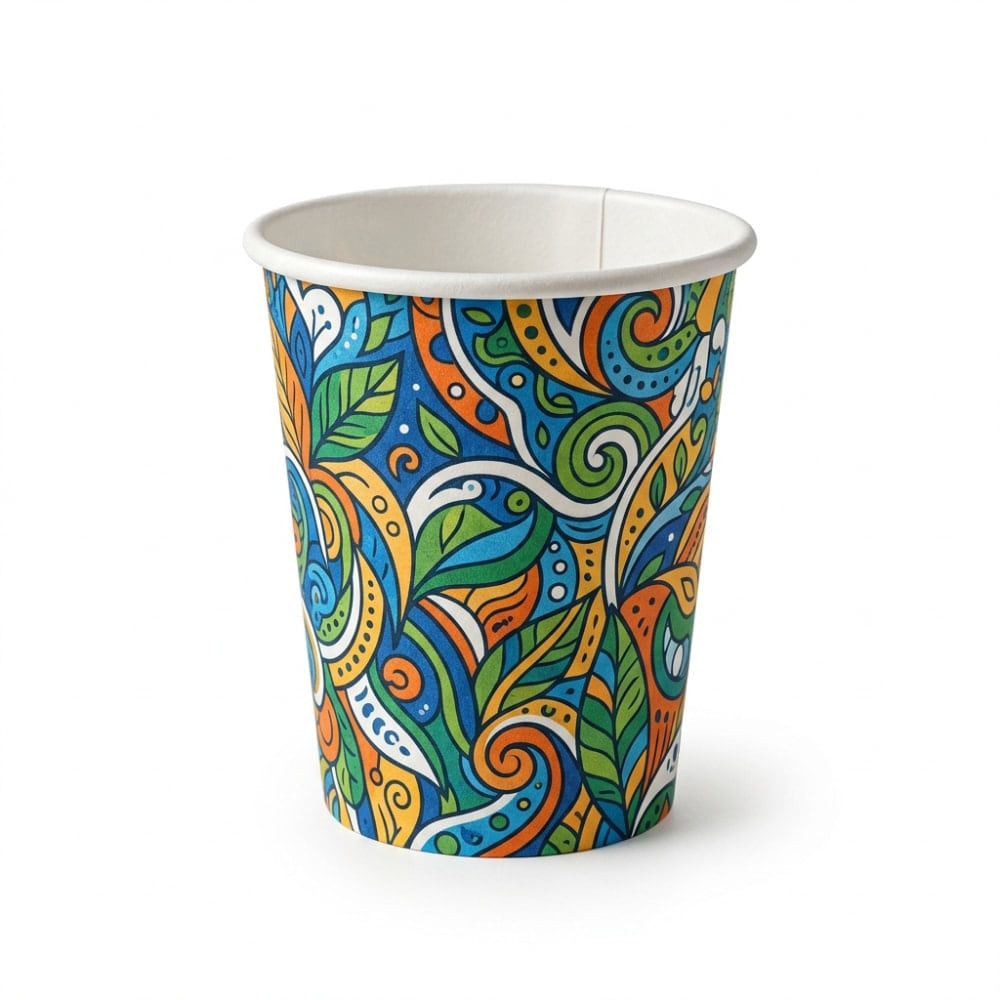
Custom Single Wall Paper Cups
A starting point for a defined takeaway beverage range where a smooth branding surface is appropriate.
Review for the enquiryRecipe fill volume, coating, cold condensation or hot handling, lid reference and storage cartons.

Ripple Wall Hot Drink Cups
A candidate for hot coffee hand-over when grip and handling justify the textured wrap.
Review for the enquiryReal-temperature trial, print clarity, stack separation and complete cup/lid cost.
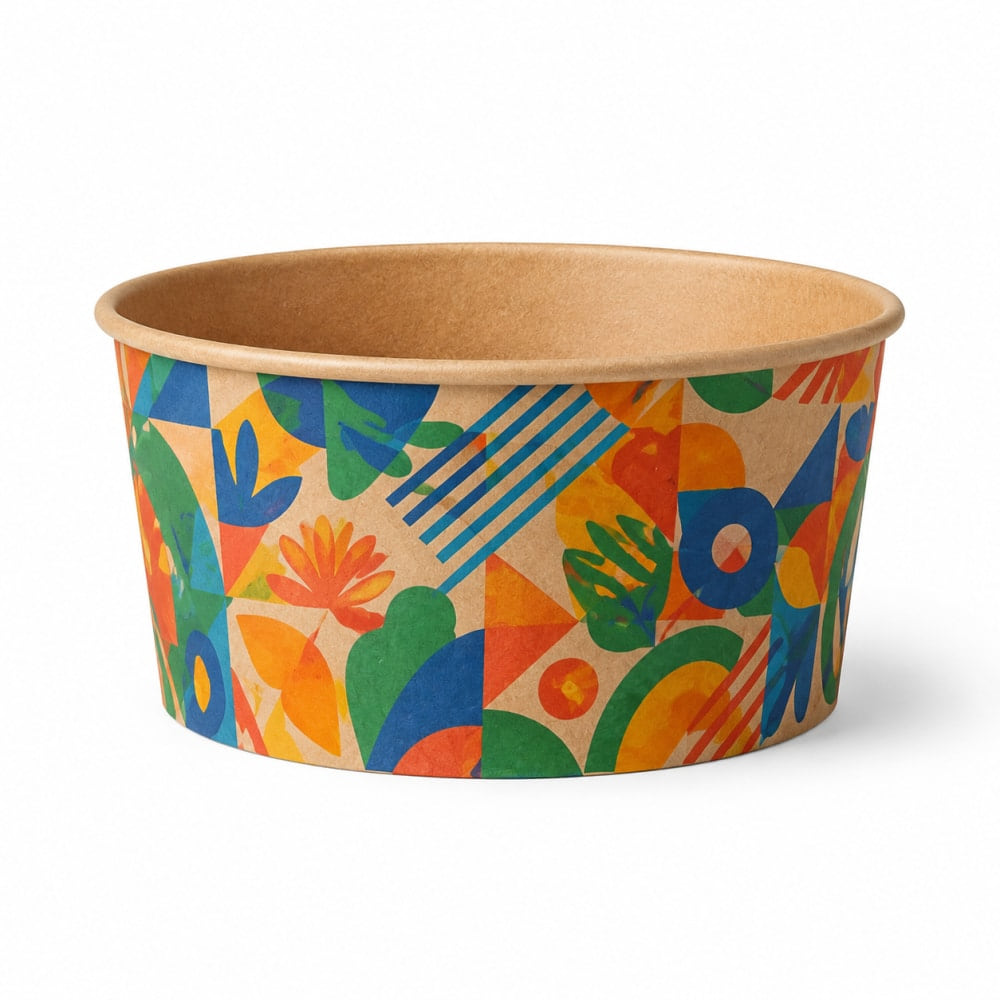
Kraft Paper Salad Bowls
A candidate for chilled salad or office-meal programmes with a specified bowl-and-lid presentation.
Review for the enquiryDressing contact, holding sequence, loaded stacking and compatibility of the exact lid.
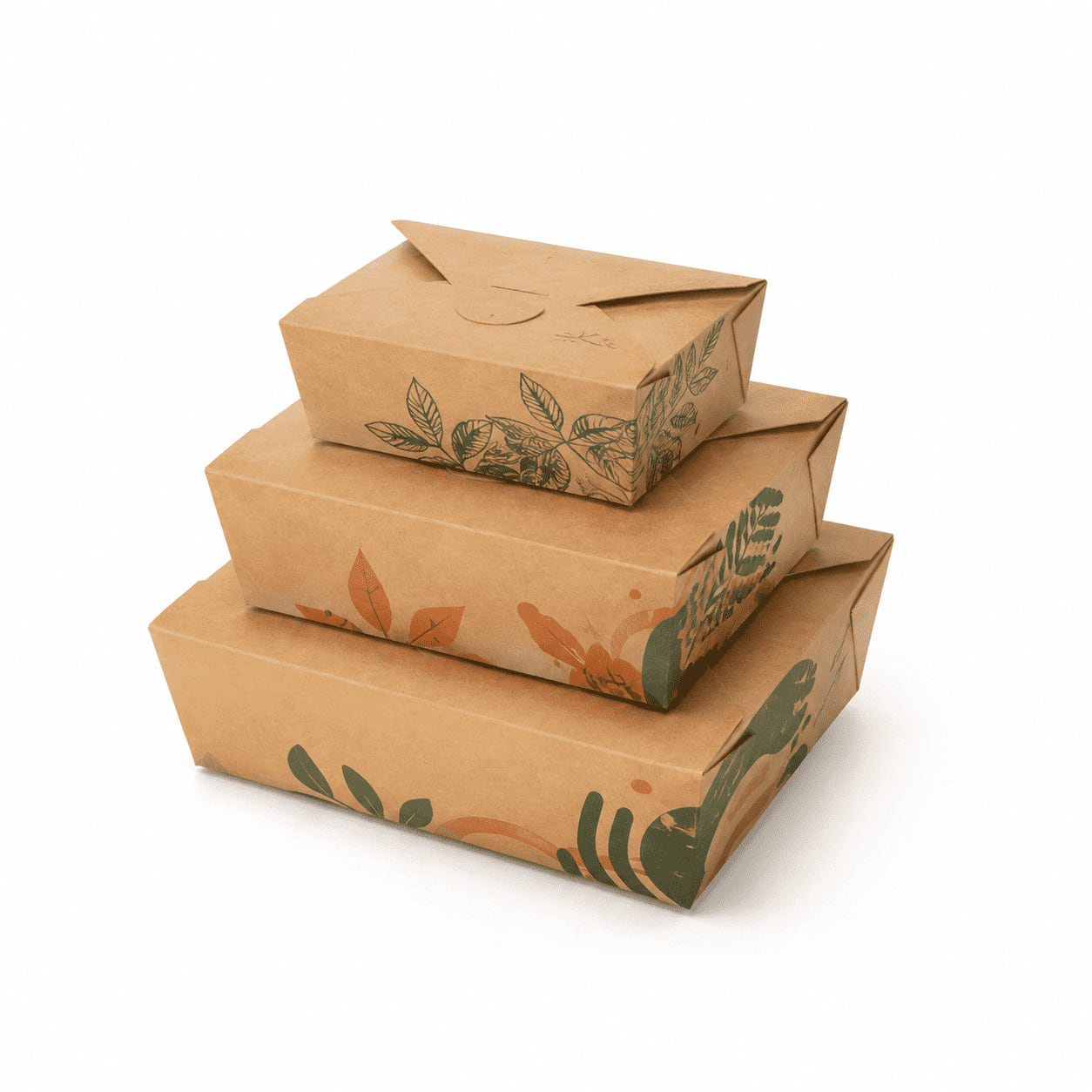
Kraft Paper Lunch Boxes
A candidate for a stable takeaway menu where the portion and food conditions suit a folded box.
Review for the enquiryOil and moisture load, closure, carrying trial and carton storage at the outlet.
FAQs: Sourcing Paper Food Packaging in Singapore
Do Singapore Hawker Stalls Need Disposable Packaging for All Sales?
First separate dine-in and takeaway service. NEA describes defined dine-in requirements for hawker centres and stallholders, and the operator should check the setting that applies. Forecast the takeaway quantity rather than assuming every meal needs a disposable pack.
Does Mandatory Packaging Reporting Apply to Every Small Café?
Scope depends on the activity, specified packaging, turnover conditions and reference-year rules. Check the current NEA guidance for the actual business. The reporting threshold is not a universal charge on every cup or food container. Ask the supplier for useful weights and composition data without assuming that the supplier makes the legal scope decision.
Is a Local Distributor Better than Direct Importing?
Compare the required stockholding and delivery service. A distributor can be practical for frequent small drops, while direct manufacturing can suit a predictable custom range with an organised import and storage plan. Clarify inventory ownership and compare the same delivered scope.
Can One Paper Bowl Serve Curry, Salad and All Takeaway Meals?
Only if the specified bowl, barrier and lid are suitable for each proposed use and the relevant trials support it. Separate oil, free liquid, heat and cold holding conditions. Do not approve a broad menu category from one dry-food sample.
How Much Custom Packaging Should a Small Outlet Order?
Use the actual minimum for each size and artwork, then calculate the months of stock and physical cartons involved. Confirm where the goods will be kept and how they reach the outlet. A combined brand forecast can conceal a very slow-moving printed variant.
Can the Printer Translate the Final Packaging Copy?
The buyer should provide approved wording and arrange an appropriate language review. The supplier can explain production constraints and proofing, but should not be left to decide brand meaning or unsupported claims. Keep one final artwork version linked to the order.
Is Paper Packaging Automatically Recyclable or Compostable in Singapore?
No. Review the complete structure and any separate lid, then assess the evidence and the real collection or treatment arrangement. Paper appearance, fibre sourcing and disposal properties are different questions. Keep printed messages specific to what can be supported.
What Should a Useful First Enquiry Include?
Identify dine-in or takeaway use, menu and temperature, size, lid, quantity per SKU, artwork, delivery point and storage arrangement. Add documentation and packaging-data needs. Ask the supplier to identify assumptions, sample differences and the approvals required before production.
Send a Supplier Enquiry for Singapore
You can include the menu, quantity by SKU and actual delivery point in your message. Enter your phone number with calling code, email and message, then choose Send Enquiry to submit directly through Zoho Forms. Your name and any product or quantity selections are optional.
Sources and Further Reading
Research checked on 22 October 2026. Official references support the local factual context; comparison frameworks and illustrative scenarios are purchasing guidance.
Product images are from Fude’s existing catalogue. Sample-review scenes are AI illustrations. Confirm the proposed SKU, materials, documents, quantities and commercial terms for the actual order.
 Malaysia
 Vietnam
 Indonesia