
Three Distinct Buying Decisions
Choose the Guide That Matches Your Project.
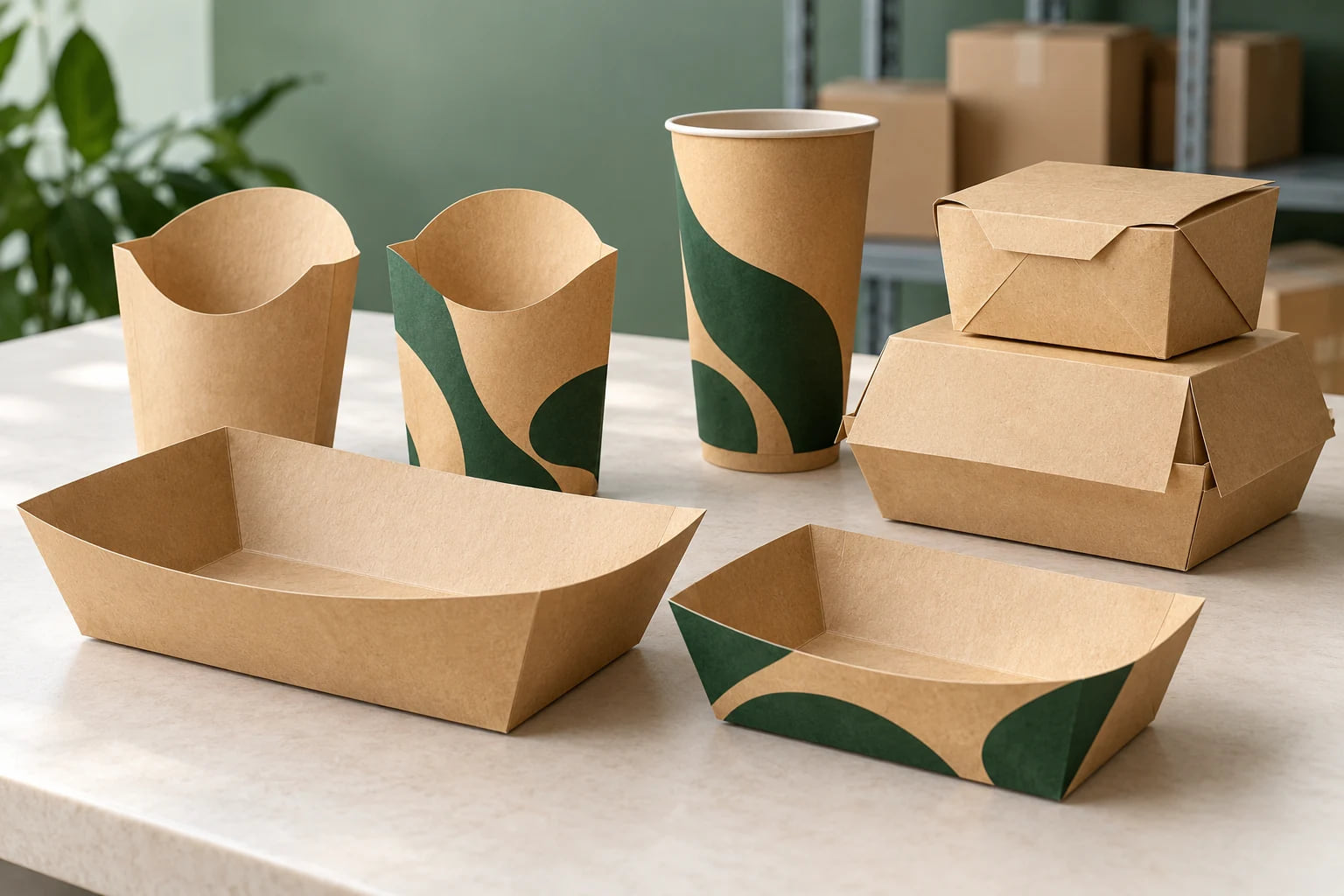
Choose formats by immediate serving versus closed carrying before designing a unified QSR print range.
QSR Paper Packaging: Menu Range Buying Guide
A multi-menu QSR programme needs enough formats to protect different foods without making the store catalogue unmanageable. Map meals, sides, snacks and drinks before consolidating sizes. Two dishes can share a box when portion fit and service requirements align; a similar appearance is insufficient.
Read the Guide ↗Business Buying GuideFried Food Paper Packaging: Chain Buying Guide
For a fried-food chain, good packaging balances grease handling, portion support and the intended carrying routine. An attractive open tray and a closed delivery box serve different jobs. Select around the actual fried menu before deciding which formats deserve branded printing.
Read the Guide ↗Business Buying GuideQSR Delivery Packaging: Acceptance Testing Guide
Delivery acceptance turns a headquarters sample into a repeatable store pack. The main question is whether the selected combination works with the chain’s portions, bag arrangement and delivery routine. Establish that evidence before describing a new range as ready for network adoption.
Read the Guide ↗01 / Buyer guide
Start with the Relevant Product Family.
Product starting point
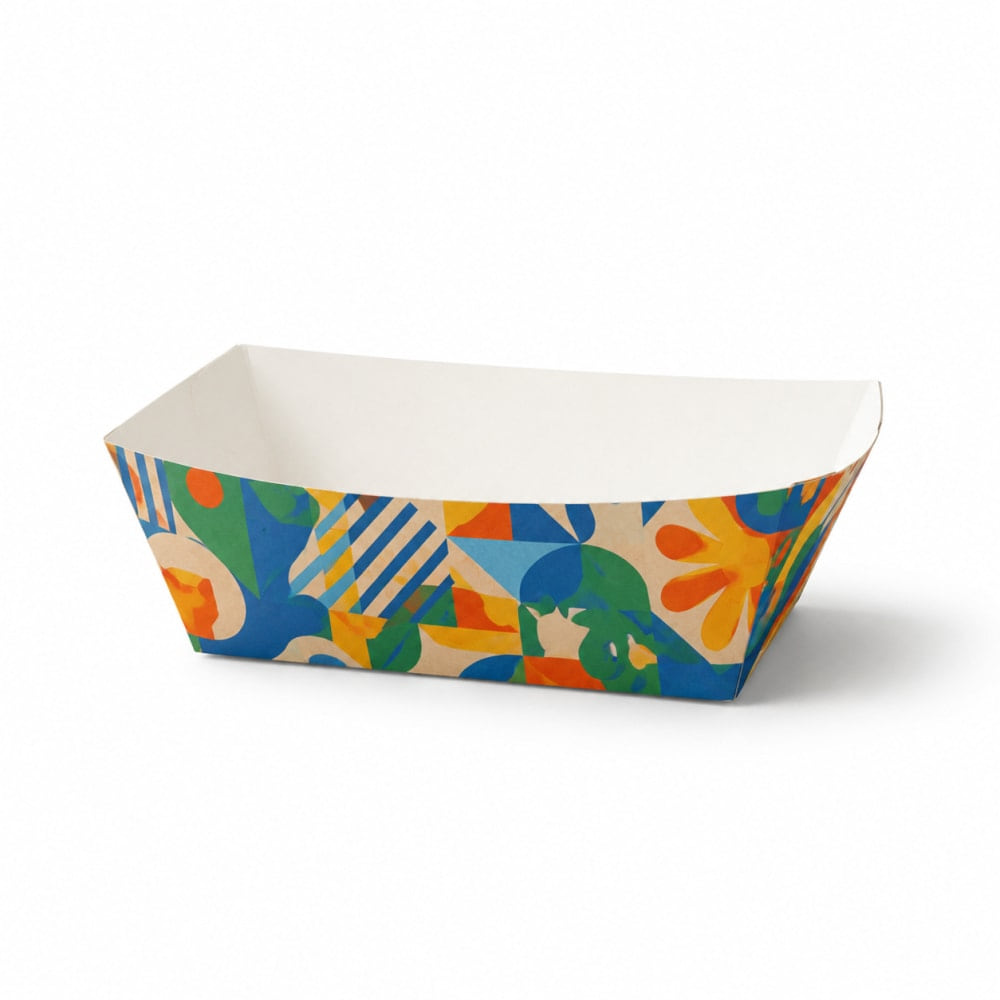
Paper Boat Trays
Consider for immediately served snacks and fried sides where an open top supports access and presentation.
View the Relevant Product Range ↗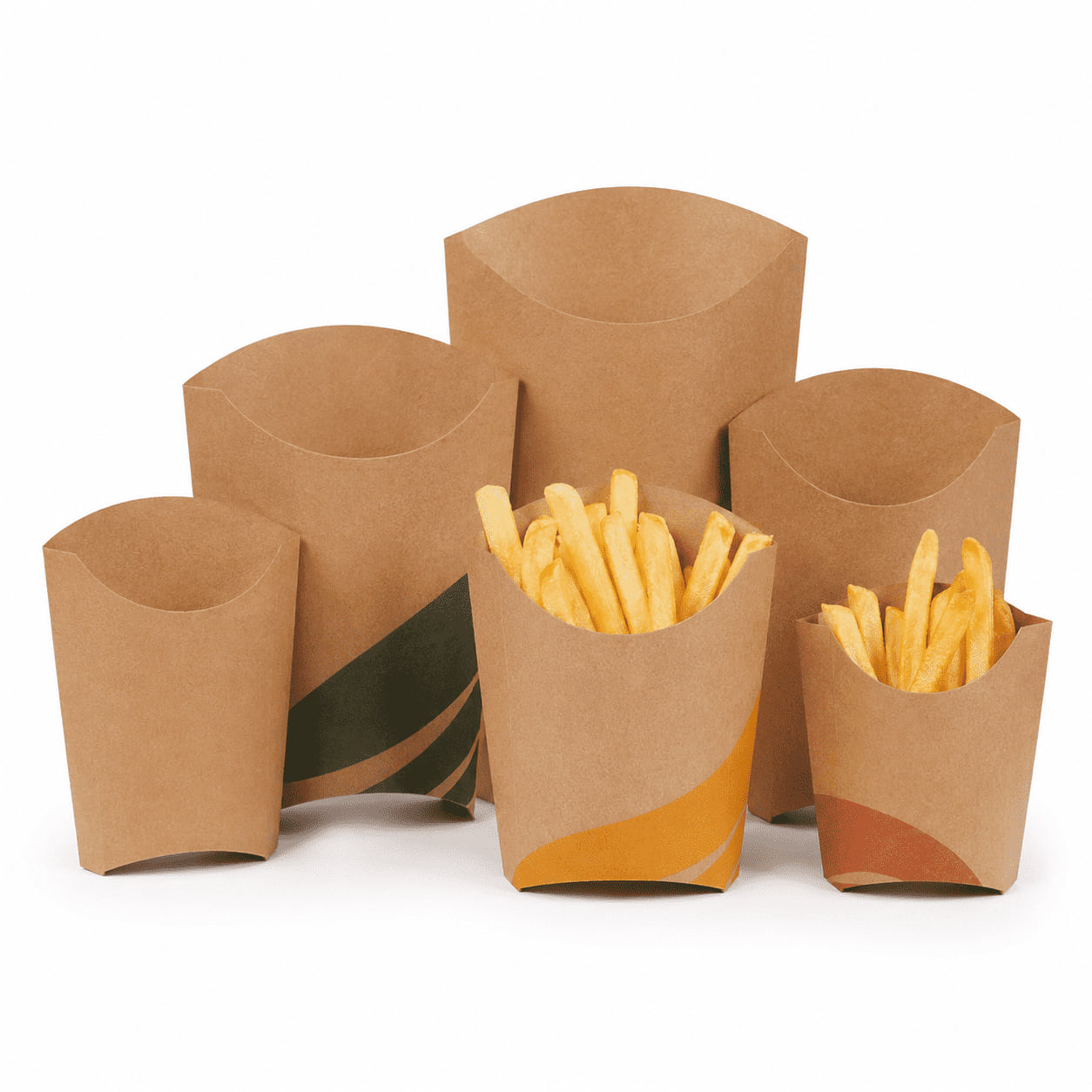
Product starting point
Paper Fries Cups
Compare for upright portions and hand-held service. Include the weight and sauce placement of loaded items.
View the Relevant Product Range ↗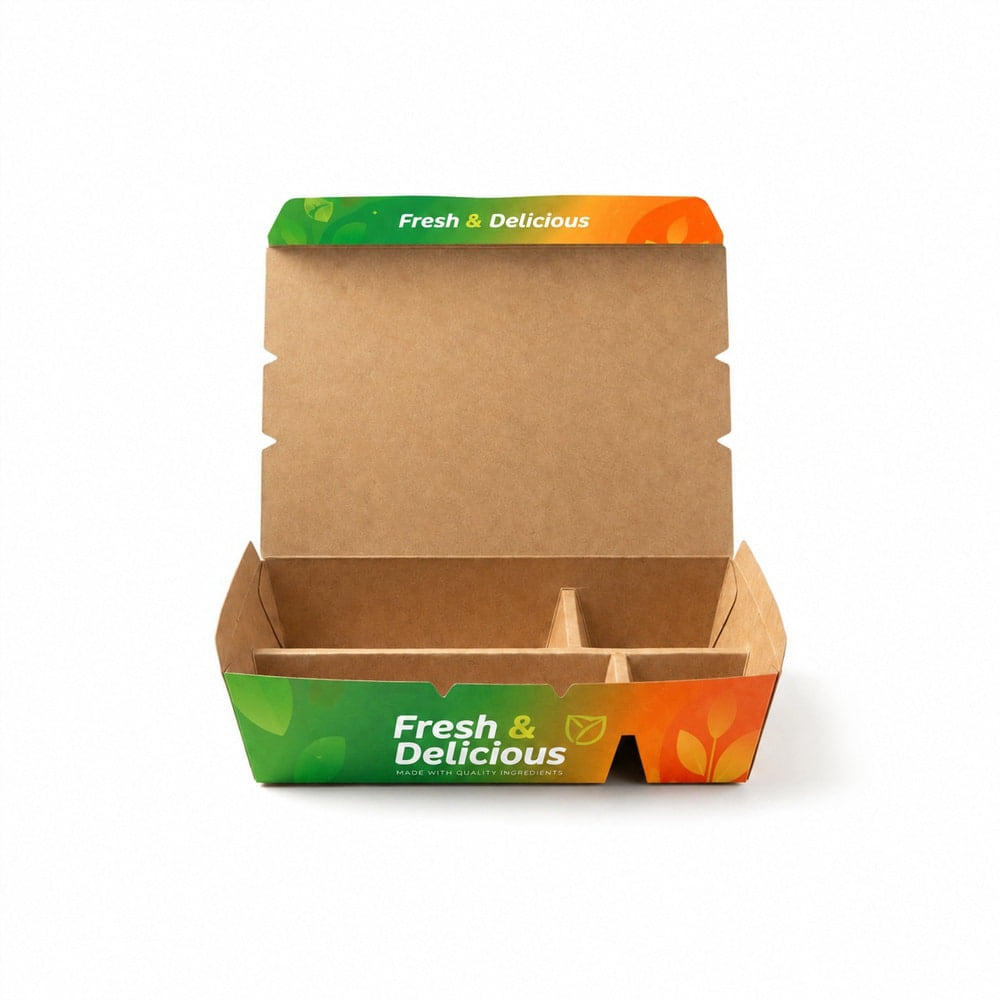
Product starting point
Folded Takeaway Boxes
Evaluate a closed pack where the meal must be carried. Check closure, usable space and food contact on the whole box.
View the Relevant Product Range ↗Product starting point
Compartment Meal Boxes
Use where keeping menu components separated has a practical purpose; compare usable space in each section.
View the Relevant Product Range ↗02 / Buyer guide
What Should Your Team Evaluate?
| Quality factor | Practical review |
|---|---|
| Grease marking | Test the actual fried item and its normal service period, including contact at folds and seams. |
| Filled-pack shape | Assess lifting, base support and the ability to eat from or carry the loaded format. |
| Texture and closure trade-off | Compare the full packing routine; containing a hot product and retaining its preferred texture are separate evaluation questions. |
| Peak-service handling | Check tray separation, box opening and lid/closure steps with staff using the normal counter setup. |
03 / Buyer guide
Decide How Much Customisation Is Useful.
Start with an appropriate physical pack. Compare plain formats for flexibility, buyer-applied labels for changing identity, and printed existing structures for stable recurring brand demand. Treat new geometry as a separate functional development decision.
A Consistent Takeaway Identity
Printed boxes and serving trays can connect different menu items to the same chain brand.
A Clearer Menu Range
Approved designs and product references help distinguish serving formats without adding unnecessary structures.
A Repeatable Campaign Base
Permanent brand artwork can coexist with changing menu or promotional information where the layout allows.
04 / Buyer guide
Keep the Material Discussion Specific.
| Pack element | Selection priority |
|---|---|
| Grease and moisture barrier | Ask for the complete paper/coating structure and evaluate the oiliest intended dish. |
| Board stiffness | Judge the loaded pack and folds, rather than using grammage alone to rank quotations. |
| Print and food-contact layout | Keep exterior graphics and the approved converting layout consistent with the finished pack specification. |
| Lid or closure structure | A folded tab and a separate snap lid create different operating and purchasing requirements. |
Do not infer a specialised burger clamshell, tamper-evident closure or all-menu performance from Fude’s general lunch-box or tray category.
Use the scenario guides above for actionable comparisons and sample checks. Confirm any offered alternative against the exact finished pack and intended conditions.
05 / Buyer guide
Bring the Right Questions to the Manufacturer.
| Question | Evidence to request |
|---|---|
| Does the range cover the actual menu? | Request a menu-to-format proposal rather than a catalogue of nominal sizes. |
| Can folded areas be sampled with the food? | Review performance at corners, seams and the closure, not only the centre of the paper. |
| Are accessories included in the quoted combination? | Separate containers, lids and other items so the comparison is commercially equivalent. |
A relevant manufacturer to approach
Discuss This Programme with FUDE.
Use the linked product catalogue as a starting point and Fude’s custom-packaging service for a project-specific discussion. Provide the menu, portion photos, intended use, quantities by size/design and delivery point.
Ask for available references, matched components, samples and an itemised proposal. Special-use candidates remain subject to exact-pack and buyer approval.
Contact FUDE ↗