
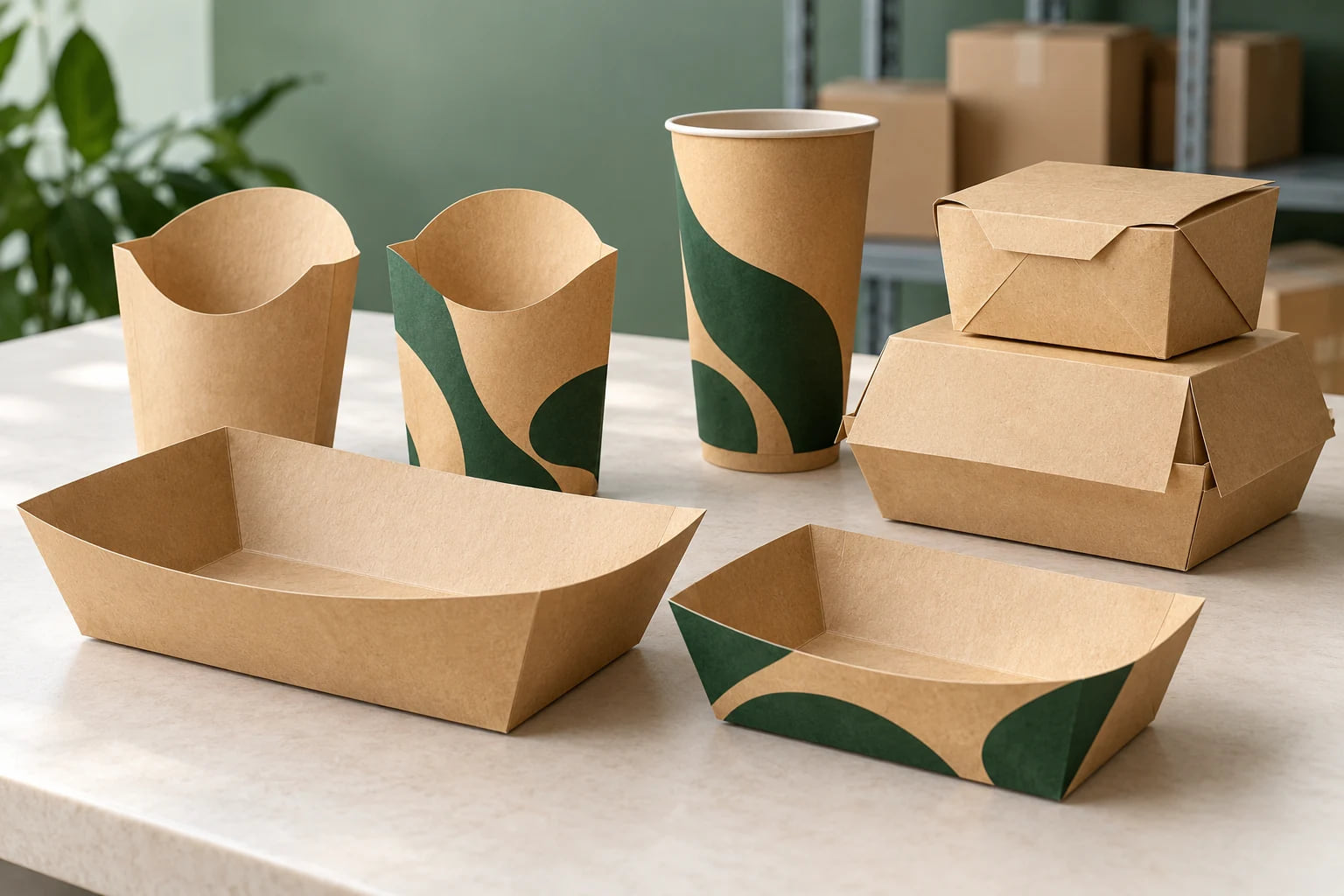
The buying recommendation
Build a focused neutral assortment of boats, fries cups, meal boxes and matched beverage cups. Use representative customer portions to choose the core sizes. Keep dedicated franchise prints and unusual formats as clearly separate commercial references.
Prioritise usable serving formats and a controlled assortment before multiplying franchise designs.
01 / Buyer guide
Which Products Should Your Business Compare?
Use the project recommendation above to compare the relevant product families below. Add only the sizes and components that fulfil a defined menu or operating role.
Product starting point
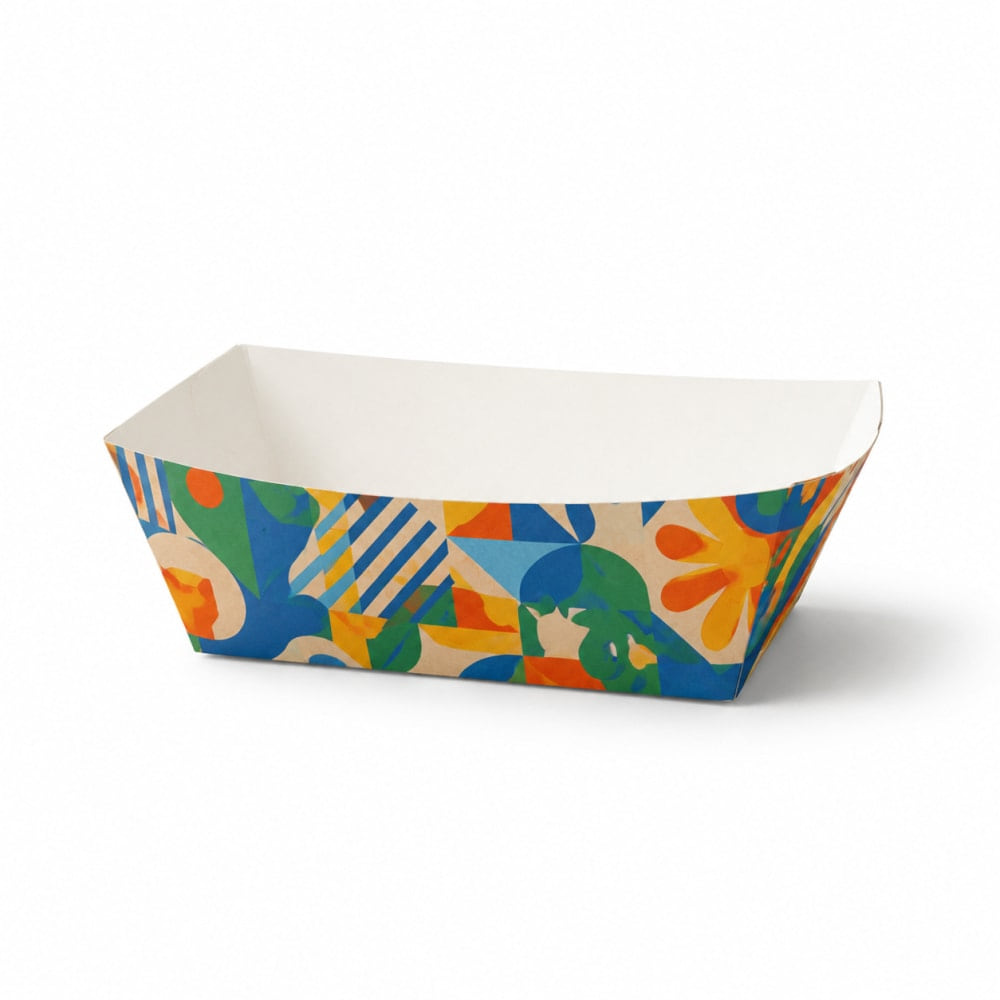
Open Food Boats
Consider for immediately served street-food portions where access and presentation matter.
View the Relevant Product Range ↗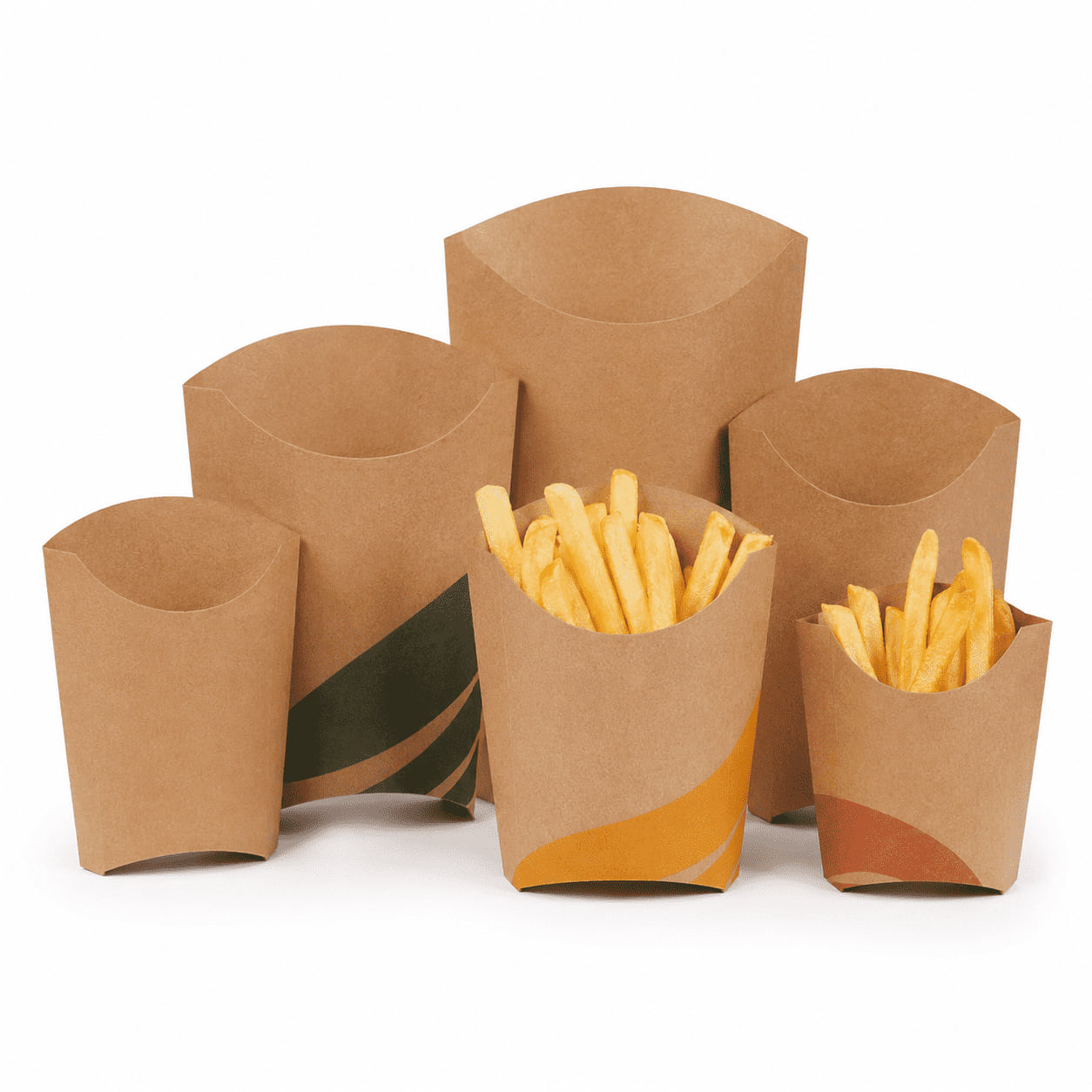
Product starting point
Upright Fries Cups
Compare for hand-held portions, including the weight and sauce placement of loaded products.
View the Relevant Product Range ↗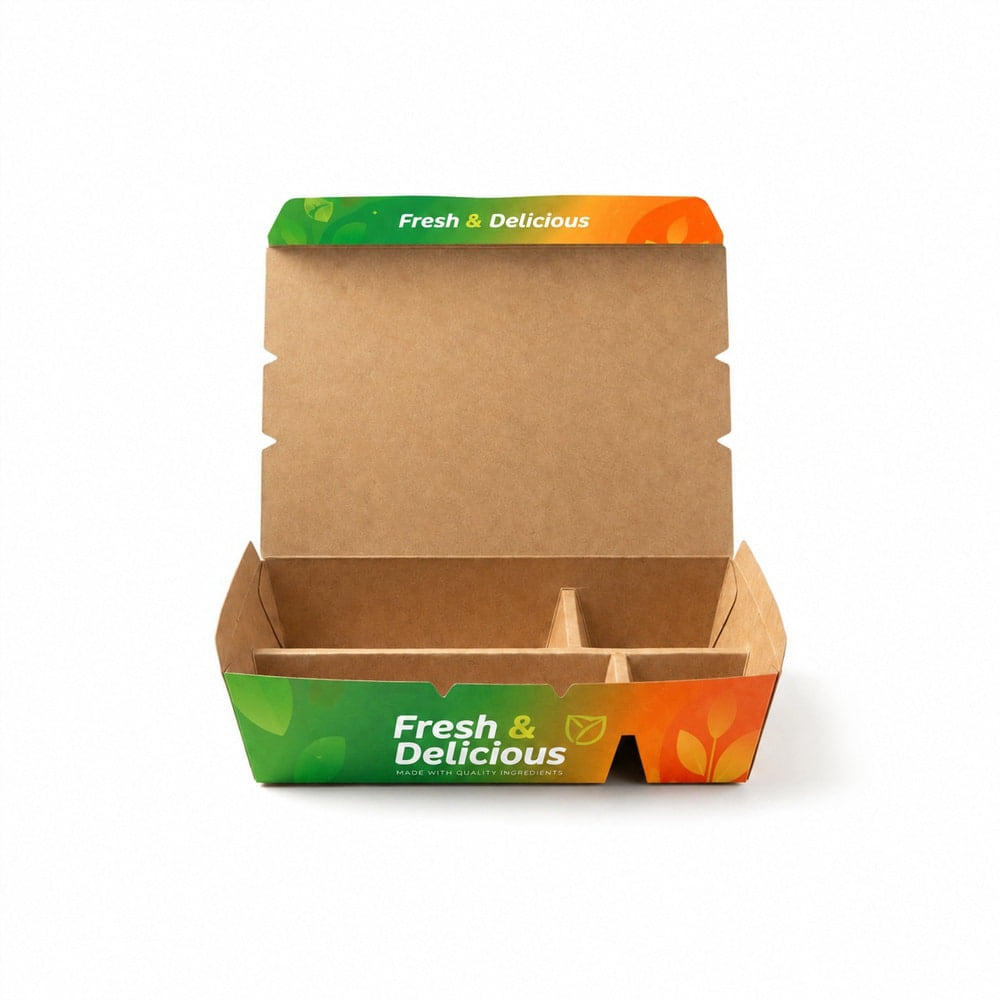
Product starting point
Closed Takeaway Boxes
Retain where the meal needs enclosed carrying rather than immediate open service.
View the Relevant Product Range ↗Choose the smallest useful range that covers the intended food and operating needs. Keep each accepted container, closure and artwork reference together so repeat quotations describe the same pack.
02 / Buyer guide
What Makes This a Good Paper Pack?
Mobile-food networks need a range that works with a compact counter, limited storage and different service situations. A tray for food eaten nearby and a closed box for carrying fulfil different tasks. Franchise and distributor programmes should keep those distinctions visible in the purchasing list.
| Quality factor | What to inspect |
|---|---|
| One-handed use | Assess the filled pack’s balance and access in the actual service situation. |
| Storage and separation | Check nested units, separation and available counter space without assuming one size fits every franchise. |
| Oil and sauce contact | Trial the wettest or greasiest intended item at seams and folds. |
| Order-set handling | Test the customer order combination and any separately sourced outer bag. |
Checks for This Specific Project.
Account Coverage
Map the proposed assortment to the main mobile-food customer menus.
Sales Selection
Check whether staff can recommend the right role and size without assuming all packs carry the same foods.
Warehouse Units
Reconcile supplier cartons with the distributor’s customer ordering units.
Compare candidates with the same agreed food, portion and handling conditions. Keep photographs, sample identities and observations with the decision; turn the accepted result into a written purchasing reference.
03 / Buyer guide
Use Stock, Labels or Custom Print?
| Buying route | When it fits this project | What to compare |
|---|---|---|
| Plain / stock-format enquiry | The natural starting route for shared stock serving unrelated businesses. | Less dedicated artwork inventory; confirm availability and order terms. Buyer branding may be less visible. |
| Plain + buyer-applied label | Consider distributor identity where it has a practical customer benefit. | Flexible information, with additional label purchasing, application work and surface checks. |
| Custom print on an existing format | Quote customer-specific branding separately with quantity and stock ownership agreed. | A recurring brand identity with artwork/proofing work and quantities planned by size and design. |
| New structure / tooling enquiry | Avoid exclusive formats without a defined customer need and demand basis. | A functional development decision with samples, qualification and a separate commercial proposal. |
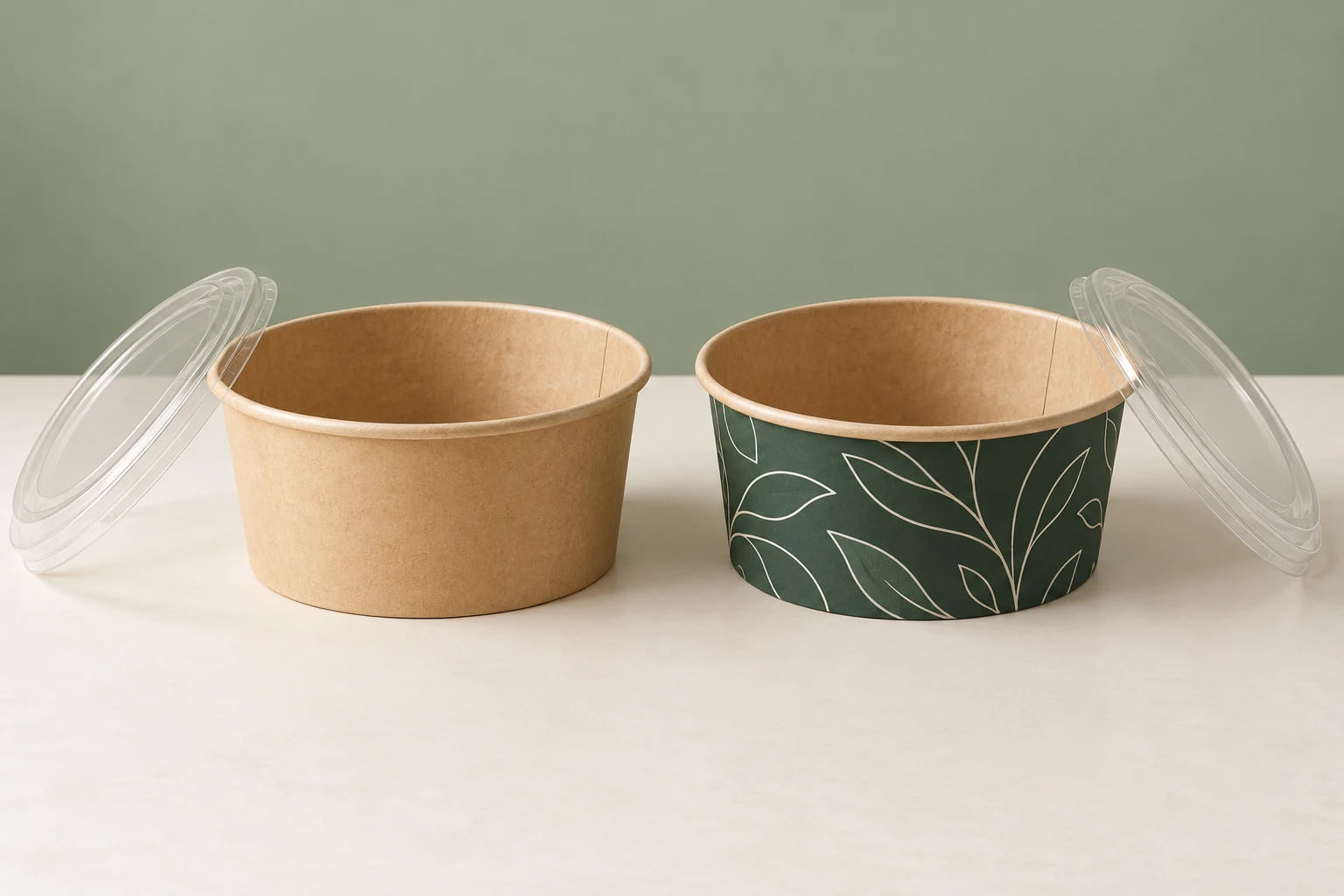
What Custom Printing Can Do for the Business.
Recognition Across Mobile Outlets
A consistent printed format can link a changing service location to the same brand.
Clearer Franchise Supply
Approved product and artwork references reduce ambiguity in the central catalogue.
A Deliberate Shared-Stock Plan
Plain stock can cover uncertain demand while dedicated print serves stable branded items.
Compare the Whole Purchasing Decision.
Request comparable quotes for the same structure and use. Include artwork and proofing charges, quantity per size/design, labels and application work, carton units, delivery scope and unused printed stock. Custom print creates value when recognition and repeat demand justify those commitments; it is not an automatic saving.
04 / Buyer guide
Choose the Board, Barrier and Closure Separately.
Classify by intended food contact and finished structure, not only kraft colour. Compare grease resistance for fried snacks, moisture contact for meals and separate drink constructions. Keep unqualified special uses outside routine product recommendations.
| Application component | Recommended starting point |
|---|---|
| Barrier-lined foodservice board | Start with a structure selected for the actual food contact, not an unverified brown-paper appearance. |
| Open versus closed construction | Choose by serving and carrying need; closure alone does not establish better food texture. |
| Plain or white print surface | Assess the desired brand finish and the actual printed sample. |
| Lid or integral closure | Specify the component and order quantities instead of treating all takeaway formats as interchangeable. |
| Route | Why compare it | What needs confirmation |
|---|---|---|
| Natural kraft exterior | A useful starting look for restrained graphics and a visible natural-paper finish. | Review real print contrast and consistency. Kraft colour is not a barrier specification or environmental certification. |
| White exterior / print surface | Compare when fine detail, colour appearance or a clean visual system is central to the brand. | Approve a proof on the actual finished surface; exterior colour does not establish food-contact performance. |
| PE-lined finished pack | A practical comparison baseline where offered for the intended wet/oily food or beverage. | Confirm the exact construction, food-contact use and paired closure. Recycling acceptance depends on the finished pack and local system. |
| Dispersion / alternative barrier | Worth comparing when a specific material or end-of-life brief motivates an alternative. | Availability and properties depend on the finished structure. Obtain candidate-specific information and trial it; do not assume a universal replacement. |
| PLA or a compostability-led route | Consider only where that exact candidate and a relevant collection route are available. | Check the complete product and any certification scope. A polymer name does not establish home compostability or local acceptance. |
| Separate lid or integral closure | Choose around food height, visibility, closure and the real service routine. | Record lid material and reference separately. Matching diameter alone does not guarantee compatibility. |
Material background: Metsä Board foodservice boards explains board and barrier roles; Stora Enso barrier solutions describes product-specific alternatives. These are material references, not evidence of Fude using those suppliers or grades. For compostability-led enquiries, verify the exact product in the relevant certification directory and collection system.
PET, PP or Paper/Fibre for the Lid?
For a warm meal, begin with the offered closure explicitly specified for that use; compare an integral fold with a matched separate lid where available. For a cold visible product, compare a clear candidate. Evaluate PP and paper/fibre alternatives by their exact finished properties and the actual service routine.
| Lid route | Why compare it | Trade-off and check |
|---|---|---|
| PET lid | Compare for cold-food visibility and a clear display. | Check the actual product’s use limitations, headspace and rim pairing. Do not transfer a cold-use approval to hot food or heating. |
| PP lid | Compare where an offered grade and finished design suit the intended handling or thermal brief. | Inspect clarity, stiffness, fit and exact-use evidence. The letters PP do not approve every lid for every appliance. |
| Paper / moulded-fibre lid | Compare for a coordinated paper-led appearance. | Usually gives less product visibility; assess barrier, condensation, fit and any window separately. Fibre content alone does not establish compostability. |
For examples of product-specific use differences, see BioPak’s cold-use PET lid and specified paper bowl lid. These examples illustrate why finished-product specifications matter; they do not describe Fude lid availability or approval.
05 / Buyer guide
How to Choose a Capable Manufacturer.
Ask for a product-role and carton matrix that distinguishes confirmed standard references from customer-specific printing and development enquiries.
| Manufacturer question | Useful answer or evidence |
|---|---|
| Can the range be trialled in a compact service area? | Review sample separation, opening and filled-pack handling with operators. |
| Which stock units will the distributor or franchise order? | Ask for format, artwork and carton-unit mapping. |
| How are event orders separated from repeat demand? | Clarify project quantities and confirmed receiving windows. |
Relevant Manufacturing Scope
Ask which operations and products are offered directly and which components or processes involve other suppliers. A broad catalogue alone does not establish control of every proposed item.
A Traceable Approval Route
Look for an agreed specification, sample identity, correct dieline, artwork revision and authorised approver. Relevant product information should describe the exact structure and intended use.
A Clear Repeat-Order and Issue Process
Agree how ordered references, packing and batch information are identified, how discrepancies are reported and how substitutions or changes are approved before production.
06 / Buyer guide
Send a Brief That Produces Comparable Proposals.
Offering every similar size can increase slow stock and make it harder for small operators to choose the right pack.
Define the Product and Food.
Include portions, food photographs, moisture/oil contact, the intended closure and the real filling, holding and carrying routine. State special equipment, storage or heating only where part of the actual project.
Separate Quantities and Identities.
List quantity per size and artwork, distinguish forecast from firm order and identify the authorised design owner. Share the receiving point and required timing, then ask for a project-specific proposal.
Agree Acceptance Before the Bulk Order.
Confirm sample checks, relevant document scope, carton units, production reference and change approval. Ask for MOQ, proofing costs and timing for the quoted combination rather than assuming a universal figure.
An enquiry you can adapt
We distribute packaging to mobile food operators. Please propose a focused neutral range against the attached customer menu groups, with dimensions, matched components and carton units. List dedicated customer-print options separately. We will use samples to assess portion coverage and prepare accurate sales descriptions.
07 / Buyer guide
Why Put FUDE on Your Sourcing Shortlist?
Fude is a relevant manufacturer to approach when your brief overlaps its paper cup, bowl, meal-box or food-tray catalogue and custom-packaging service.
For food truck franchises and mobile food networks, begin with the product references shown above and ask Fude to propose the exact available structure, paired components and sample route. Compare that response with the guide’s selection criteria rather than choosing on the logo or unit price alone.
The range does not automatically include specialised taco holders, bags, cutlery or every street-food format. Confirm accessory and structure availability.
Ask Fude to confirm dimensions, materials, available customisation, sample/proofing sequence, quantities, timing and delivery responsibilities for your order. Keep the accepted specification and commercial scope in writing.
08 / Buyer guide
Questions Procurement Teams Ask.
Should Unusual Formats Be Stocked?
Compare customer demand with a clearly identified enquiry-only route before committing shared stock.
Can Supplier and Customer Codes Differ?
Yes, provided the mapping preserves exact structure, lid and order-unit identity.
What Makes Plain and Printed Quotations Comparable?
Use the same product construction, matched closure, quantities and delivery scope. Itemise print/proofing work, labels where relevant and any development separately.
Which Details Are Needed for the First Manufacturer Enquiry?
Provide the menu and portions, intended use, products and lids, quantities by size/design, destination, timing and sample requirements. Use the scenario brief above as a starting point.
Your manufacturer-ready enquiry
Turn This Guide into a Useful Brief.
Enter your phone number with calling code, email and message, then choose Send Enquiry to submit directly to FUDE through Zoho Forms. Your name is optional.
Continue Your Buying Decision